
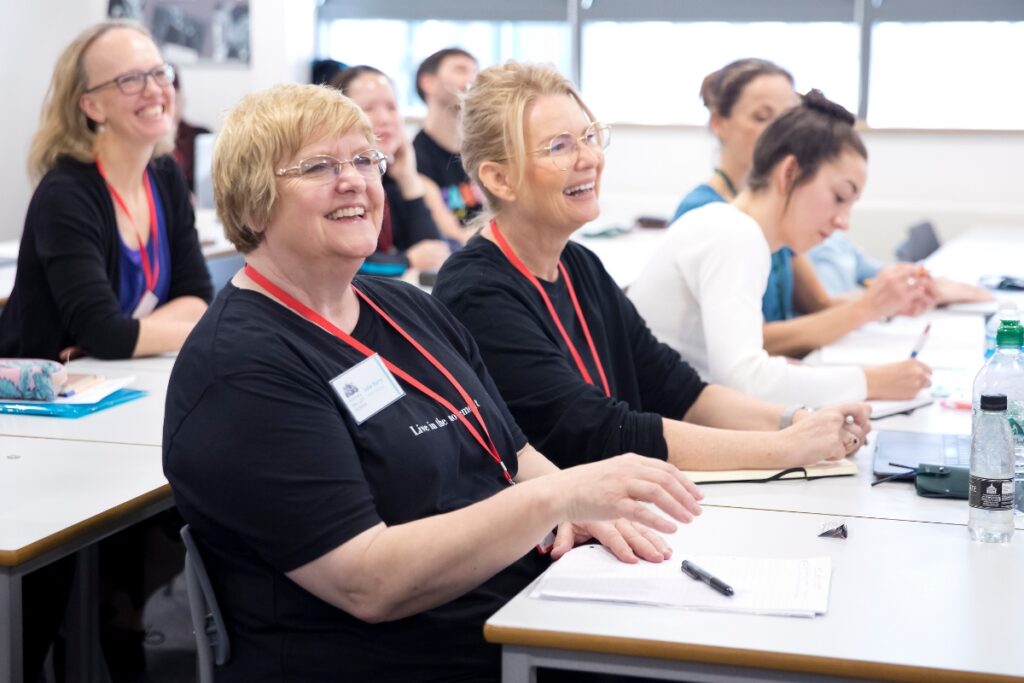
Affiliate Teacher spotlight: Julia Barry
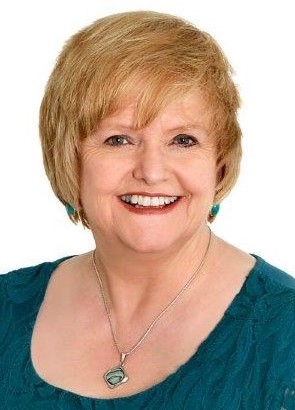
Longtime Affiliate Teacher Julia Barry was awarded the International Association for Dance Medicine and Science (IADMS) Dance Educator Award in July, which honours an outstanding educator who meaningfully integrates dance medicine and science into their teaching practice, shaping the future of dancers and educators through informed, reflective, and evolving teaching practice.
Based in Sydney, Julia is a dance teacher, researcher, and teacher educator whose career has spanned private studios, vocational training, and university dance programs. A passionate advocate for safe dance practice, dancer well-being, and educator development, she has dedicated her career to creating positive, evidence-informed learning environments where dancers and teachers can thrive.
A graduate and Affiliate Teacher of the The Royal Ballet School and a Life Registered Teacher, Examiner, and Faculty of Education Tutor with the Royal Academy of Dance, Julia has also contributed to research exploring adolescent dancer wellness in recreational and pre-professional dance settings.
Julia has also been accepted to present at the 2026 IADMS Conference in Melbourne on Reviewing and revitalising dance teaching language to support student learning and well-being.
In 2027, Julia will celebrate 50 years since graduating from the School’s teacher training course, then directed by Valerie Adams. We spoke with Julia about her achievement and how the Affiliate Programme supports her teaching practice.
How does it feel to receive the Dance Educator Award from IADMS in recognition of your dedication as a teacher?
I am deeply honoured, amazed and absolutely delighted to receive this award. I acknowledge all the many delightful students I have had the privilege and pleasure to teach and the kind and supportive colleagues and mentors who have inspired and supported me over the last nearly 50 years. I hope my receiving this award will give other teachers, who also work across a range of dance contexts and age ranges in a ‘portfolio career,’ additional confidence that the work we do at the ‘grass roots’ level is valued and appreciated in the broader dance community. There cannot be the pre-professional and professional levels of the dance world without the work teachers of young students are doing!
How do you incorporate dance medicine and science into your teaching practice today?
I aim to integrate safe dance practice concepts into all classes and offer students a well-rounded dance education in a positive, supportive and encouraging learning environment. There is so much more to teaching dance than just teaching dance! I share a range of information with students to prompt discussion on aspects of physical, psychological and social well-being, to support and enhance their engagement and learning about looking after themselves as dancers. Along with in-class activities and discussions, I encourage students to keep a dance file, which they can use as a reflective journal, as well as for developing a personal ‘wellness toolkit’ of helpful information.
What are you most proud of as a teacher?
This is a challenging question! I am very proud of all the lovely students and teachers I have worked with. Many former students have gone on to successful dance performance and teaching careers, as well as diverse careers in other fields. Many have told me they felt their dance training gave them a definite advantage!
I was very proud of the dance school I developed and the Youth Ballet group that I ran alongside the school. I was able to develop a transition programme for students interested in pursuing a career in dance and a student teacher training programme. I instigated annual Summer Schools with international guest teachers. Since then, I think I have been most proud of my efforts to bring the academic and professional aspects of dance closer together, working collaboratively to share important research with teachers and students. I have also championed dancer wellness and the vital role of the teacher in creating a positive and supportive learning environment.
Tell me about your journey to teaching and researching. When did you decide to pursue teaching as a career? How did you find out about The Royal Ballet School’s teacher training course?
As a student at a local dance school in Bristol, I was inspired to pursue a career in dance when Julia Farron (former Royal Ballet School teacher) visited to teach a class and mime workshop. She taught us the Lilac Fairy mime, and my friend and I spent the entire bus journey home writing it down. As soon as we got home, we found the music in my parents’ LP collection and danced away for hours practising it!
I auditioned for the Upper School Dancer’s Course at age 16 but was not accepted, so I went to Arts Educational School full-time course to try to improve my standard. I always dreamed of attending The Royal Ballet School and, having enjoyed gaining some assistant teaching experience with my teacher in Bristol, decided to apply for the School’s Teacher Training Course. I wanted to gain the invaluable training the School offered, and the Course had an outstanding reputation.
After the preliminary audition, I received a most unexpected phone call from the School: the audition panel offered me the opportunity to attend the Dancer’s Course final audition! The Teacher’s Course final audition was a month later, so I felt I had nothing to lose and it would be a good test run for me to have this experience. I did not think for a moment I had any chance of being accepted on the Dancer’s Course.
As it happened, Julia Farron taught the Dancer’s Course final audition! I was so inspired by her once again, and just ‘danced my heart out,’ treasuring what I thought would be my only other chance to be in a class taught by Miss Farron. My number kept being called out as the audition process continued, and, amazingly, I got right through to the interview stage.
The Principal at the time, Barbara Fewster, was very kind to my mother and me as we sat across the desk in her office, but she was also very straight and honest. There were issues with my limited turn-out and flexibility in my spine, but the panel had agreed they felt I had something to offer artistically, and they wanted to give me the opportunity to see whether anything could be done through training to improve my physical limitations.
I was on cloud 9 walking through the doors at Talgarth Road as a student on the Dancer’s Course, and this was multiplied when I discovered Miss Farron was to be my teacher! She was so lovely to me and encouraged and challenged me so much. I absolutely loved her classes and felt I was making more progress than I ever thought possible. However, towards the end of that first term, on looking at the second year students in class through the studio windows, I came to realise I would be unlikely to be offered a second and subsequent year of study at the School. I walked into the end of first term interview with Miss Farron and burst into tears, telling her I could see I had made a huge mistake. Miss Farron was so kind and reassured me that the situation was not at all my fault. She had already spoken with Miss Adams, the Director of the Teacher Training Course, and they had arranged for me to swap in the new year! The Teacher Training Course students were very supportive and helped me hugely, especially people who were to become dear and lifelong friends, Sally Baker and Vivienne Saxton.
Where did your career take you after attending the School?
After graduating with the School’s Diploma in Ballet Teaching in 1977, I married my Kiwi husband and moved to New Zealand. After a few years of freelance teaching, I took over a large dance school in Auckland and built it up further over the next 12 years. Once I had two children, I sold the school to a friend and continued freelancing. I became a qualified Mat Pilates teacher and found this very beneficial for the dance students I continued to work with.
I became interested in pursuing a Master’s degree and originally approached the University of Auckland, but they were not interested in a professionally trained dance teacher, thinking I would not have sufficient academic background to conduct effective research! Fortunately, Queensland University of Technology also offered a distance education Master’s in Creative Industries (Dance Teaching), and when I approached them, they were delighted to welcome me as an experienced professional! Gaining that Master’s opened doors for me in teaching and designing programmes for full-time dance courses and commencing tutoring on the Royal Academy of Dance teacher education programmes.
A few years later, my husband and I moved to Australia, and I undertook a Postgraduate Certificate in Higher Education (Teaching and Learning). After much encouragement from my dear friend and fellow Royal Ballet School Teacher Training Course Graduate, Terry James, I decided to apply to QUT for further post-graduate research. I gained the Master of Philosophy through researching adolescent dancer wellness in elite pre-professional dance schools and private dance studios in Australia.
Since completing that degree, I have been involved with other research projects, been an examiner for a Master’s candidate and an industry co-supervisor for undergraduate level. I have also continued tutoring on a number of the Royal Academy of Dance teacher education programmes, including the professional dancer’s courses. Throughout my career, I have continued teaching at all levels, from young children to pre-professional level, supporting trainee teachers and offering continuing professional development courses for early career and experienced teachers. I have presented regarding my MPhil research at several dance conferences over the last 10 years and am delighted to be presenting with colleagues at the IADMS Conference: Reviewing and revitalising dance teaching language to support student learning and well-being.
You have been an Affiliate Teacher with the School since 2022. Why did you decide to join the Affiliate Programme? What is your favourite part about being an Affiliate Teacher?
I had been running an ‘extension class’ for several years at a private dance studio I teach at in Sydney. In this class, I focused on refining basic technique and expanding students’ dance vocabulary through free work, fostering musicality and artistry, teaching adapted repertoire dances and developing students’ creative abilities through improvisation and composition tasks. Students were already presenting their own choreographic group and solo pieces in studio concerts, and the classes were proving to be very popular. I also taught a regular conditioning class to support students’ dance development.
When I found out what the Affiliate Programme offered, it seemed an ideal fit, as it included many similar elements to the programme I was already running. I felt it would be beneficial for the students to follow the Affiliate Programme and be able to gain direct contact with the School, learning and benefitting from the System of Training.
I thoroughly enjoy teaching the Affiliate Programme and find the freedom it offers the teacher and the students to use their creativity in many different ways to be both an enjoyable and a valuable challenge. I appreciate the many new colleagues I have met through the Affiliate Programme and greatly value the community of like-minded people.
What are your future goals? How do you want to continue with your professional development?
Firstly, I have absolutely no intention of retiring! Future goals include wishing to continue working in the studio to support and encourage students, supporting trainee, early career and experienced teachers with teacher education and collaborating with colleagues on further research projects to benefit future generations of dancers and teachers. I have some further dance teaching-related qualifications I am interested in pursuing, to keep my teaching practice developing and progressing, like the Safe in Dance International Healthy Dance Practice qualifications.
I am very interested in the concept of micro-credentials. There could be a system established whereby Continued Professional Development (CPD) courses could contribute credits towards units of a formal qualification. In this way, the CPD dance teachers are required to undertake each year could also support teachers gaining further qualifications, to enhance their teaching status and support their students’ progress and development.
I am also aiming to establish teacher discussion groups to provide regular opportunities for teachers to interact with peers. Sharing and exploring pertinent topics would help teachers feel connected to a supportive and informative professional learning community.
Following on from my MPhil research, I hope next year to initiate and develop with health professional colleagues a Dancer Wellness Windows programme, for teachers to use to integrate wellness concepts quickly and easily within their regular classes for students of all ages. A few colleagues have also suggested I consider writing a book! I’m not sure about that idea.
I have no intention of slowing down any time soon.
Catja Christensen is the Marketing and Communications Executive at The Royal Ballet School and joined the School in 2025. She enjoys interviewing students, staff and guest artists for news stories and crafting eye-catching newsletters.