
Ballet teaching qualifications in the UK explained
There’s no law in the UK that says you need a qualification to teach ballet. No licence, no mandatory registration. A teacher can rent a village hall, pin up a flyer and start running classes next week.
That’s the legal position. The practical position is different. Parents may check credentials. Schools and dance organisations may expect them. Vocational training environments almost always require them. And only teachers registered with a specific awarding body can enter students for that body’s examinations, which matters because examinations are how most young ballet students measure their progress and how most parents judge whether a school is serious.
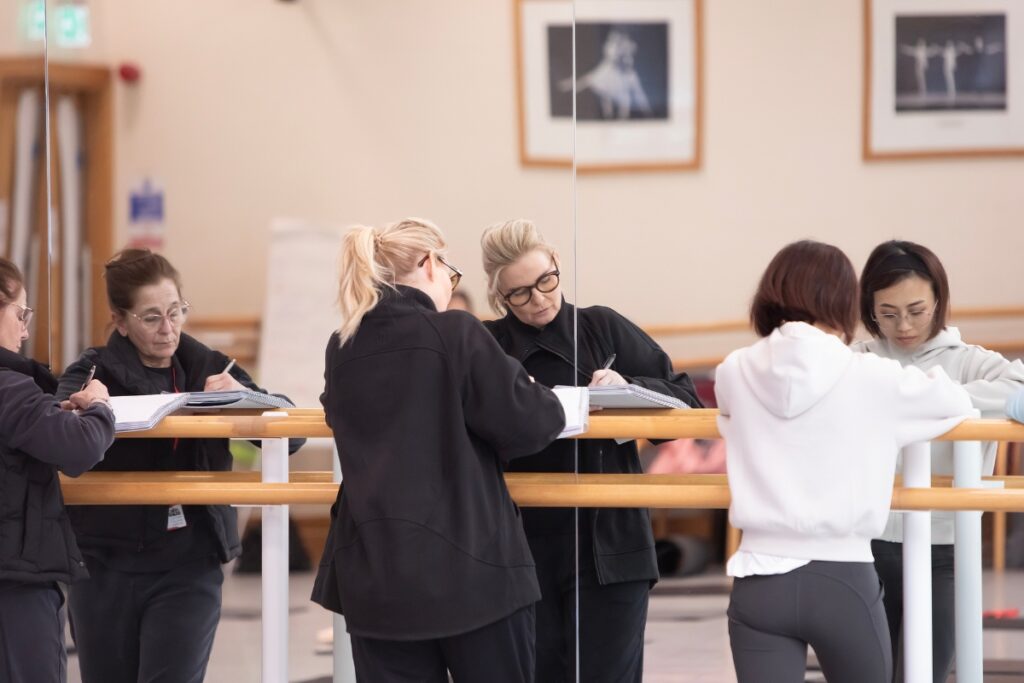
Beyond employability, formal study does something that teaching experience alone can’t easily replicate. It forces you to examine the assumptions behind your practice. Are the corrections you give grounded in current anatomical understanding? You might find your class structure doesn’t actually serve the students in front of you. And the methods you absorbed during your own training may no longer be fit for purpose. They’re hard questions to arrive at from the front of a studio, no matter how many years you’ve been standing there.
Several organisations offer the most widely recognised ballet teaching qualifications in the UK. They aren’t interchangeable.
Both the Royal Academy of Dance and the Imperial Society of Teachers of Dancing provide established frameworks that have shaped ballet teaching for decades. The Royal Ballet School’s teacher training programmes occupy a different position.
‘Our courses focus equally on pedagogy and content – not just the learning of a syllabus.’
That distinction matters when comparing courses. The question isn’t just which qualification carries the most weight, but which one matches where you are now and where you want to go.
What are the recognised ballet teaching qualifications in the UK?
Royal Academy of Dance (RAD)
The RAD operates in 85 countries, and its teaching credentials are among the most widely held in the world. The main entry-level route is the Certificate in Dance Teaching (Ballet), a two-year part-time programme combining distance learning, online study, a five-day in-person intensive study period and a mentored teaching placement in Year 2. UK fees for the 2026/27 intake are £5,730 plus a £135 registration fee (radprospectus.info). Graduates become eligible for RAD Registered Teacher Status, which is what allows them to enter students for RAD examinations.
Beyond the Certificate, the RAD offers a BA (Hons) Ballet Education, a Professional Dancers’ Graduate Teaching Diploma and postgraduate study up to MA level, all validated by the University of Bath. That global footprint also makes RAD credentials useful for anyone likely to work outside the UK. Worth knowing if you already hold a qualification from another body: the RAD now accepts Level 4 or equivalent credentials as eligible for Registered Teacher Status, provided teachers complete CPD within their first year of membership.
Imperial Society of Teachers of Dancing (ISTD)
The ISTD’s primary teaching qualification is the Level 4 Diploma in Dance Education (DDE), an Ofqual-regulated qualification carrying 120 credits on the Regulated Qualifications Framework. Students take the DDE through ISTD-approved dance centres across the UK, typically over two to three years part-time, covering five units that span safe teaching practice, observation, classroom teaching and the Intermediate-level syllabus examination. Entry is open from age 17, though teaching practice can’t begin until age 18.
Beyond the DDE, the ISTD offers Licentiate and Fellowship grades, plus the Level 6 Diploma in Dance Pedagogy. The ISTD covers 13 dance genres including Cecchetti, Modern Theatre, Tap and National Dance. This is likely most relevant to dance teachers looking to build a teaching practice across styles.
A new pathway is the direct entry to Full Teaching Membership for graduates of The Royal Ballet School’s Diploma of Classical Ballet Teaching, without requiring additional examination.
The Royal Ballet School
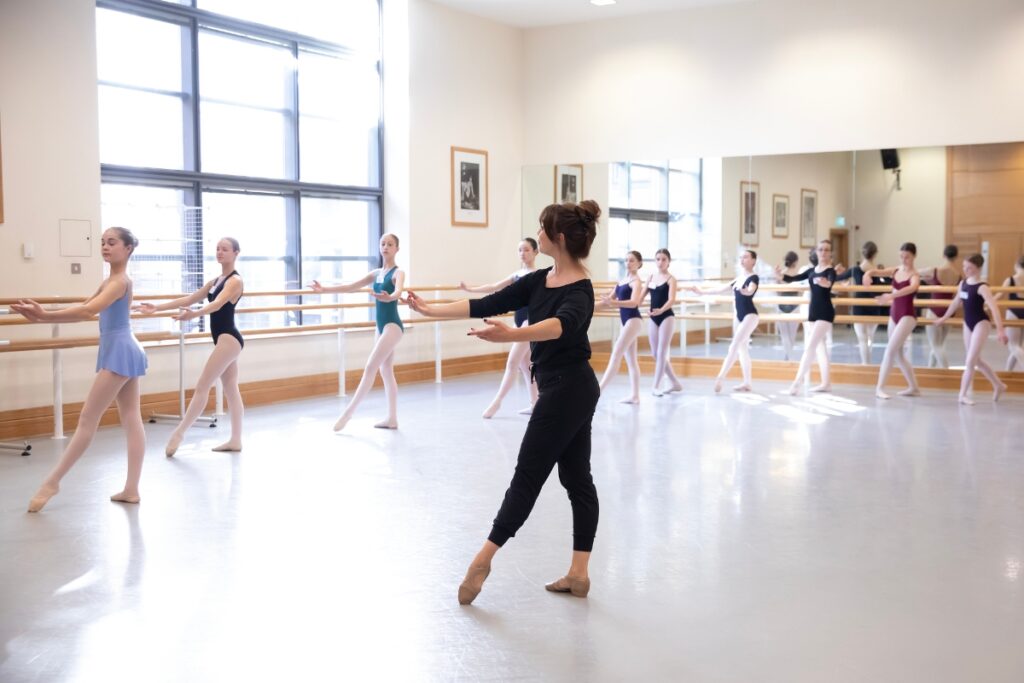
The Royal Ballet School’s teacher training programmes work differently from the RAD and ISTD routes. Our focus is pedagogy rather than syllabus content: how teachers think, plan, observe, reflect and adapt.
Our principal qualification is the Diploma of Classical Ballet Teaching (formerly Diploma of Dance Teaching), open for study in 2027. A two-year part-time hybrid course delivered partly at our studios in Covent Garden, White Lodge in Richmond and online. Curriculum areas include classical ballet technique, pedagogy, psychology and child development, reflective teaching practice, workplace context and the healthy dancer. Practical studio work makes up around 60 per cent of the curriculum, with the balance going to written assignments and research. Teachers specialise in vocational or pre-vocational settings depending on where they intend to teach.
What separates the Diploma from other ballet teaching qualifications in the UK is what graduates walk away with. They gain direct entry to the School’s own Affiliate Programme, RAD Registered Teacher Status, ISTD Full Teaching Membership and bbodance Registered Teacher membership. No other UK qualification provides pathways into all four professional frameworks from a single programme.
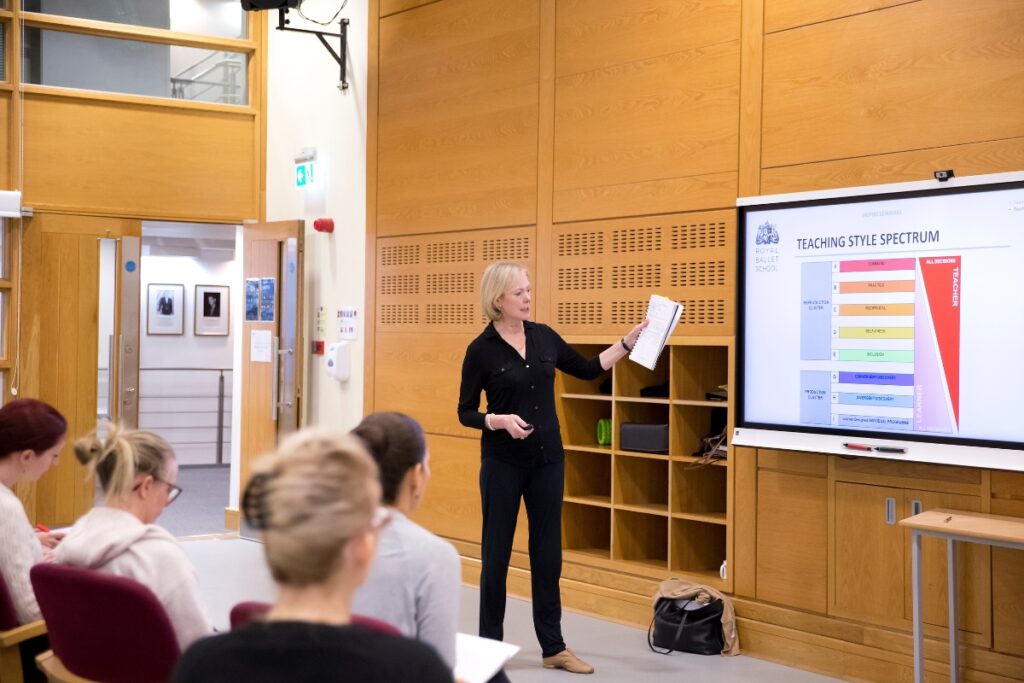
Inspire seminars are six one-day sessions covering technique, artistry and teaching practice, available in person and via live stream. Enlighten webinars are short online sessions on specific topics, from pointe work and pedagogy to studio business management. And the Affiliate Programme gives teachers in the recreational sector a structured, non-syllabus route based on The Royal Ballet School’s philosophy and System of Training that they can take directly into their own studios.
We are currently redesigning our Diploma course with a hybrid model combining in-person intensives at our Covent Garden and White Lodge studios, online and live seminars and lectures and mentored teaching practice. Applications for the next intake are expected to open in summer 2026, with the programme relaunching in early 2027.
bbodance, IDTA, and other awarding bodies
bbodance offers Ofqual-regulated teaching qualifications at Levels 3, 4 and 5, and is restructuring its provision from 2026 onwards. Under the new framework, teachers can become fully qualified at Level 4 through the Diploma in Dance Teaching Practice, without needing to progress to Level 5 as was previously required. bbodance’s courses aren’t genre-specific, which means they’re open to teachers regardless of style or syllabus. That flexibility suits teachers who work across multiple organisations or want a qualification that transfers between genres.
The International Dance Teachers’ Association (IDTA) offers a Level 4 Ballet Diploma through approved centres, and the British Theatre Dance Association (BTDA) runs a Certificate in Dance Teaching with provisions for teachers qualified through other bodies to cross over at the same level. All five organisations are validated by the Council for Dance, Drama and Musical Theatre (CDMT), the sector’s quality assurance body.
How should aspiring ballet teachers prepare for a teaching career?
It depends on where you want to end up. Someone heading into recreational studio teaching may find the RAD Certificate or the ISTD DDE a solid starting point, with The Royal Ballet School’s Affiliate Programme and CPD programmes available to build on that foundation. A teacher aiming for vocational work will generally need a stronger pedagogical grounding, and the School’s Diploma of Classical Ballet Teaching was designed with that progression in mind.
It’s worth thinking about how qualifications connect to each other early on. The Diploma’s four-way pathway into the Affiliate Programme, RAD Registered Teacher Status, ISTD Full Teaching Membership and bbodance Registered Teacher membership means your options stay open rather than narrowing when you pick one route.
Keep that in mind when weighing up options. Qualifications open the door. But a teaching career that lasts 20 or 30 years, or more, is built on something harder to pin down: the willingness to keep asking whether the way you taught last term is good enough for next term’s students.
Key takeaway
There is no single route into ballet teaching in the UK, and the most effective approach has always combined formal qualification, practical experience and ongoing learning. At The Royal Ballet School, we support teachers across all of those dimensions: not just at the start of the journey, but throughout it.