
Ballet teacher training courses
‘Teacher training in ballet is not one-size-fits-all.’
Some routes provide structure and professional certification. Others offer space to reflect, to question, to deepen an existing practice. Most teachers who take their craft seriously will engage with both at different points in their career. The question is not which kind of training matters but how to find the combination that serves your teaching, and your students, most effectively.
At The Royal Ballet School, our focus is on supporting teachers as they develop beyond foundational training. Our programmes are not designed to help people become ballet teachers. They are designed to help existing ballet teachers become more effective ones.
What are the main ballet teacher training routes?
There are a few broad categories of ballet teacher training in the UK, and understanding the difference matters for planning a teaching career:
- Syllabus-based qualifications, offered by organisations including the Royal Academy of Dance (RAD) and the Imperial Society of Teachers of Dancing (ISTD). These provide a structured framework and widely-recognised certification, and are typically the foundation of an early teaching career
- Non-syllabus qualifications, like our Affiliate Programme, equip and empower teachers to guide, assess and support a broad range of students to learn how to learn, and to value the process itself
- Continuing professional development (CPD), designed for teachers already in practice who want to improve the quality of their teaching and stay current with developments in pedagogy.
All have genuine value. Initial qualifications establish the technical and professional foundation; CPD is where the work of truly advancing your practice begins.
What is the difference between syllabus-specific and pedagogy-focused training?
Syllabus-specific qualifications train teachers to deliver a particular organisation’s examination syllabi. Complete the RAD CDT and you can enter students for RAD ballet examinations. Complete the ISTD DDE in Imperial Classical Ballet and you can enter students for ISTD exams. The bbodance Licentiate works the same way. All three prepare teachers to work within a defined framework of graded exercises, set work and assessment criteria.
Pedagogy-focused qualifications work differently. They develop broader teaching competencies that apply across genres and syllabi. bbodance’s Ofqual-regulated Certificate and Diploma Introduction courses accept students from any training background and don’t tie graduates to a particular examination system (bbo.dance). A teacher studying these qualifications can apply what they learn whether they’re working in RAD, ISTD, or any other framework.
The Royal Ballet School’s Diploma of Classical Ballet Teaching sits between these two models. It isn’t syllabus-specific and doesn’t train teachers to deliver a particular set of graded exercises. Instead, our course centres on classical ballet technique, pedagogy psychology and child development, reflective teaching practice and the healthy dancer. Practical work accounts for around 60% of the curriculum. What makes the Diploma unique is what graduates walk away with: pathways to The Royal Ballet School’s own Affiliate Teacher status, RAD Registered Teacher Status, ISTD Full Teaching Membership and bbodance Registered Teacher membership. No other single UK programme connects graduates to all three of the country’s main teaching frameworks from one qualification.
Which model suits you depends on your goals. If you want to enter students for a specific board’s exams, you need the corresponding syllabus-specific qualification. If you’re looking to develop your pedagogical practice more broadly, or you work outside the examination system, a pedagogy-focused or methodology-based route may be more useful.
What makes The Royal Ballet School’s teacher training different?
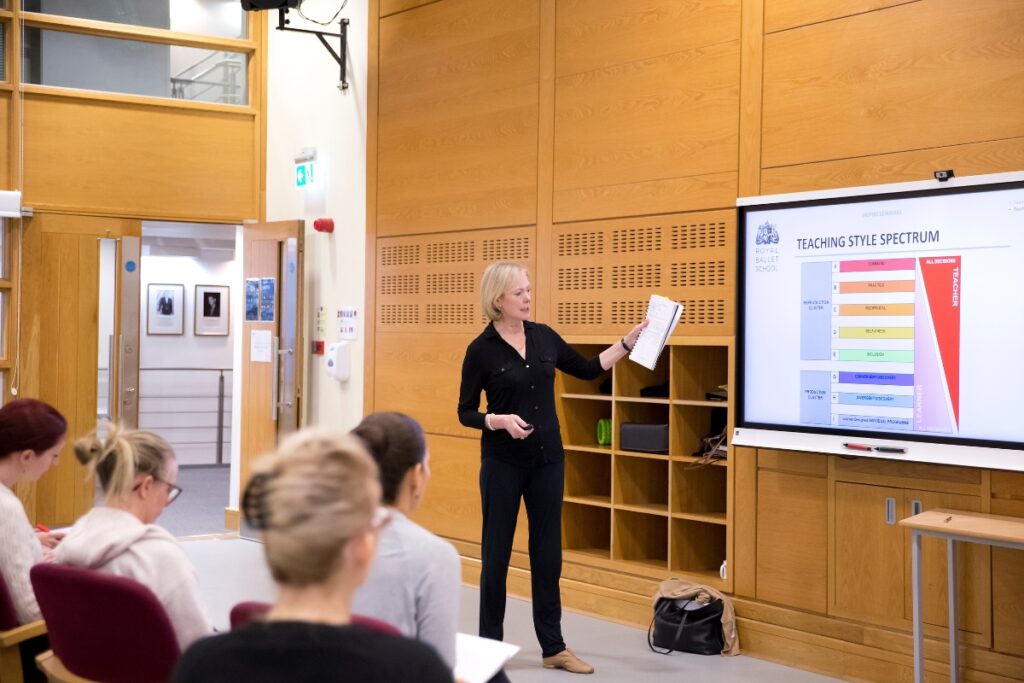
Our Inspire and Enlighten programmes sit firmly in the CPD space. They are designed to enhance teaching practice rather than provide initial certification, and they are aimed at teachers who want to ask questions about how and why they teach the way they do.
We want teachers who align with our ethos and philosophy: not those who simply want to learn how The Royal Ballet School works, but those who want to become better individual teachers. They know that traditional ballet methods alone are not enough, and they come to us looking for more tools and a genuine desire to deepen their practice.
TEACHER INSIGHT
‘A syllabus gives you structure, but it doesn’t give you all the answers. Teaching well means knowing when to adapt, when to challenge and when to step back.’
What are The Royal Ballet School’s Inspire seminars?
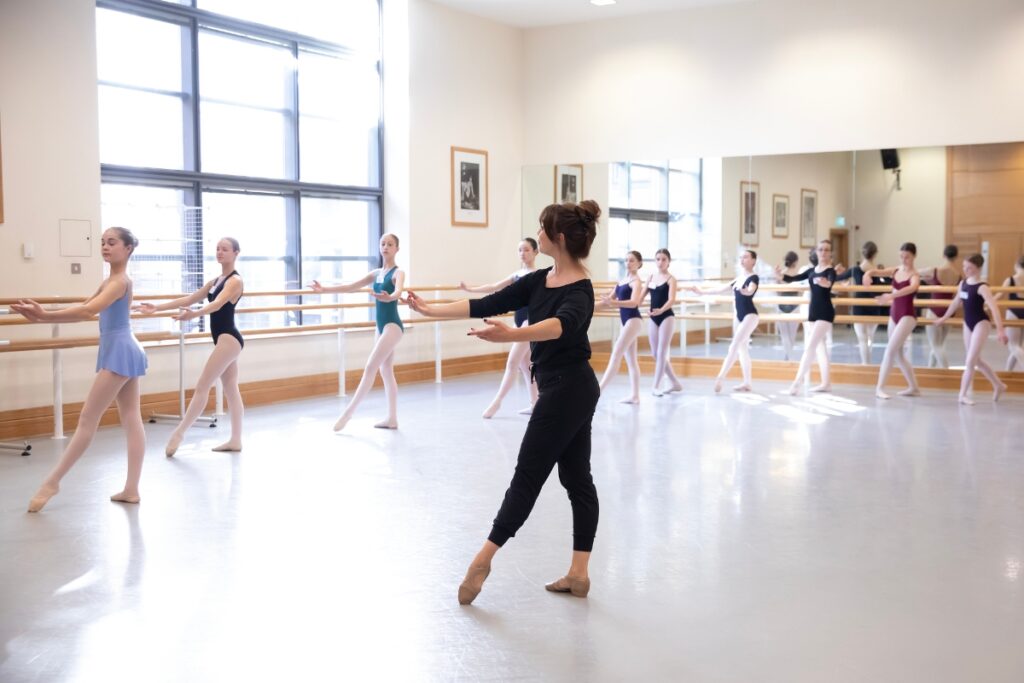
Inspire is our series of six one-day seminars exploring the foundations of classical ballet technique, more advanced elements of technique and artistry and principles of effective teaching, designed to support the professional development of teachers from all backgrounds.
These sessions combine practical studio work with genuine pedagogical insight, and they work well both as an introduction to ballet pedagogy for those newer to formal teacher training and as meaningful enhancement for more experienced practitioners. The balance between practical and conceptual work is deliberate: we believe that what you do in the studio and what you understand about how people learn are inseparable.
What are The Royal Ballet School’s Enlighten webinars?
Our Enlighten webinars provide flexible online professional development drawing on The Royal Ballet School’s extensive knowledge and experience as a world leader in dance education.
Unlike Inspire, Enlighten webinars assume a degree of existing knowledge and are not introductory-level content. They are an excellent supplement to the Inspire series and are particularly well-suited to teachers looking to develop a robust continuing professional development portfolio. Each webinar offers insight from experienced educators, and the online format makes them accessible to teachers wherever they are based.
TEACHER INSIGHT
‘The most valuable part of continued training is the opportunity to reflect; teaching can become routine, and these moments allow you to reconsider how and why you do things.’
What is The Royal Ballet School’s Diploma of Classical Ballet Teaching?
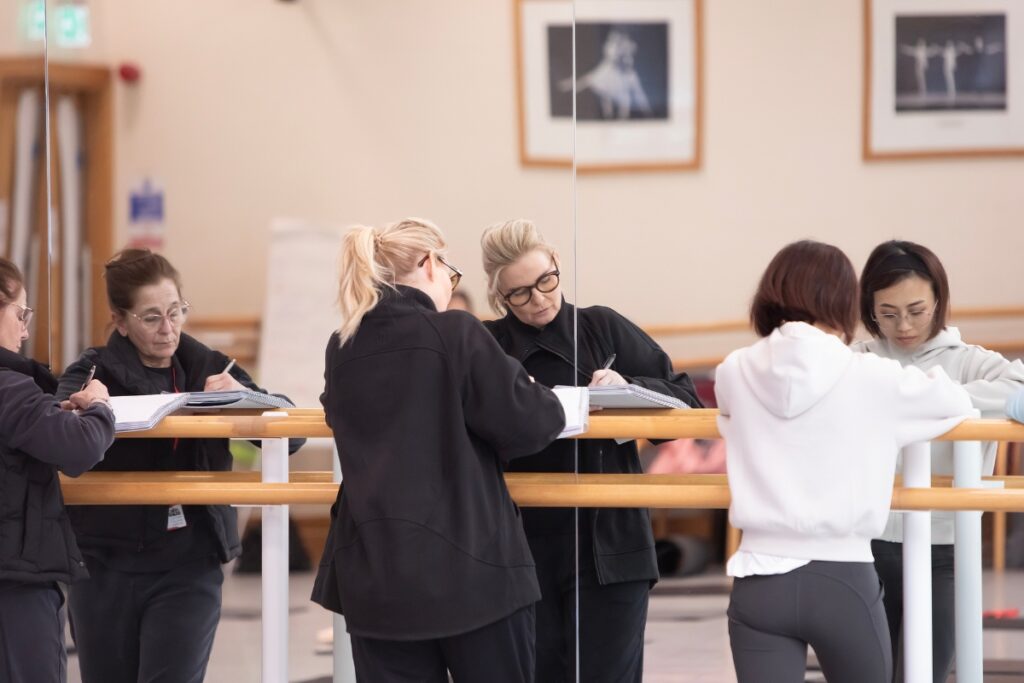
The Diploma of Classical Ballet Teaching is our two-year, part-time programme that trains professional dancers and early career to experienced dance teachers to teach classical ballet to a world-class standard.
The Diploma provides a sound foundation in technical and holistic approaches to teaching ballet to pre-vocational and vocational students. It draws on the School’s vocational vocabulary and methodology, incorporating the most current developments in pedagogy, and allows teachers to specialise in either vocational or pre-vocational settings depending on the direction of their career. This is the most comprehensive route we offer, and it reflects the depth of commitment we ask of the teachers who pursue it.
What is The Royal Ballet School’s Affiliate Programme?
Our Affiliate Programme is a unique training and assessment programme for private and recreational dance teachers, designed to be delivered in their own schools. It is an innovative alternative to syllabus-based models, one that equips and empowers teachers to guide, assess and support a broad range of students to learn how to learn, and to value the process itself.
There are two pathways, depending on the level of commitment a teacher is looking for:
- Intensive training only: a one-off course that allows teachers to experience the Affiliate Programme’s content, values and methodology and receive feedback on their teaching practice, without the long-term commitment of full affiliation
- Full Affiliate Teacher training: a structured programme comprising an introduction webinar, a five-day in-person intensive training course, training for Affiliate Programme Levels 1 to 3 (for students aged five and above), a pre-Affiliation trial implementation period and ongoing post-Affiliation training sessions to support teachers through the student assessment process
- Once trained in Levels 1-3, teachers can enrol in training for Levels 4-6 and L4-6 Enhanced (suitable for prevocational students).
Affiliate teachers also receive full access to a bespoke, video-on-demand platform featuring over 300 videos, exclusive access to study Frederick Ashton repertoire provided by the Frederick Ashton Foundation (Levels 4-6) and access to ongoing professional development opportunities.
Key takeaway
The most effective ballet teachers engage with multiple forms of training throughout their career, combining initial qualifications, practical experience, and continued learning. Our programmes at The Royal Ballet School are designed for the teachers who understand that the work of improving never stops.
Frequently asked questions about ballet teacher training
Do you need a qualification to teach ballet in the UK?
There’s no legal requirement in the private studio sector. Maintained schools require Qualified Teacher Status (QTS). Further education settings require QTLS.
What is the difference between Ofqual-regulated and university-validated teaching qualifications?
ISTD, bbodance and IDTA qualifications are regulated by Ofqual and sit on the RQF. RAD qualifications are validated by the University of Bath and sit on the FHEQ. The levels are equivalent in practice, and both routes are recognised across the sector. Neither is inherently superior.
Can professional dancers enter teacher training without a prior teaching qualification?
Yes. Most Level 4 programmes accept candidates with an Intermediate-level dance examination or recognised equivalent. The Royal Ballet School’s Diploma of Classical Ballet Teaching is designed for professional dancers and early career to experienced dance teachers.
How long does it take to become a qualified ballet teacher?
It depends on the route. The Royal Ballet School’s Diploma is two years part-time. bbodance’s Diploma Introduction to Dance Teaching takes six to seven months. RAD’s Certificate in Dance Teaching takes two years part-time. ISTD’s DDE typically spans two to three years depending on the Approved Dance Centre.
Can you study ballet teacher training online or part-time?
Every major UK course is available part-time. The Royal Ballet School’s Diploma currently runs in person on Fridays during term time, with hybrid delivery planned from 2027. RAD’s Certificate is primarily distance-learning with one five-day in-person intensive per year. bbodance’s Level 3 and Level 4 qualifications combine online and studio-based learning. ISTD’s DDE runs through Approved Dance Centres with varying models.
What can you do with a ballet teaching qualification?
A Level 4 qualification may open doors for you into private dance studios, community settings, and recreational dance schools. The Royal Ballet School’s Diploma gives access to the School’s Affiliate network and registered teacher status across RAD, ISTD, and bbodance. Syllabus-specific qualifications from RAD, ISTD and bbodance also qualify you to enter students for that organisation’s examinations. The Royal Ballet School’s Diploma and higher qualifications at Level 5 and 6 support progression into senior teaching, teacher training and academic roles.