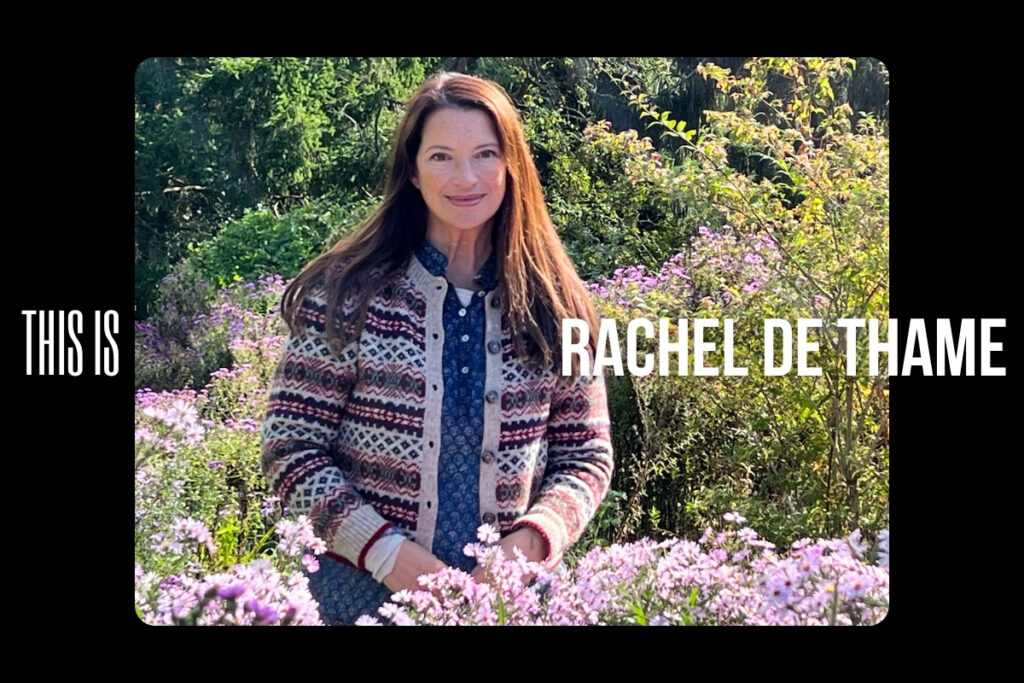

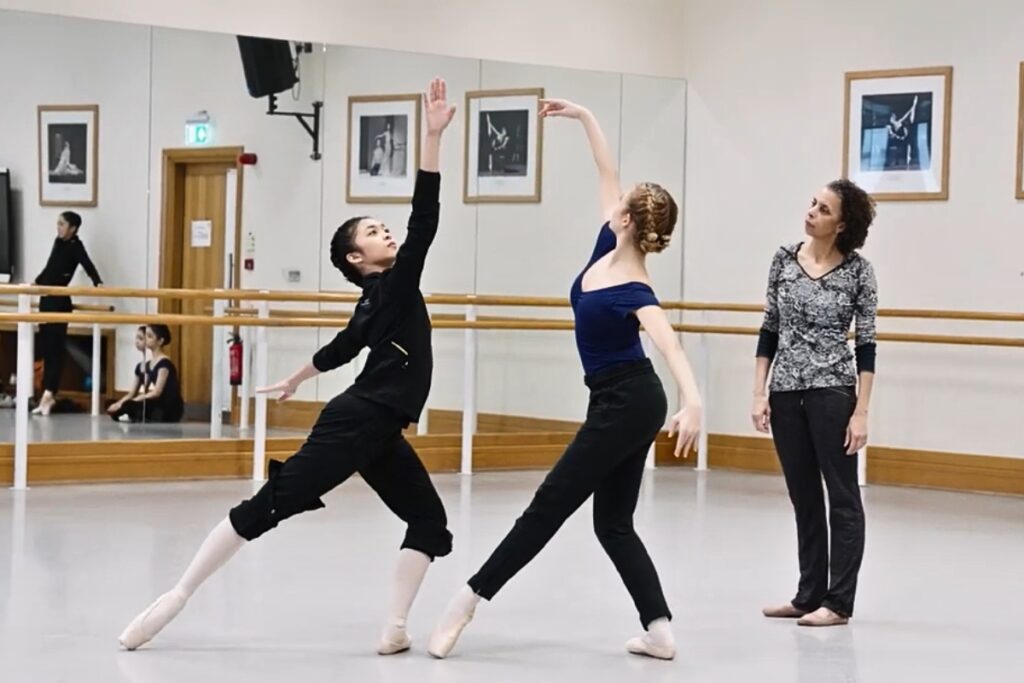
Guest choreographer Dr Adesola Akinleye on reclaiming ballet in her work ‘Sycorax’s Tempest’ for our Centenary Insight Days
Content warning: story includes references to slavery, racism and misogyny. Readers may find themes in this interview sensitive or upsetting, but we feel it is important to share this commentary.
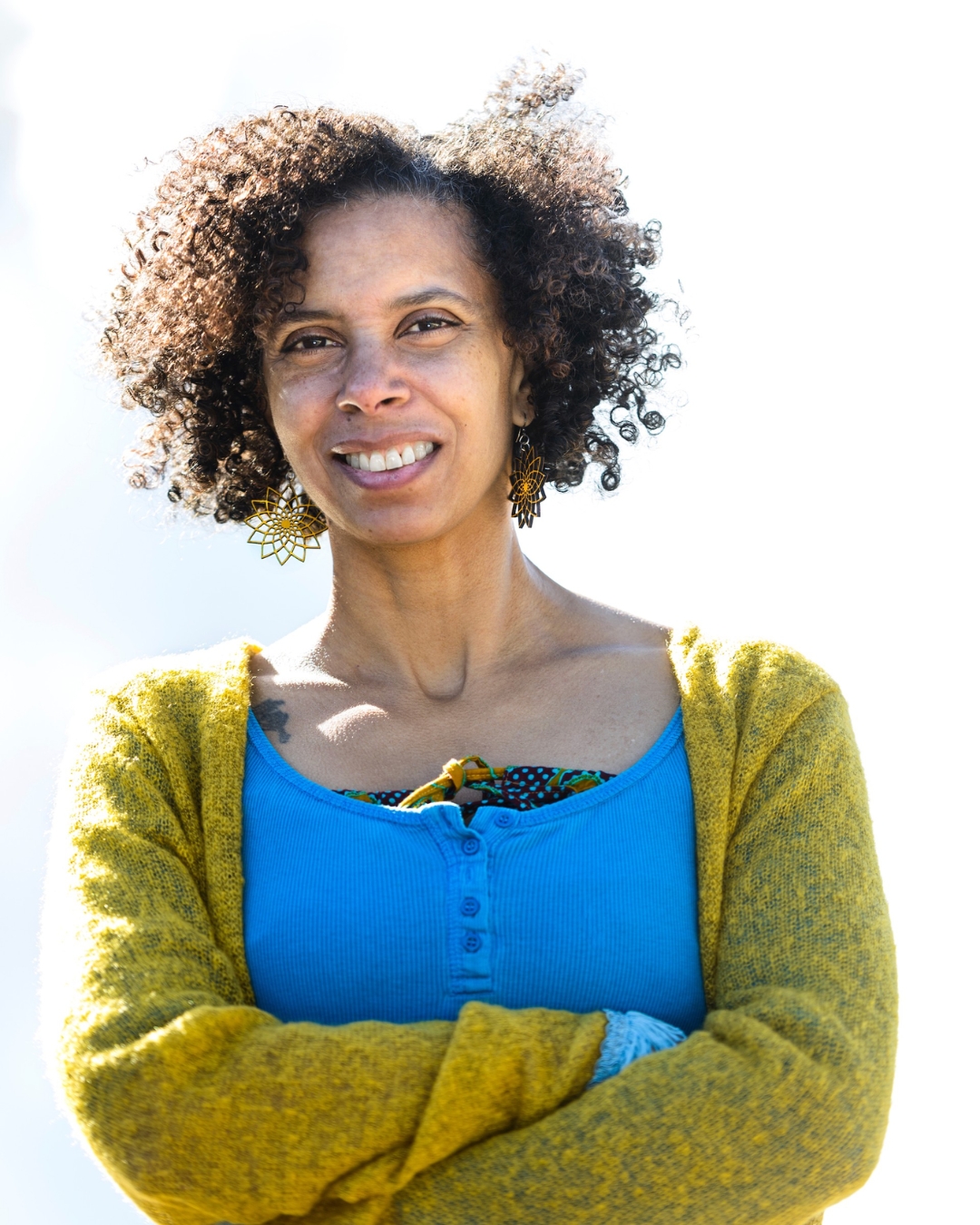
How can ballet be a force for healing and change? Guest choreographer Dr Adesola Akinleye explores this question and more in her ballet Sycorax’s Tempest, which will be performed at the School’s centenary insight day: our future on 22 March 2026
Adesola has been working with eight 2nd Year students this term on the latest sections of her ballet. She choreographed act one with Texas Christian University in 2024 and act two with the University of Utah in 2025. Now, she is building excerpts from the beginning, middle and end of the ballet.
I feel like the students have been really porous. They bring themselves fully to the work even when they have a lot going on. They’ve been very open to thinking about new ideas and interpreting them through their bodies.
Sycorax’s Tempest reimagines William Shakespeare’s 415-year-old play The Tempest. The play is about Prospero, the former Duke of Milan, and his daughter, Miranda, who are stranded on a remote island. The island was once ruled by a witch named Sycorax, but only her son, Caliban, remains, who Prospero enslaves. Tensions rise between Caliban and Prospero, resulting in conflict throughout the play. Although Sycorax never appears in the original play, Adesola chose to hero her in this ballet, which features themes of forgiveness, healing and reconciliation.
Adesola was inspired by scholar Sylvia Wynter’s afterword to Out of the Kumbla (1994) titled ‘Beyond Miranda’s Meaning: Un/silencing the ‘Demonic Ground’ of Caliban’s ‘Woman,’’ which discusses how Sycorax is integral to the narrative yet never appears as a character, only mentioned in dialogue.
I thought, what if we put Sycorax back into the story and told it from her perspective? What if what actually happened was that a mother’s love sorted everything, so that Prospero makes friends with his family, Caliban is free and the island is not a destitute place anymore? Isn’t that what mothers often do, be slightly behind the scenes, trying to make a space for their children to be able to move forwards? Isn’t that what we want to do as a generation, to be behind the scenes, making space for the next generation to live in more harmony and togetherness?
Adesola later watched a documentary investigating Sir Francis Drake and learned about Maria, a black woman captured by Sir Francis’s crew from a Spanish merchant ship. Maria became pregnant while on board and was subsequently abandoned on a remote island – a story that runs in parallel to that of Shakespeare’s fictional Sycorax. Historically, women were considered to be bad luck on board ships, which led Drake’s sailors to document Maria’s unusual presence in their journals. Shakespeare and his contemporaries would likely have been familiar with her story.
People weren’t advertising what Sir Francis Drake was doing – he wasn’t meant to be engaging with the Spanish – but it would have been in the common discussions. A lot of people wrote about the fact that Maria was on board because it was scary and unusual.
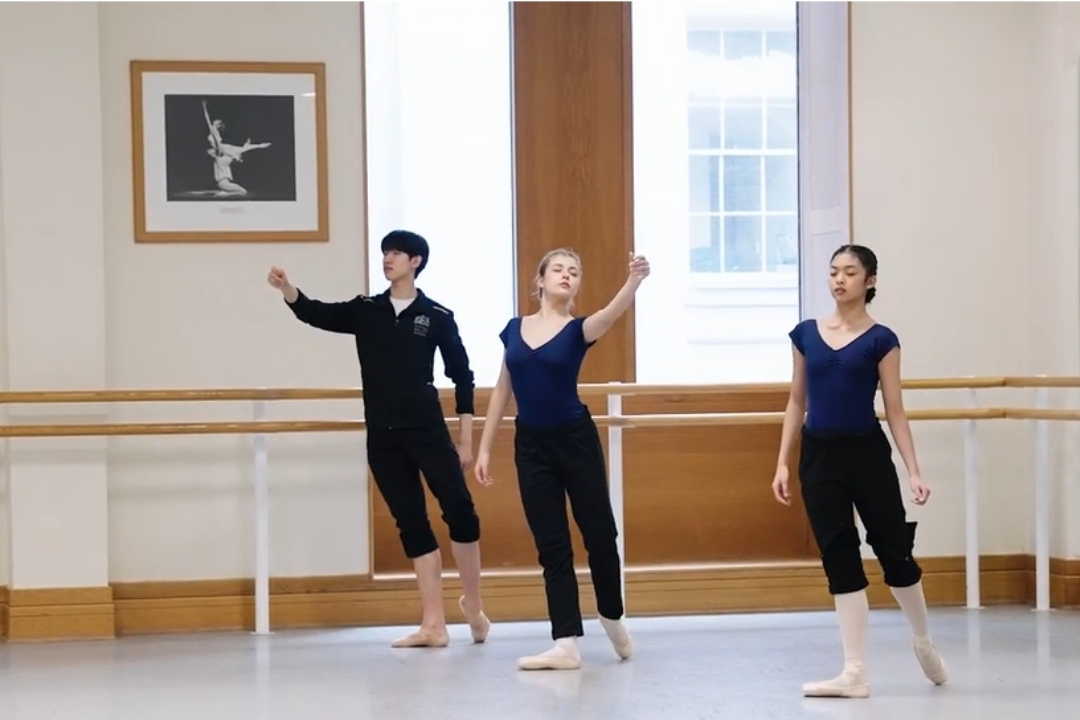
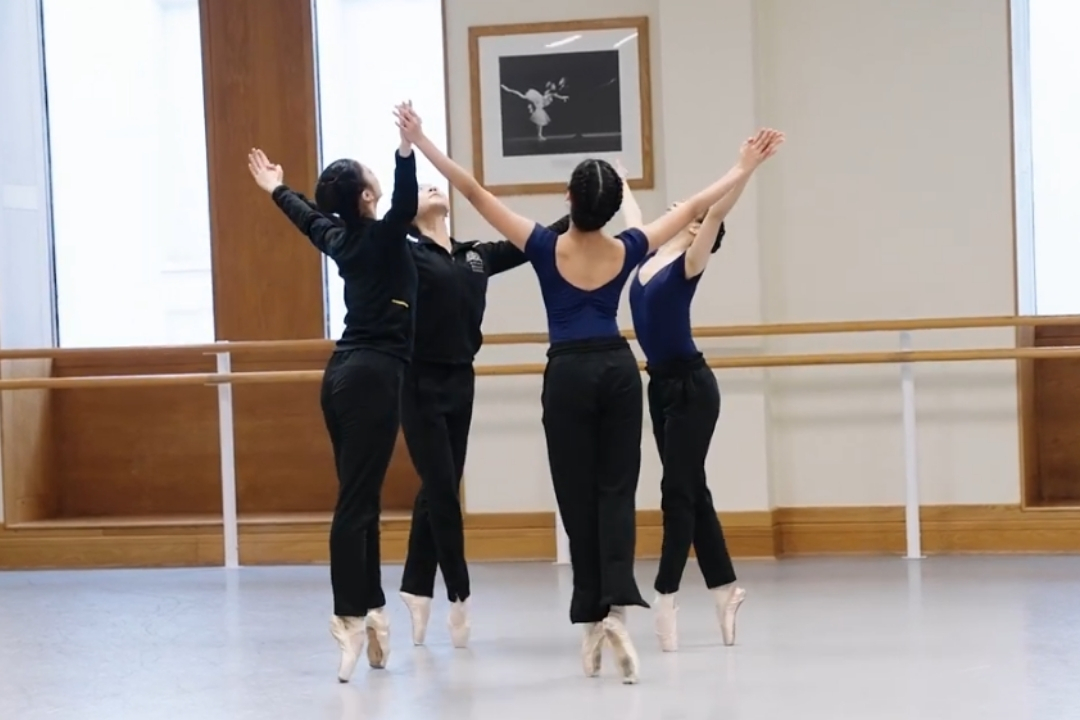
Above: students rehearse the trio and quartet from Sycorax’s Tempest
Adesola’s choreography draws inspiration from the ocean and from trade routes, particularly those from the transatlantic slave trade between West Africa and the Americas. She will be presenting a duet, trio and quartet at the insight day along with a talk diving into her research behind the choreography.
The first duet is about storms and sirens of the sea. To me, Sycorax carries the spirits of all the women in the ocean. There were a lot of mothers who jumped off slave ships, sometimes with their children, because they wanted to save them from enslavement. This duet is about the idea of all of those mothers rising up and creating the tempest.
The middle trio is the ‘eyes wide open’ section, a famous quote from the play in act 2, scene 1: ‘With eyes wide open; standing, speaking, moving, / And yet so fast asleep.’ The courtiers are wandering the island and are not completely present. I see it as Shakespeare critiquing how we are wandering around, allowing bad things to happen and yet not doing anything about it.
The last quartet is from the prologue about forgiveness. I think of them as the spirit of the island healing itself. We were talking about spirals, jellyfish and the idea of circles of healing in rehearsal. There are philosophies from indigenous Pacific island nations about how they engage with the sea, thinking of things being in flow rather than being grounded.
Adesola acknowledges the colonial context to this story and discusses how we reckon with this painful historical period in modern times.
The dancers and I were talking about how Prospero is saying, ‘How can you forgive me? I want to be able to go back to being in harmony with everything and being there for the people I am meant to.’ I feel like it becomes much more of a hope for the future, and so it ties in with this idea that we all love ballet, and part of the love is that ballet is so human. When you’re watching someone dancing, or when you’re dancing yourself, you can express this idea of humanity. We have a unique ability to show people humanity through movement: what does it mean to care for each other, forgive each other and dance together?
Ballet has a unique history of having traveled around the world and, as discussed in my book, (Re:) Claiming Ballet, having been used as a political tool and kept its connection with art. Ballet is in a unique place to say, good and bad things have happened, but now we’re focusing on how we move forwards together and heal those spaces. Ballet can be a positive force for change, which is not always how it is perceived.
When you watch somebody dancing, you connect with them, but if some people never get on stage, you never get to connect with them as human beings. It has been gatekept: who can be human, who can have those emotions? Yet, as we break those doors down, we can use it as the perfect space to say, yes, look at all these different types of bodies and people. We can connect with them through this humanity of dance.
On what she hopes for the next 100 years of ballet, she says:
I don’t feel like it is useful to have a clear vision of where the next 100 years are going. I have been reading Braiding Sweetgrass by Robin Wall Kimmerer about the Anishinaabe Nation and the seventh fire, which is about going back and picking up the tatters to weave them into the future. We’ve hurt each other and lost things, so I feel like there’s something about going to pick up the pieces that haven’t been threaded in.
Groups have been excluded from ballet, and now we are opening up. But that isn’t the future – they have been here this whole time. Now it’s about finding those threads and asking, ‘How can we pick this up?’
I feel like the future is to decide that there is a future before we decide what it’s going to be. Part of deciding there is one is Sankofa – the idea of looking back to move forwards. Sankofa is a concept from West Africa about honouring your ancestors and bringing them forward. So it is that Sankofa moment, or the seventh fire, where healing work is to be done, for the universe, the planet and the environment. Otherwise, there is no future.
Watch Excerpts from Sycorax’s Tempest and hear more from Adesola at our Centenary Insight Day on Sunday 22 March 2026. Attend in-person at Upper School or online from anywhere in the world. A recording will be available for a month following the event.
Book your tickets here.