
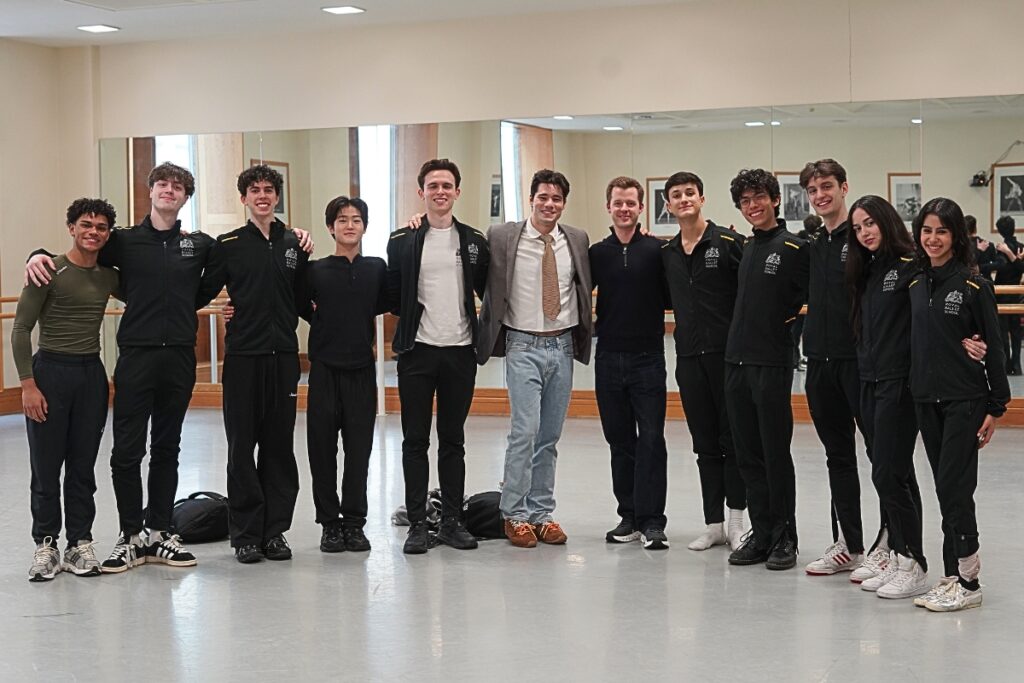
‘The work was the goal and the gift:’ Creative Artist Talk with New York City Ballet Principal Jovani Furlan
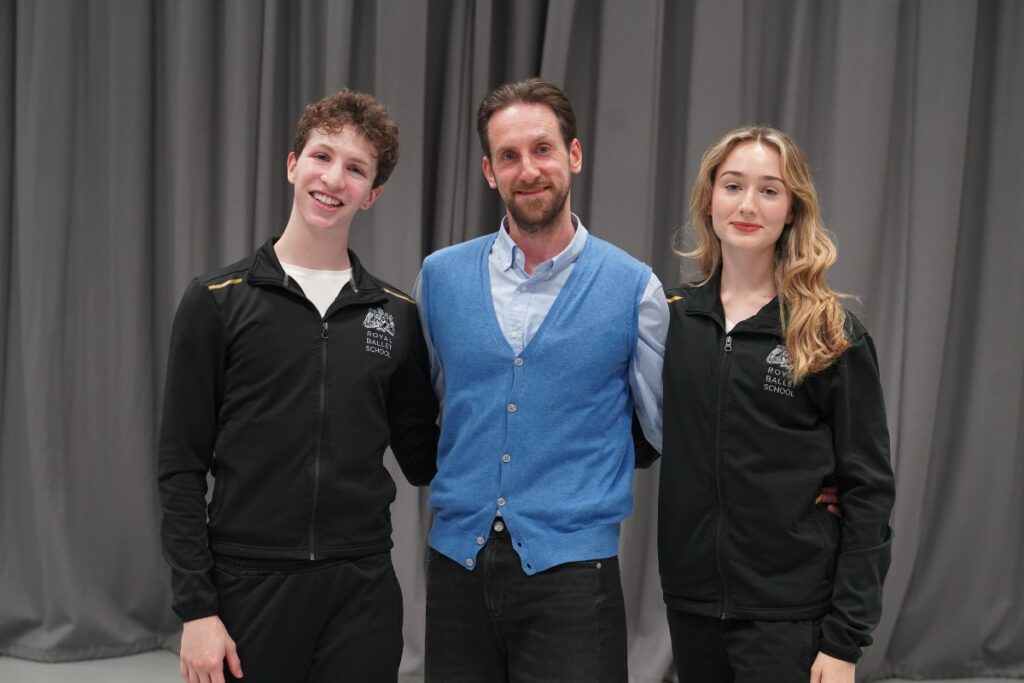
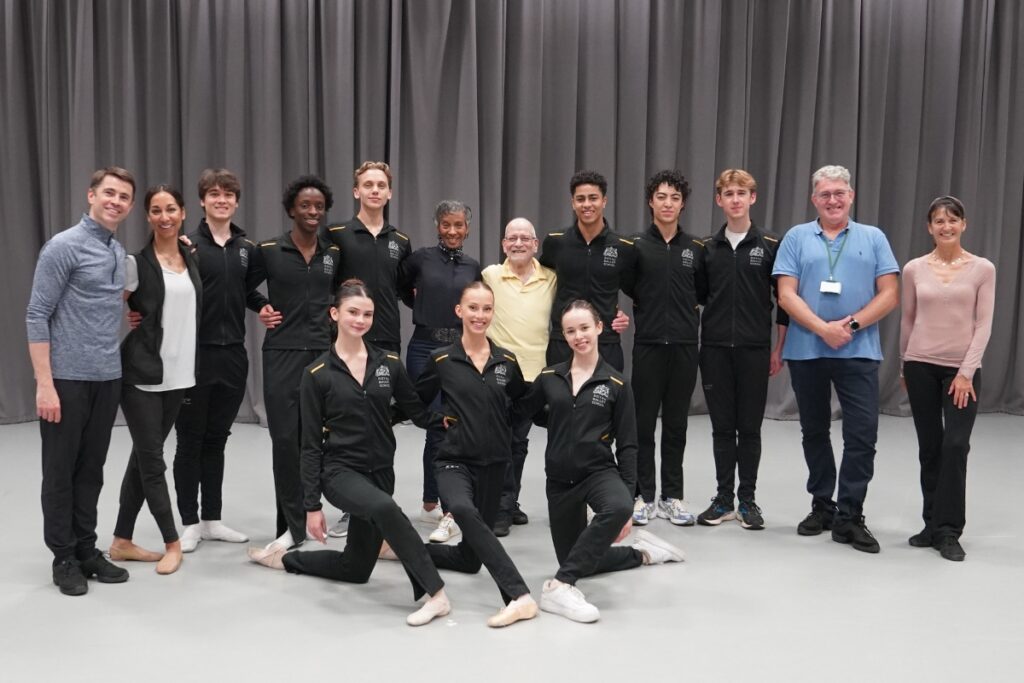
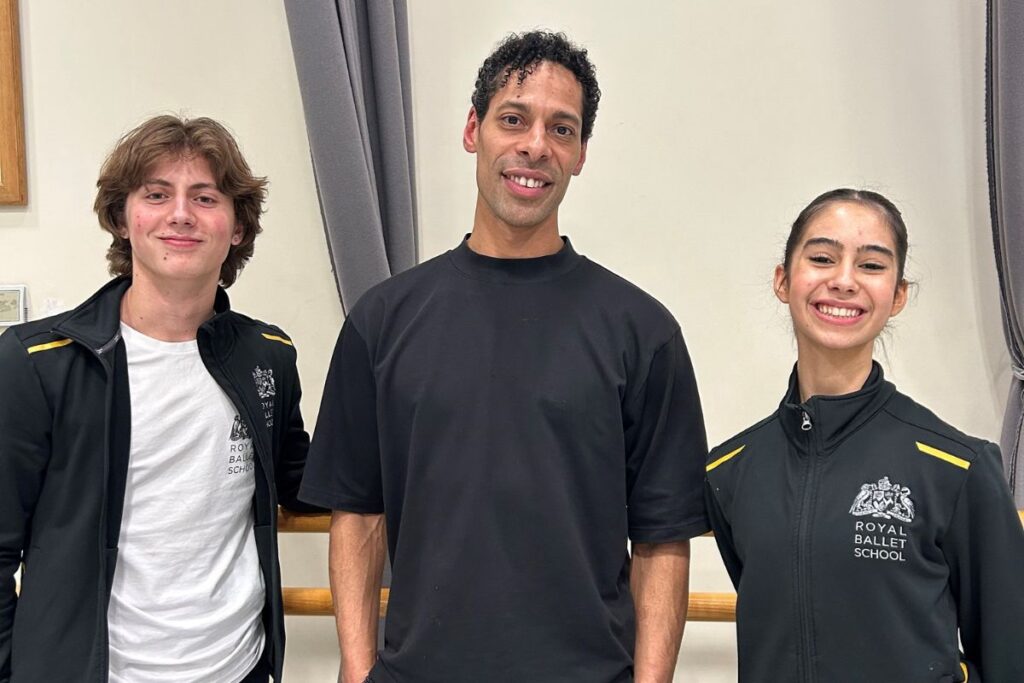
Earlier this year, New York City Ballet Principal Jovani Furlan stopped by the School to give a Creative Artist Talk to our Upper School students while in town teaching three different workshops across London and catching the Turn It Out with Tiler Peck and Friends shows at Sadler’s Wells.
Jovani started dancing aged 11 at The Bolshoi Theater School in Brazil. ‘It was very serious, very disciplined,’ he recalled. ‘I first fell in love with the hard work. I didn’t even put my hand on the barre or do a port de bras until around eight months or a year into my training. As the years went by, I started falling in love with ballet when I could actually dance in the centre and feel what we were working towards. YouTube was getting bigger, and when I was 12, I watched videos of performances. That’s what really informed me. By the age of 13-14, I knew I wanted to dance for my job.’
Even in his home country, The Bolshoi Theater School was a cultural immersion. ‘All the teachers came from the Bolshoi Academy in Moscow and only spoke Russian, so we always had a translator in the room. It made it feel like a very serious environment.’
In 2010, he participated in the International Ballet Competition in Jackson, Mississippi and was offered a full scholarship to attend the Miami City Ballet School from Edward Villella, the Founding Artistic Director of Miami City Ballet. ‘I studied at the school for seven years then participated in the Jackson IBC, which only happens every four years.’ Although the Bolshoi Theatre School did not like competitions, Jovani learned a lot about his peers and other training styles. ‘I definitely saw how much more I had to work, because I was very happy in my studio, just trying to do four clean pirouettes. But then in the competition, people were doing eight or more, and I felt my level was just not the same.
Luckily, Edward saw something beyond my technique and offered me a scholarship. I think competitions can be really great, but ultimately, once you get into a company, artistic directors want to see uniqueness, personality and musicality. A lot of people can do 10 pirouettes, but that doesn’t mean they are going to have amazing careers.’
He moved to Miami in 2011 to train at the school, then he joined the Miami City Ballet in 2012. He was promoted to Soloist in 2015 and Principal in 2017. ‘My dream was always to go to the United States. I was only at the school for about three months. I joined in January 2011, then they offered me an apprenticeship in April. I was just excited and went for it. I had a lot of openness and curiosity to learn. I fell in love with the training from the minute I took my first class and got corrections about how things were supposed to feel and how we are supposed to attack movement.’
Jovani felt like it was a fast-paced career move to leave the school so soon but experienced a steady progression through the ranks. ‘I was an Apprentice learning Cavalier from The Nutcracker in my first year. Then, I think I did three years in the Corps de Ballet, two years as a Soloist and then Principal.
When I started dancing, my dream was to get into the corps of a company. I never dreamed of being a Principal, but when I started learning Cavalier from The Nutcracker in my first year, I realised that I might have something. When I became a Soloist, I was hungry to work to become a Principal. Then once I got there, the work made me want to keep going. It’s the goal and the gift. When you become a Principal dancer, you have more freedom. You get to do more roles, but you also have more authority over what you do. I love the work even more and feel like I can give myself more freely to it.
I had surgery in my first professional year, and I really thought that was going to hinder everything, but I kept working. There was also a change of Artistic Directors. Edward
retired, then Lourdes Lopez took over. Thankfully, she liked me. Sometimes it doesn’t matter how great a dancer you are. Dance is subjective. Sometimes, you are not the director’s pick, and you have to decide if you want to stay or go somewhere else.’
Jovani joined New York City Ballet, founded by choreographer and innovator George Balanchine, as a Soloist in August 2019 and was promoted to Principal in February 2022, where he continues dancing today. ‘At New York City Ballet, there are 102 dancers, and only four of us didn’t go to the School of American Ballet. When I first found out about the company, it became my goal to join, but I thought it couldn’t happen because they only hired from the School of American Ballet. But when they changed directors in 2018 and Peter Martins left, I saw a window of opportunity, so I just sent an email.
At the time, my point of contact was Resident Choreographer Justin Peck because we had been working with him at Miami City Ballet. I emailed him and said, hey, I know this is a little unorthodox, but I would love an audition. I auditioned that same week. Honestly, I was a Principal at Miami City Ballet, but if New York City Ballet offered me a corps contract, I would have taken it.’
When asked about the stylistic changes between dancing in Miami and New York, Jovani said, ‘Even though I have been dancing for 15 years in Balanchine companies, my training still looks different. I still stand out, I guess in a good way, but it still feels shocking, especially the speed and how people have tighter fifth positions than I do. The partnering was the biggest change, but it’s also my favourite. It’s very daring and hands off in a way. The ballerina has to do a lot, but the man does, too. There is a lot of one-handed partnering, letting go then catching after turns.
I think the main difference is the speed and musicality. Everything felt so square to me before. Everything comes from the barre. When you take a Balanchine class, you do three or four tendu combinations at the barre, from very slow to very fast, changing rhythms. You also turn from a straight back leg and spot front, but I think that is just fun. I loved making that change.’
He shared that there is never a dull moment in company life, with new repertoire to perform every season. ‘We work about 40 weeks per year with 25 weeks of performances. In those 25 weeks, we perform around 60-70 ballets. I would never be in all of them, maybe 20-30. Typical days start with class, either 75 or 90 minutes long, then up to six hours of rehearsal. There are days when I only have a 15-minute rehearsal because there are
another 20 ballets to rehearse. There is no time to digest everything. You are just going and going. It’s amazing but very different from any other workplace.’
Over his career, Jovani recalled several mentors who helped shape him as an artist. ‘My first teacher at Miami City Ballet School was Carter Alexander, who shaped me a lot. He trained a lot with a very iconic teacher, Stanley Williams, who trained under Balanchine. Then my first boss, Edward Villella, was amazing. He was a very raw person and dancer, so I think he instilled that in me. I work on my technique a lot, but I definitely didn’t make it to where I am just with my technique. It was because of how I approached dance. Carter gave me that base and technique, then Edward set me free.’
His favourite ballets are a mix of Balanchine and other master works. ‘My favourite thing to dance is any Balanchine black-and-white ballet. Agon would be number one. It’s very abstract. From the classics, thankfully, I also had a career before New York City Ballet because I’ll never do this here: Giselle. I am grateful I got to dance that at Miami City Ballet. I also love dancing Balanchine’s Rubies.’ On how to feel confident, Jovani said, ‘Trust the work. I had to tell myself, if they think I’m ready, then I’m ready. Even coming here for example, I could be scared of talking to you guys. This is The Royal Ballet School. It is on a pedestal in the world. But I told myself, if I’m here, it’s because people trust me. I approach my dancing the same way. Put in the work and believe that’s enough.’
He also has many goals outside of performing, including running his brand, Furlan Dancewear. ‘I started a business four years ago, which I’m very happy with and passionate about. Honestly, I feel like I’m steering my life more that way rather than being in the studio. My family always owned their own businesses, so that was very ingrained in me. I feel that’s the route I want to take in my life. I’m 32 now, so I still want to dance for five, maybe 10 more years. Then, I want to grow my business and still be involved in dance. I also really enjoy doing things like this, talking to younger generations and giving different perspectives.’
Although Jovani is popular on social media, with over 230,000 followers on Instagram, he warns the next generation to not judge themselves based on a curated online presence. ‘Have patience not just with your career but also with yourself. It’s so hard to grow up surrounded by social media because everything is a curated version of people’s lives. I do social media a lot and even I forget. Sometimes, I start comparing myself to others, then I remember that everyone is curating the best version they can. So, be patient with yourself in your real life and trust that the work you do is enough.’
Catja Christensen is the Marketing and Communications Executive at The Royal Ballet School and joined the School in 2025. She enjoys interviewing students, staff and guest artists for news stories and crafting eye-catching newsletters.