
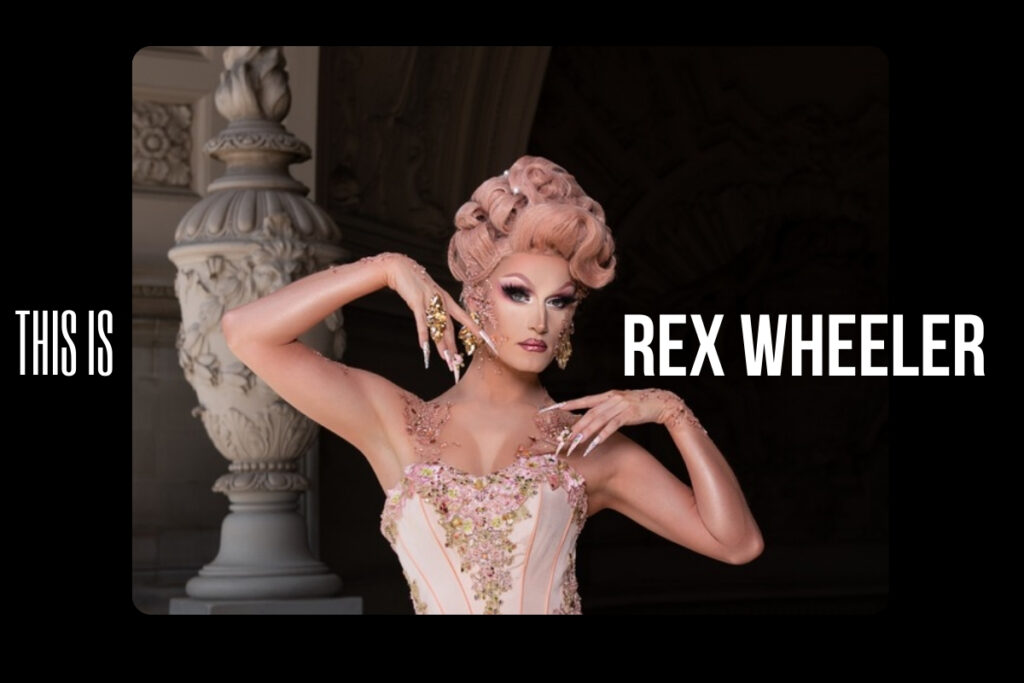
100 stories: Rex Wheeler
As part of our centenary year, we are featuring 100 stories that make up The Royal Ballet School’s past, present and future. Today, we share the story of alum, dancer, choreographer and drag queen Rex Wheeler/Lady Camden.
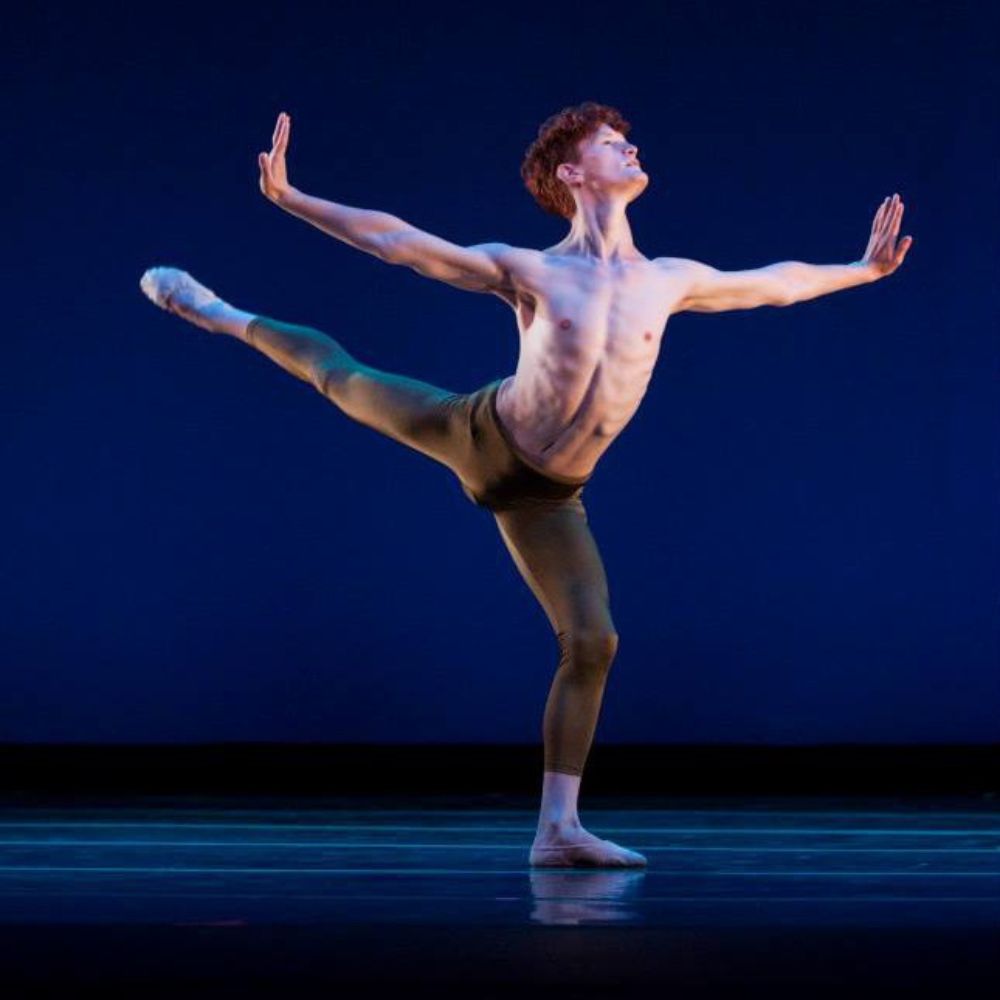
Rex attended White Lodge before graduating from Elmhurst Ballet School. He danced professionally with Slovak National Ballet, Sacramento Ballet and Smuin Contemporary Ballet. Rex is still based in San Francisco where continues to choreograph and produce shows around the US.
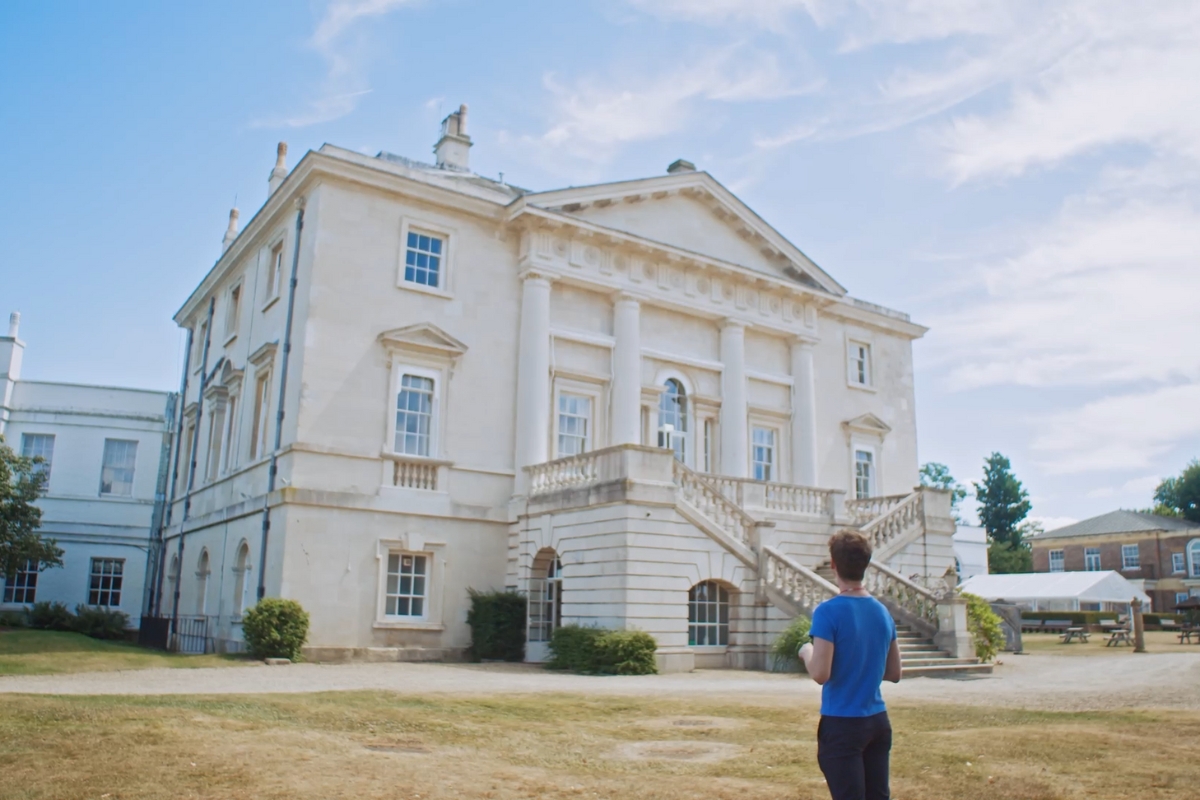
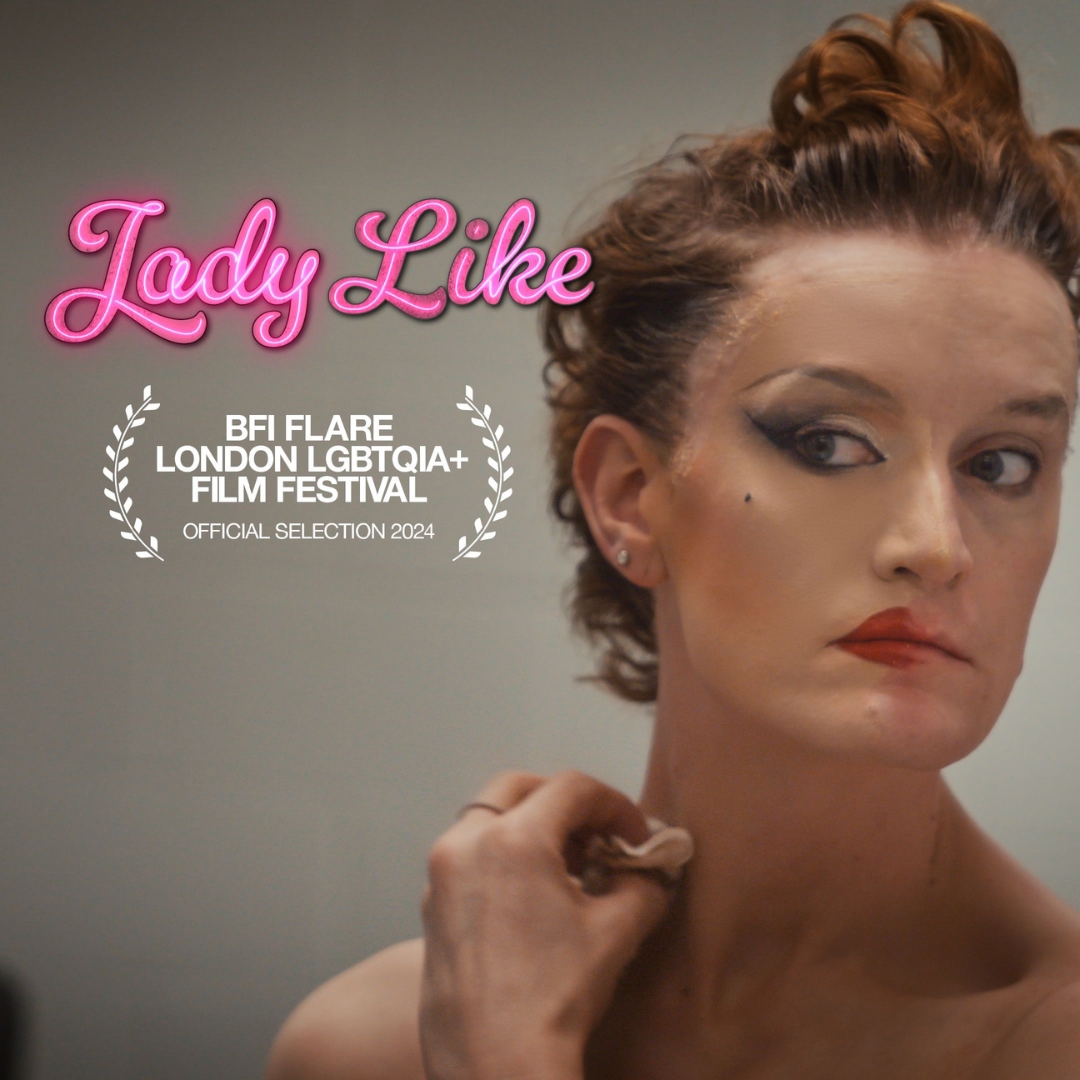
Rex fell in love with drag while living in San Francisco. He competed and was the runner-up on season 14 of RuPaul’s Drag Race as Lady Camden. Filmmaker Luke Willis created the docu-fiction film Lady Like, which follows the story of Rex Wheeler and his drag persona, Lady Camden, as they work in tandem to heal and inspire Rex’s inner child to live life authentically. In the film Rex returns to White Lodge to recall his time as a student and reflect on the love of ballet and the power of dance as an art form.
We caught up with Rex about his experience as a student, as a professional, and his discovery of drag and the creation of Lady Camden.
When did you first start dancing?
I started when I was 11 or 12. After dancing for a few years, I wanted to audition for White Lodge. My dance teacher thought it was too soon and that I didn’t have the feet, but when someone tells me I can’t do something, I think, ‘I’ll show you!’ She saw how determined I was and that I was improving quickly. She gave me some extra help in the studio, and I entered the School in Year 10.
What was it like to go from a state secondary school to White Lodge?
I went to a rough school in North London. It wasn’t a place where an aspiring ballet dancer who’s queer and skinny felt at ease. I didn’t tell anybody I was going to ballet school because I knew I would be bullied for it. When I got into White Lodge, it was a sigh of relief because I knew I was going to an environment where I could enjoy being a dancer with other people who geek out about ballet. I still remember the final audition at White Lodge, driving through a frosty Richmond Park and everything feeling so magical.
After White Lodge, I went to Elmhurst for three years with one of my best friends from The Royal Ballet School, Jade Heusen. We were Head Boy and Head Girl. I was the worst Head Boy ever, avoiding all responsibility! After that, Jade went to Birmingham Royal Ballet, and I went to Slovak National Ballet, Sacramento Ballet and Smuin Contemporary Ballet.
What was your experience like in those companies?
I loved company life because it’s what you dream of in school. It’s fun being part of a bigger entity and getting opportunities to dance bigger roles as time goes on. At Sacramento, they had a choreographic workshop for company dancers every year. We also did a lot of American repertoire there, including Balanchine. There was emphasis on musicality, dynamics and energy, which opened my mind to play with classical music differently.
I was with them for five years but wanted to explore contemporary styles, so I went to Smuin Contemporary Ballet in San Francisco, which is a fabulous city, especially for someone openly queer. The company is small, only 16 dancers, so it was a lot of dancing. Unfortunately, I had a recurring injury. When you’re injured, it forces you to think about other avenues. I knew I wanted to explore my creativity, so I started to pursue choreography. I have a great relationship with Smuin, choreographing and staging works for them.
How did drag come into your life?
I didn’t expect it. When I was at school, I thought I’d be a bunhead forever – classical ballet until I die! As I got older, I realised there was more in my heart and mind than being a silent dancer. I knew I needed to grow and do something scary or wild whilst still performing. When I was injured, there was a chunk of time when I was healing, so I would play with makeup. Then, I started to go to drag shows in San Francisco. I needed something to take the depressing injury out of my brain and get some joy from letting go, and those gay clubs with drag performances saved me out of that funk.
Once my injury healed, I would sneak into the clubs in drag, and they’d ask if I was a performer. I’d lie, get on stage and do pirouettes and kick my legs around. They thought it was amazing because it was something different to the other acts. I became competitive with myself and focused on getting better until I was able to make a living off it and transition out of performing in a company.
How did you go about creating your drag act, Lady Camden?
Lady Camden is always evolving. She can be regal but also an 80s popstar dressed in neon. I love childhood nostalgia, and the Spice Girls were the first women I fell in love with who were about being brave and bold. Sometimes being British, there’s a tendency to be demure and held back, but the Spice Girls were the antithesis of that. I take the artistry of what I do seriously, though. I want my act to have soul, and I appreciate taking the time to thoughtfully craft the act.
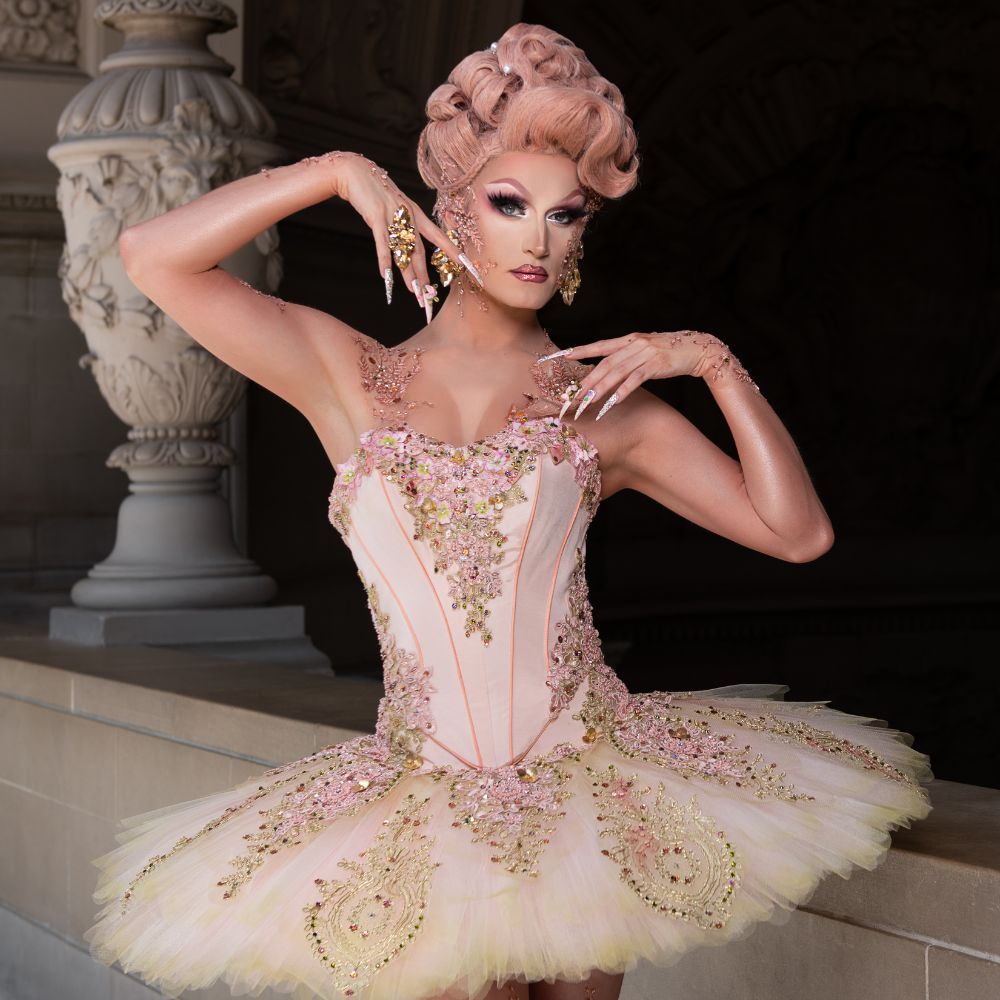
My love of ballet also comes into it. Whenever I want to be regal and refined, I think about Marianela Núñez and the dancers I love. On Drag Race, I created a tutu inspired by sets of The Nutcracker, which I recently showed Dame Monica Mason! I got invited to Onegin by Marianela, and when we were backstage, I saw Monica and instantly reverted to my 15-year-old self. I was always so in awe of her. She asked me who I was and what I did, and I was surprised because she knew about Drag Race, so I showed her photographs. She, of course, zoomed in to check my turnout, which was funny, but she loved seeing Lady Camden’s looks that I had created.
It felt like a full circle moment to be back at the Royal Opera House. I saw students watching, and it brought me back to those years of watching shows as a student. It was such a rich time, being in an environment where you don’t have to hide your passion, and you get to watch the best dancers in the world in this jewellery box of an opera house. It doesn’t get any better than that.
Why did you decide to apply for Ru Paul’s Drag Race USA? Tell us about the experience.
I’ve always been a fan of the show, and I had finally got to a place where I was making a living from drag. Then the pandemic hit, and there was no work. I was teaching ballet and acting on Zoom, which I enjoyed, but I had to support that with work in retail and restaurants. I honestly hated it. I missed creating and performing. I auditioned for Drag Race, my third time auditioning for the show, and I got it.
You made it to the final two?
I think that was down to my ballet background. I’m used to being compared to my peers, and I’ve learnt not only physical strength but also how to be smart with my body, how to be patient with progression, how to take care of my brain and emotions and how to keep my eye on the prize even when there are knock-backs. You need the drive and self-belief that you can do something even if everything else is telling you that you can’t. You learn whether you love something when you get knock-backs and how much you’re willing to fight for something that you love.
How did you find being on camera?
At first, I couldn’t stand it because nothing about ballet prepares you to be on reality TV. My anxiety kicked in, and I was so shy. RuPaul told me I needed to let go and stop hiding. I was used to striving to be perfect and polished with lots of preparation time, but I have learnt from drag how to let go of fear and say what’s on my mind. I also started to think about the camera men and women, and I didn’t want them to be bored, so I had to be entertaining.
Tell us about your documentary Lady Like – how did that come about?
During my season of Drag Race, I was creating fun content to post on my social media, making dance videos which were theatrical and had an element of storytelling to them. I was working on them with former San Francisco Ballet Soloist, Luke Willis. He resonated with my own personal story, where home life was heavy at times, but ballet was a sanctuary, and he wanted to document how the Drag Race experience would impact my life. In the documentary, Luke explores fame. It’s interesting when you’re exposed to the public how people express their opinions of you as if they know you. I quickly developed the strength to not care about criticism and be my own cheerleader.
Has there been a positive side to the fame you’ve experienced?
It’s a little crazy. I was at RuPauls DragCon UK earlier this month, and people have tattoos of me! It makes me feel like a rock star. I get some confidence from that. It’s special when people say something I’ve done has moved them, or that they like my ballet-inspired looks or how I acted in certain situations. A lot of people say that they’ve gone through difficult things, and Drag Race helped them through it. For a lot of people watching, drag sparks joy and is a happy place to distract from reality. It reminds me to do work that is honest and authentic to who I am because it can have a positive impact on someone else.
The last few years have been a whirlwind of touring. Now I’m reassessing what I want to do with drag and creatively in general.
How do you define success?
When I was a teenager, I saw success as linear. I thought, if I don’t get into Upper School and The Royal Ballet, then I wouldn’t be successful. I’ve learnt over the past 20 years that success isn’t always going to look exactly how I thought it would. I never thought I would be a drag queen. Success is whatever sets your soul on fire and makes you excited to wake up. Follow that feeling; it may not look the same as your peers’ version of success, but it’s about how something you’re doing makes you feel.
Are there any changes you would like to see in the dance or performing industries?
I think mental health support is a big one. I come from a generation where there wasn’t a focus on that. While I was on Drag Race, they provided a therapist to help with the experience and it was helpful because I had a lot of self-doubt, and they were instrumental in building my confidence to reach the final.
Another thing is the heteronormative values in ballet. I see both sides of the conversation: I understand the importance of tradition, and I’m not talking about taking away the joy of romance between a man and a woman on stage in ballet. Onegin melted my heart, but there is a greater shift in contemporary ballet towards varied representations of love and romance. It would be nice to see that in classical ballet, too. During my time as a dancer in any ballet company I felt my casting would be affected by how masculine I was able to present. I think seeing more diversity is important in the classical ballet world and something we need to keep pushing for.
Lady Like is now available to stream. Find out where you can rent or buy it here.
Header image: Rex Wheeler as Lady Camden, photographed by Maximillian Tortoriello.