
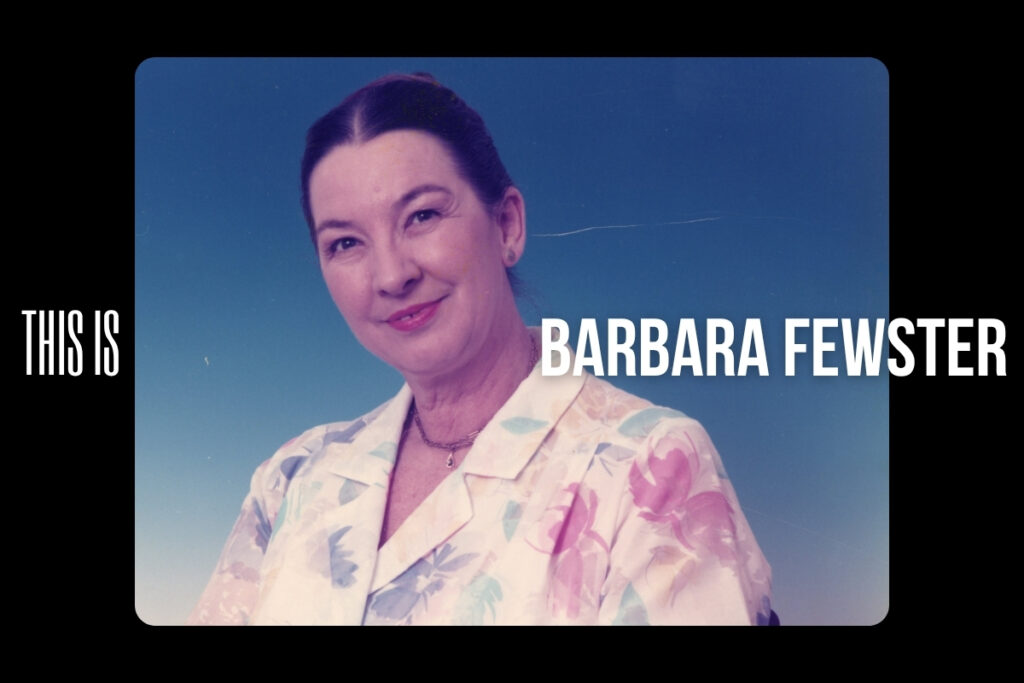
100 stories: Barbara Fewster
As part of our centenary year, we are featuring 100 stories that make up The Royal Ballet School’s past, present and future. Today, we share the story of alum Barbara Fewster, former Ballet Principal and Associate Director of the School.
Barbara was born 4 September 1928 and began dancing at the Wessex School in Bournemouth. She joined the Sadler’s Wells Ballet School in 1942, aged 15, and toured the country during World War II with Sadler’s Wells Opera Ballet. In 1946, she was a founding member of the Sadler’s Wells Theatre Ballet and toured post-war Europe.
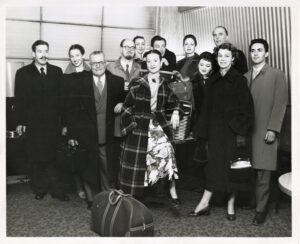
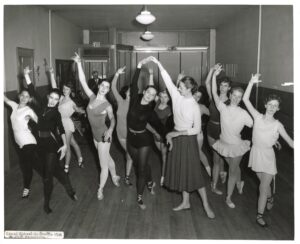
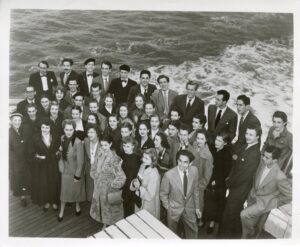
In 1947, Barbara was appointed Assistant Ballet Mistress to the Sadler’s Wells Theatre Ballet. She worked with Peggy van Praagh, later the founding Artistic Director of The Australian Ballet, who passed along Enrico Cecchetti’s teaching methods to Barbara. When Peggy became Assistant Director of the Company in 1951, Barbara took on the role of Ballet Mistress. In her final year with the company, she acted as the Ballet Mistress for the Old Vic’s famous Michael Benthall production of A Midsummer Night’s Dream, starring Moira Shearer and Robert Helpmann, which toured the United States in 1954-55.
Following her decade of performing, she began teaching at the Sadler’s Wells Ballet School, renamed The Royal Ballet School, in 1955 at the new location in Barons Court. She became Deputy Principal to Ursula Moreton in 1967 and succeeded her as Principal in 1968.
She established several key initiatives at the School:
Planted the seeds for the Associate Programme
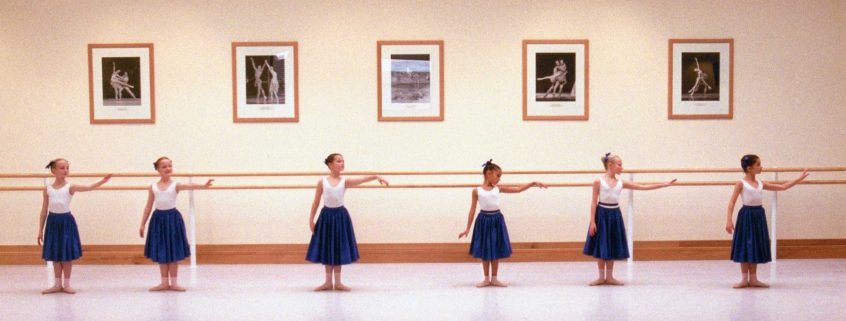
Junior Associates in 2003, photo by Johan Persson
In 1972, Ballet Principal Barbara Fewster appointed Nora Roche to supervise an ambitious new programme of Junior Associate training for children aged 8-10. This was later augmented by a Teacher Link scheme, designed to support the common aim of ballet teachers and the School: to seek out and nurture the dancers of the future.
The Associate Programme now reaches nearly 800 students across the UK, actively widening access to classical ballet training regardless of geographic location. The Associate Programme is also playing a key role in the future of the School, as the School will offer training to students of Year 7 age (11-12 years) in our national Associate centres, through our International Scholars programme and through a new UK Scholars programme, rather than in a full-time vocational setting.
Introduced contemporary dance to the School
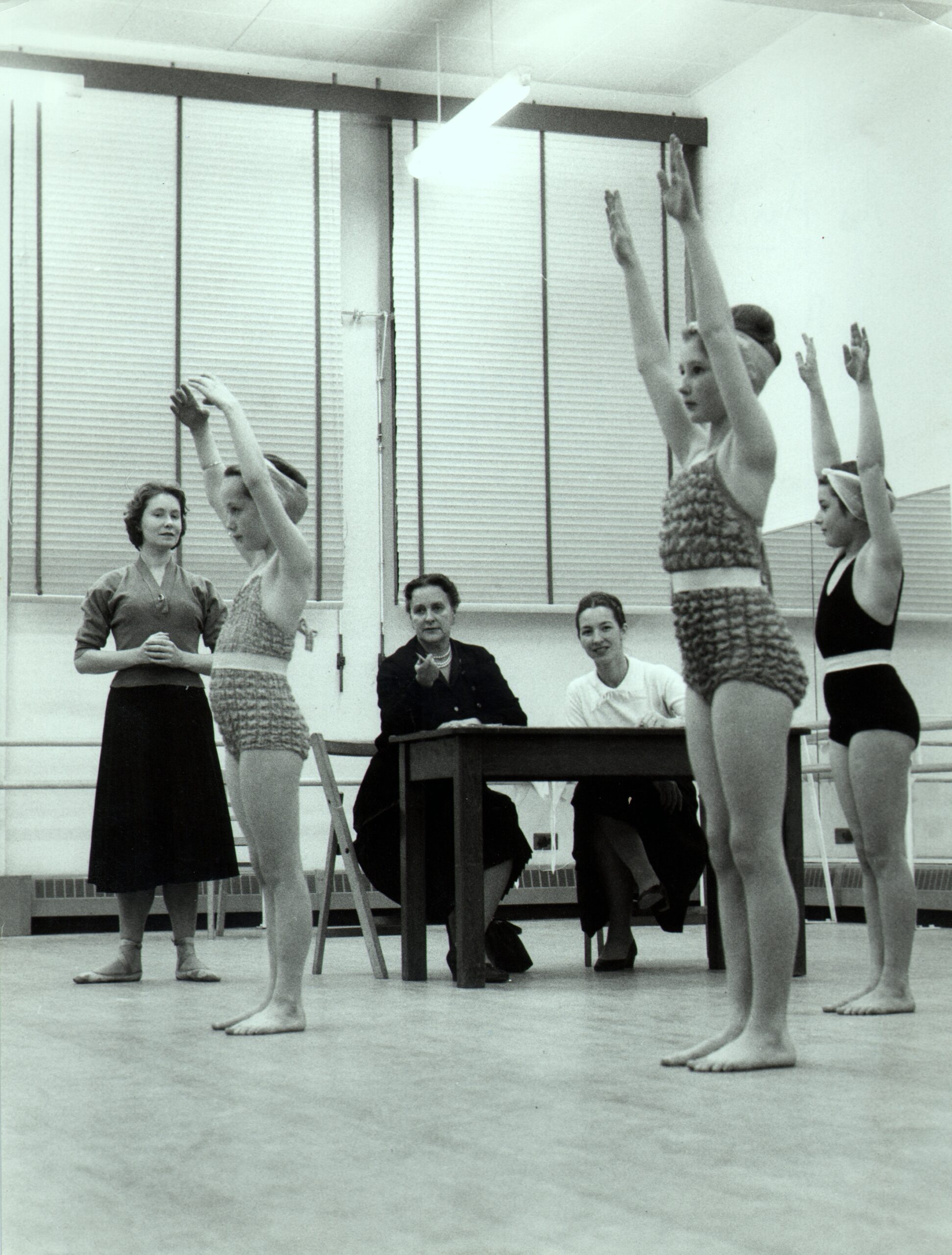
Barbara Fewster, Ursula Moreton and Audrey Harman watching students in an audition.
In an interview with Patricia Linton and Voices of British Ballet, Barbara recalls the reactions to her forward-thinking vision for the School, a decision which has influenced the School’s programming and training today.
Barbara Fewster: I had a vision, but I didn’t know how I was going to achieve it. I did bring in contemporary dance to the Upper School at The Royal Ballet School. Much against de Valois’ wishes, much against. I was fought heavily on that one.
Patricia Linton: Why? Why was she against?
Barbara Fewster: Ballet was ballet, as far as she was concerned, and it could absorb into itself what it wanted, but not to bring in special classes for contemporary dance. She was quite adamant on that.
Patricia Linton: But you won?
Barbara Fewster: Yes, thank goodness, because I could see in the modern age, my views were that if our students were going to go to other companies to dance, they would find themselves faced with movements that came out of, were born from the contemporary work, which they wouldn’t be able to cope with. They wouldn’t know how to copy. That was a very distinct time when Robert Cohan opened his school at The Place, and was showing London what, you know, this [contemporary dance] could be, how this could be enriching for all dancers.
Today’s students learn from Contemporary Programme Manager Didi Veldman and Contemporary Teacher Oliver Chapman, and explore contemporary movement in their own student choreographies and works by guest choreographers.
Introduced an educational touring group
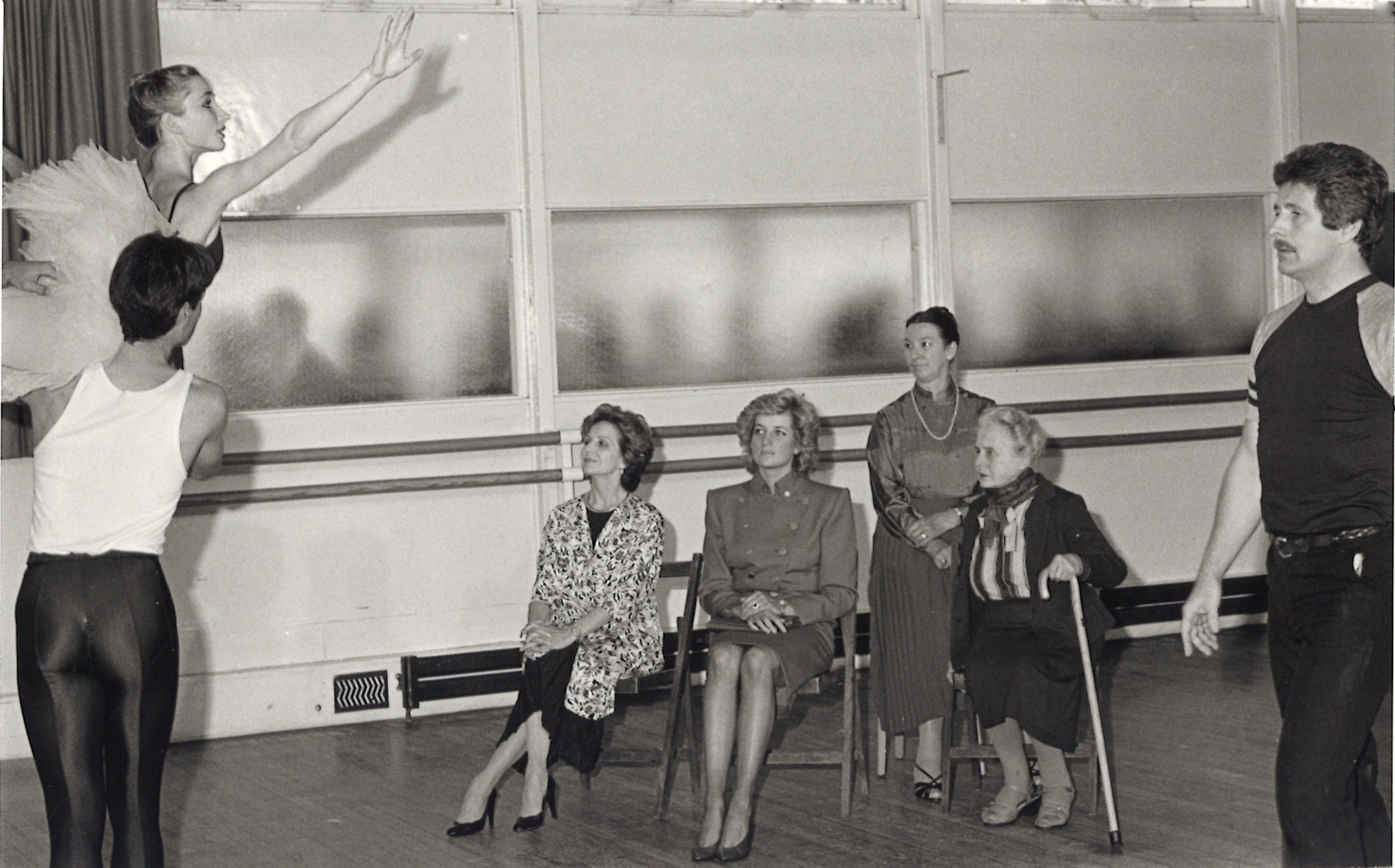
Merle Park, Princess Diana, Barbara Fewster, Ninette de Valois and David Drew in the studio at Barons Court
In the 1960s, writer and lecturer Peter Brinson approached Barbara to ask if students could participate in lecture-demonstrations on ballet. She agreed, and when The Royal Ballet joined the programme in 1964, it became formally known as Ballet for All. This not only helped bring ballet to new audiences but also provided valuable performance opportunities for young dancers.
Ballet for All came to a close in 1979, but it paved the way for current outreach programmes, like Chance to Dance, The Royal Ballet’s flagship young talent programme that has run for 27 years, and Primary Steps, the School’s programme that ran from 2005-2025 and introduced primary school children to classical ballet, as well as nurturing young talent through regular dance classes.
Established the School archives
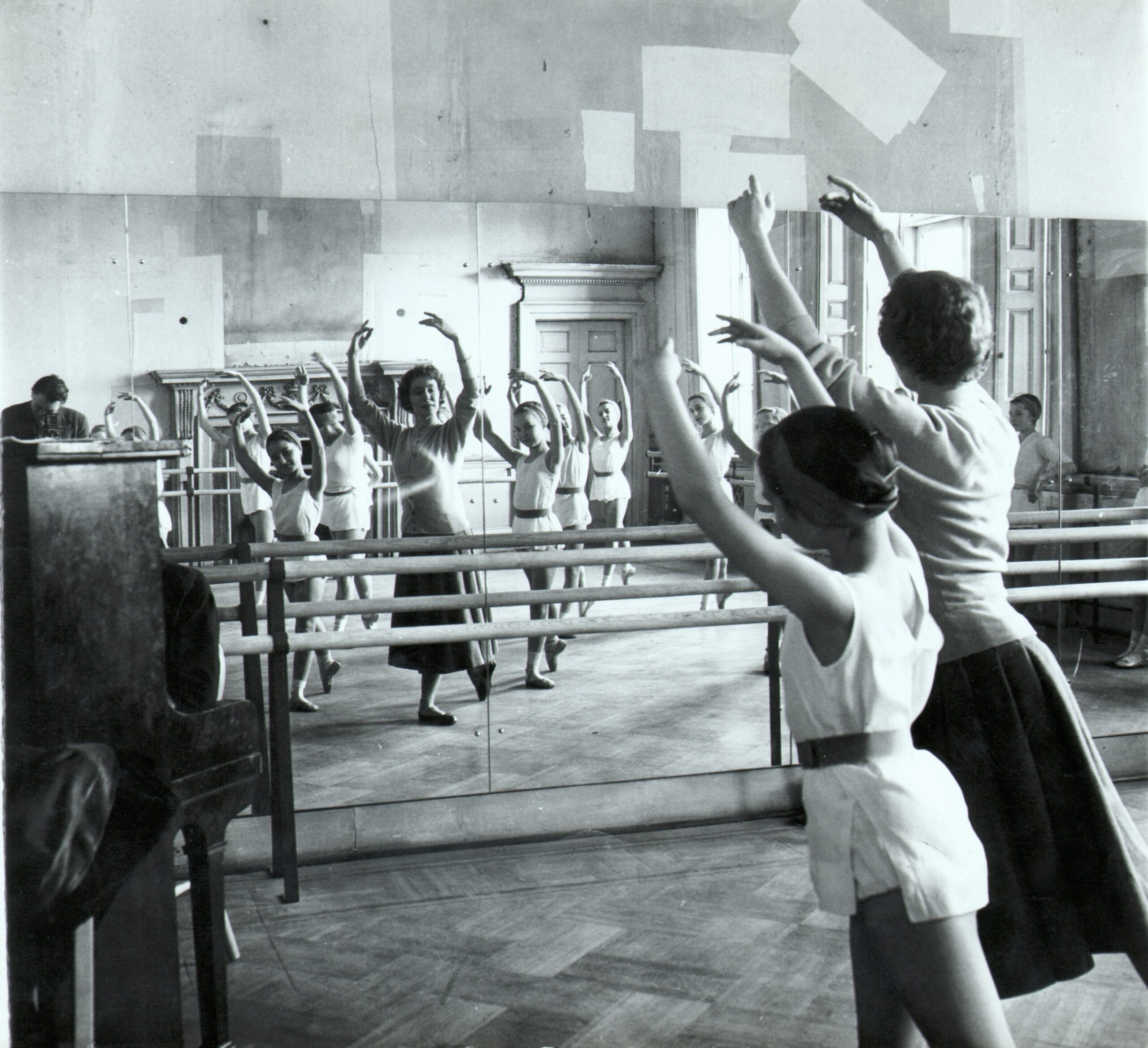
Audrey Harman teaches a class in the salon at White Lodge.
In 1979, Barbara appointed Audrey Harman as the School’s first official archivist, who played a vital role in helping to preserve its unique heritage for future generations. Audrey Harman trained at the Sadler’s Wells Ballet School and danced with Sadler’s Wells Theatre Ballet. Harman taught at The Royal Ballet School from 1956-1963, before becoming personal assistant to Russian choreographer, Léonide Massine at the School from 1968-1976.
Our current Manager of Special Collections Dr Anna Meadmore started as Audrey’s assistant and recently produced a theatre recitation titled ‘Dear Miss Harman’ for our Centenary Insight Days based on letters written by Beatrice Appleyard, Molly Brown, Sheila McCarthy, Elizabeth Miller, Nadina Newhouse and Joy Newton. The actors embodied the identities of past students reminiscing on fond memories and mischievous anecdotes, from classroom discipline to dressing room laughter.
The archives have played a vital role in our 100 stories series and in bringing the centenary campaign to life.
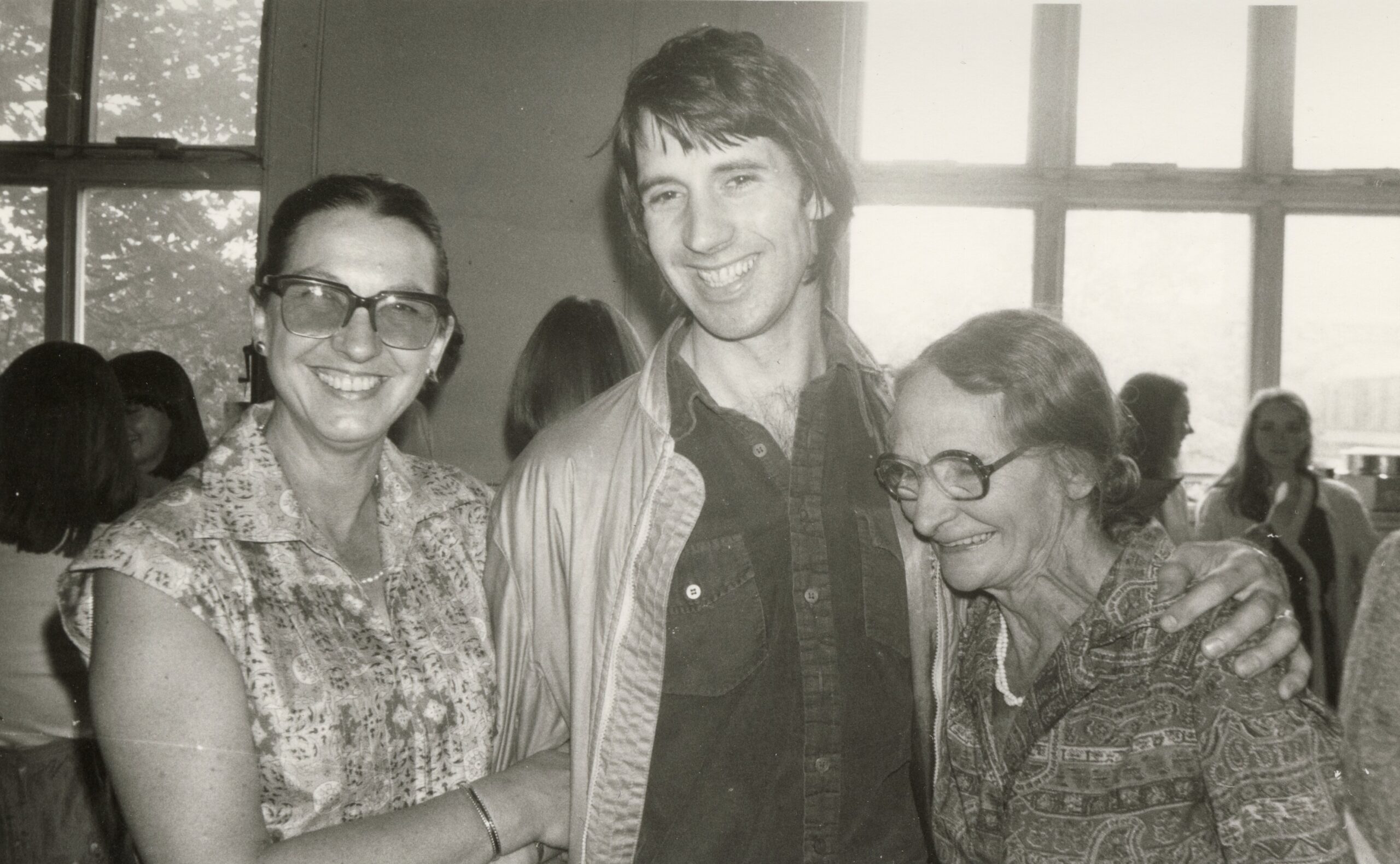
Barbara Fewster with Robert North and Joan Lawson in June 1978.
Catja Christensen is the Marketing and Communications Executive at The Royal Ballet School and joined the School in 2025. She enjoys interviewing students, staff and guest artists for news stories and crafting eye-catching newsletters.