
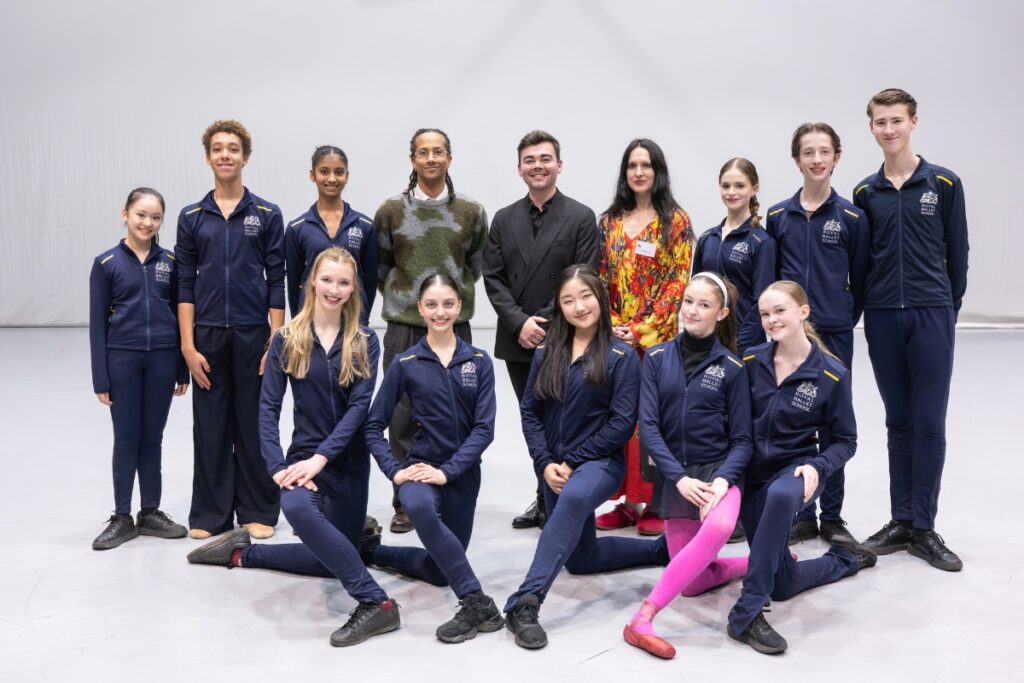
Rhian Robbins on nurturing the next generation of creative artists through the Kenneth MacMillan Emerging Choreographer
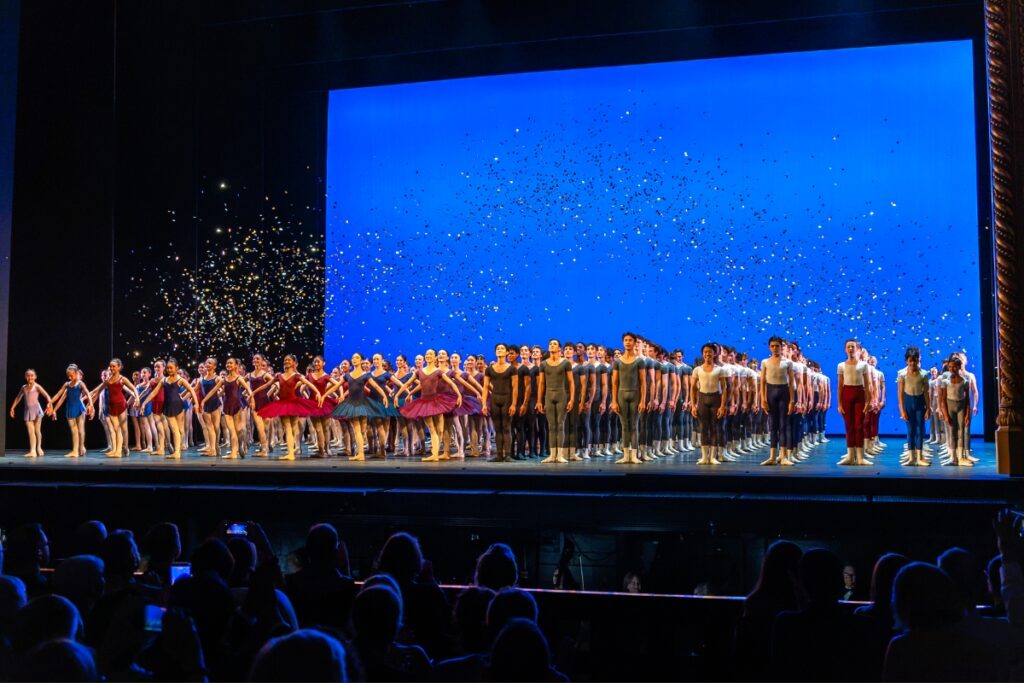
The annual Kenneth MacMillan Emerging Choreographer event took place in the second week of December, showcasing our Year 10 and 11 students’ original choreography. The performances were held at White Lodge to admiring audiences of school groups, donors, staff and families.
The event is one of three events in our Ninette de Valois Choreographic Programme, which gives students the chance to explore their creative instincts and discover their choreographic voices throughout their time at the School. Our founder, Dame Ninette de Valois, was passionate about fostering young artists and nurturing their creative curiosity, and fostering student choreography remains a core tenet of our curriculum today.
Artists Holly Blakely, Andrew McNicol and Jacob Wye served on the mentorship panel, watching the show and providing feedback to the young choreographers. Some of the student pieces may be selected to be further developed and performed at our 2026 Summer Performances.
This year’s programme featured a blend of classical, neo-classical and even jazz techniques. Some students were inspired by films and film scores, including Year 11 student Jolie’s Awake in the Matrix, inspired by The Matrix, and Year 10 student Anisha’s Pulsations, set to the F1 film score by Hans Zimmer and driven by the exhilaration of Formula 1 racing.
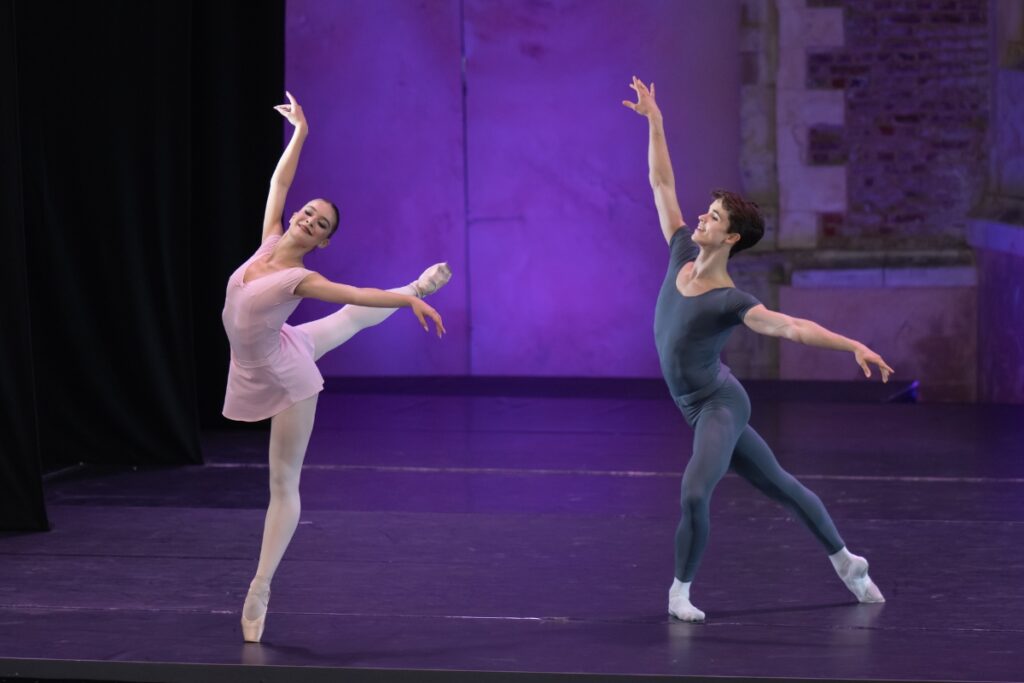
Year 10 students Isaac and Filippa set their choreography to specific music genres and eras. Isaac’s Rhythmic Blend reimagined Louis Prima’s famous 1935 big band song Sing Sing Sing in jazz club setting featuring swing dance and tap dancing. Filippa brought the vivid colours and music from the 1960s to life with Downtown, set to song Mushroom Hunting by The Seatbelts.
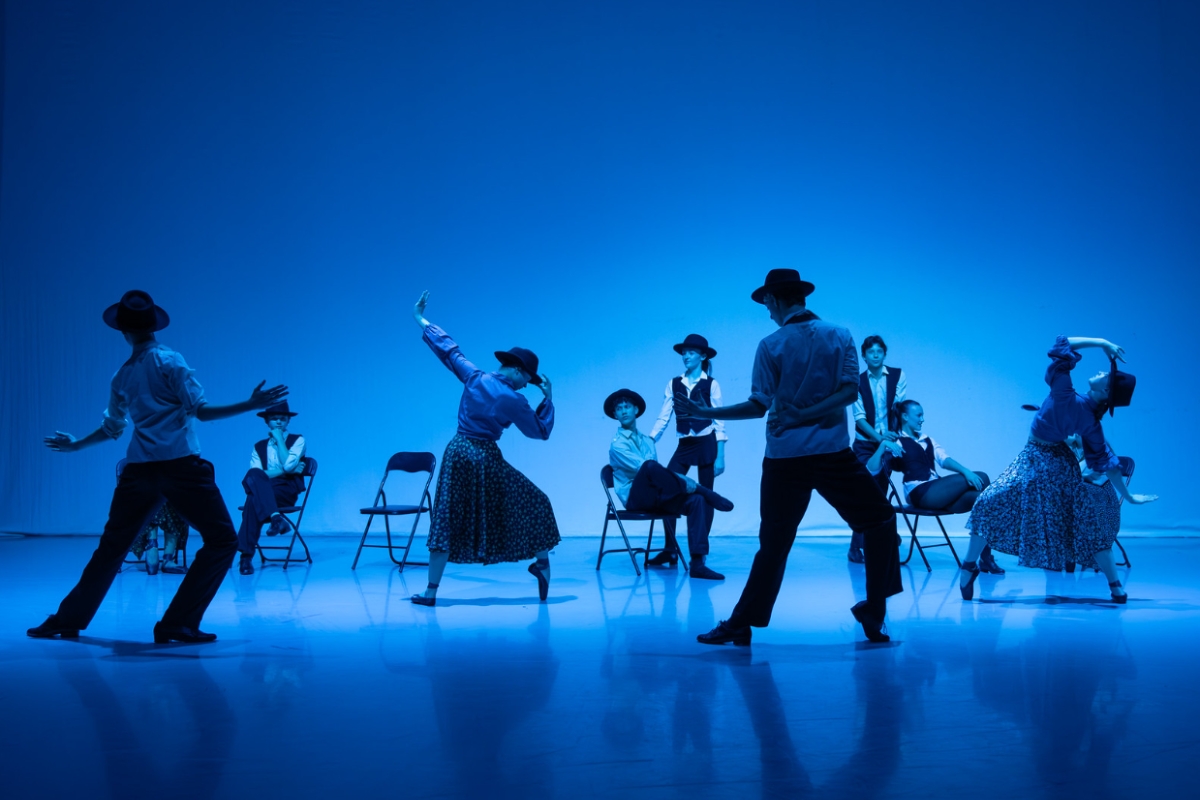
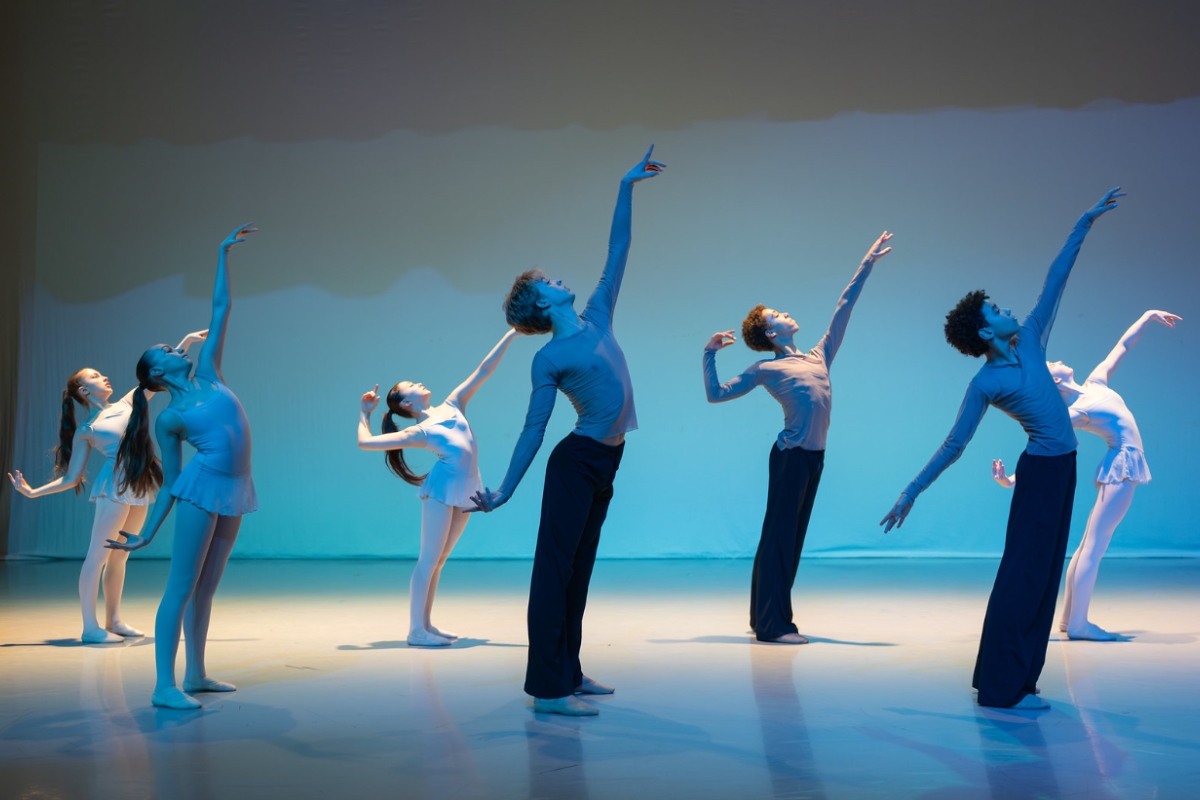
Left: Isaac’s Rhythmic Blend; Right: Robyn’s Constellations
For five years, Choreographic Tutor Rhian Robbins has guided White Lodge students through the process, from brainstorming ideas, choosing music, casting classmates, scheduling rehearsals, and designing costumes, lighting and staging.
Can you tell me about the process leading up to the Kenneth MacMillan performances: when do students begin thinking about their choreography? How do you support them in their creative process?
All the students are welcome to choreograph, and I will always encourage them to have a go even if they are unsure. Many students will have been researching ideas and music before we even get back to school, while others might not start thinking about it until we start our choreographic classes in September.
We start with exploring the art of choreography and the different ways of working and generating movement material on and with each other. We also maintain the fundamentals of the students’ classical ballet training and how that informs their work. I will help them in trying out some creative tasks or suggest other ideas to inform what they would like to explore and create. The process involves lots of questions: what do they want to say? What would they like the audience to see and feel? How can you transition from one section to another?
All the students have an opportunity to share their progress a few weeks before the shows. At this point, they will usually not have finished their work but can show short sections. Some students will also have very clear ideas of costumes and lighting, whilst others are still developing ideas. There is no right or wrong way – everyone works differently.
This year, we selected 10 pieces to complete and develop their work for the performances. We had so many excellent choreographies this year that it was really hard to choose. The last few weeks were busy with the choreographers choosing their final cast, costumes and lighting. We are extremely fortunate to have a production team in-house to advise on the final costumes and lighting for their work. The process is like any professional experience, with changes being made right up to the last minute!
Before we get to stage, the choreographers have a real challenge to finish, clean and space the work alongside their daily training and academic classes. It’s incredible how the students thrive and negotiate everything so expertly to achieve such fantastic work.
How do students begin creating their mood boards? How do these help the guest panel gain an understanding of the choreography?
I encourage the students to research their themes and create a mood board. They include music, colours, textures, images, text, inspirational choreographers and anything that might inspire them. They also record and save everything, because even if they don’t use it this time, that bank of inspiration will always be useful to have.
The mood boards help the guest panel to understand more about the students’ thought processes, providing an insight into what drives them and who they are as people. It’s not about explaining the piece or the narrative – that is left for the audience to interpret.
What is your favourite part about working with the students through this process?
I love working with the students and being part of their creative journey, and they continue to surprise me by their ambition and bravery. It feels like a partnership, and we all learn from each other. It’s fascinating to watch them grow as people, find their choreographic voices and learn to communicate their ideas with their dancers. Being a choreographer is very vulnerable, and sharing your personal, innermost feelings with your peers is not easy. You have to be brave.
The teamwork and generosity of everyone involved is wonderful. I am excited by how the students are prepared to experiment, explore their unique physical voices and have a chance to ‘play’ in a safe space. It’s incredible when they let go, step back and begin to ‘see’ their choreography, not just the technical things but the emotions of their dancers and how they interpret the choreographic intentions. Seeing the delight on their faces when everything comes together in front of an audience is another highlight.
What are the long-lasting impacts you have witnessed from this programme?
Way before I started working on this programme, I met students who developed a curiosity and drive to make work from when they were at the School. They became dancers who had an inherent understanding of the demands of choreographing and collaborating with their choreographers. So many alumni also work as choreographers in film, theatre, opera and more.
Why do you think the School’s emphasis on choreography is so important?
The School was originally called the Academy of Choreographic Art, and I think the perfect answer to that is this quote from Ninette de Valois: ‘Somebody must always be doing something new, or life would get very dull.’ For classical ballet to evolve, we need the choreographers of tomorrow to shape the future and tell their stories: students who have the confidence to take that initial step and develop their artform. With this emphasis on choreography throughout the School, the students have an understanding that creativity is as much part of their art form as is performance.
Creating possibilities for our students to spark a curiosity beyond the classroom and appreciate, create or talk about choreography is integral to their artistic journeys. We are confident that the future of classical ballet choreography is in good hands.
Congratulations to all 10 emerging choreographers for a wonderful show, and thank you to the dancers, teachers, production crew and staff who helped present another successful Kenneth MacMillan Emerging Choreographer event.