
Ursula Moreton Emerging Choreographer 2026
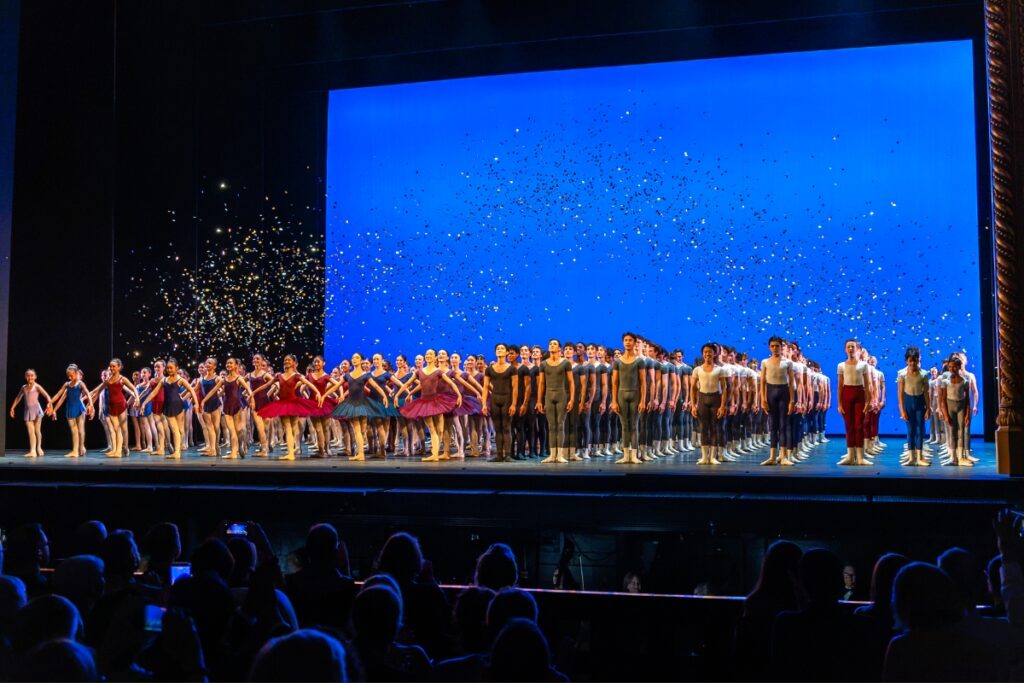
When Dame Ninette de Valois founded her Academy of Choreographic Art in 1926, she planted the seeds for the world’s leading choreographers to thrive over the next century and beyond. Her dream is truly alive and well, as demonstrated by this year’s edition of the Ursula Moreton Emerging Choreographer, one of three performances in the Ninette de Valois Choreographic Programme.
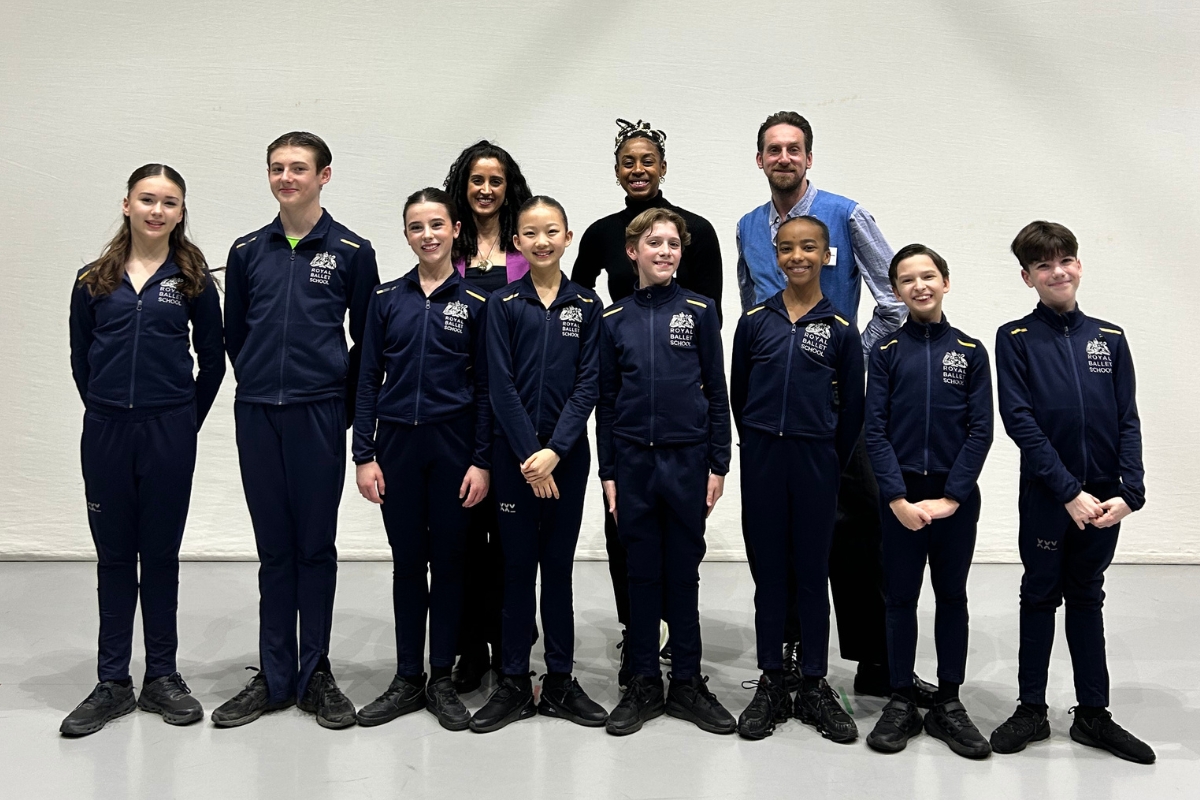
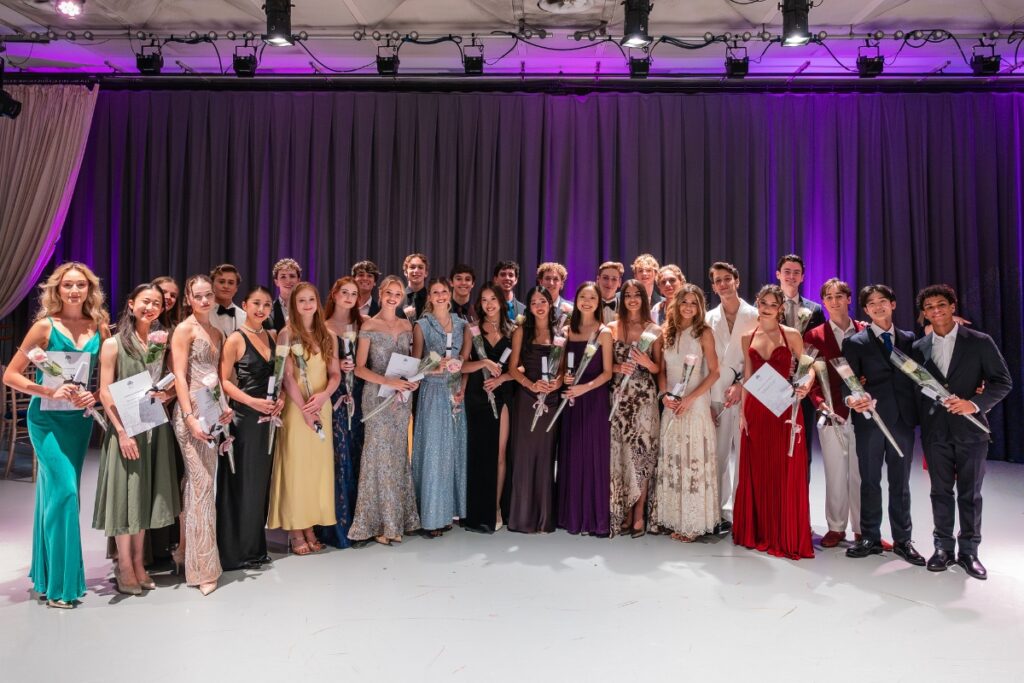
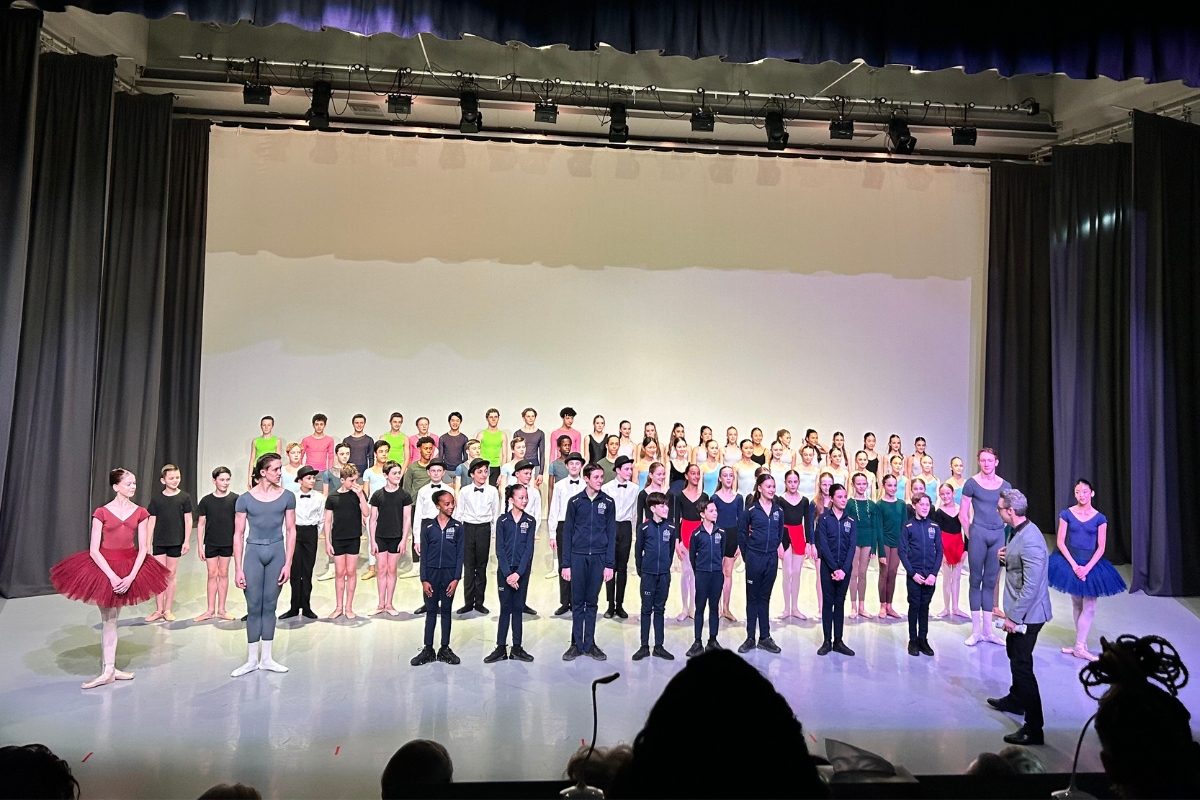
The eight choreographers stand with guest panelists Nandita Shankardass, Isabela Coracy and Jonathan Watkins.
Students left to right: Mirabelle, Cam, Felicity, Rosie, William, Maddie, Bertalan and Will.
The stage crew also included students Nicola, Arlo, Adrian and Felix, who helped stage manage and run lighting under the guidance of Production and Theatre Technician Daniel Philipson. Wardrobe Supervisor Anja Mlakar also helped students bring their visions to life with costumes and props.
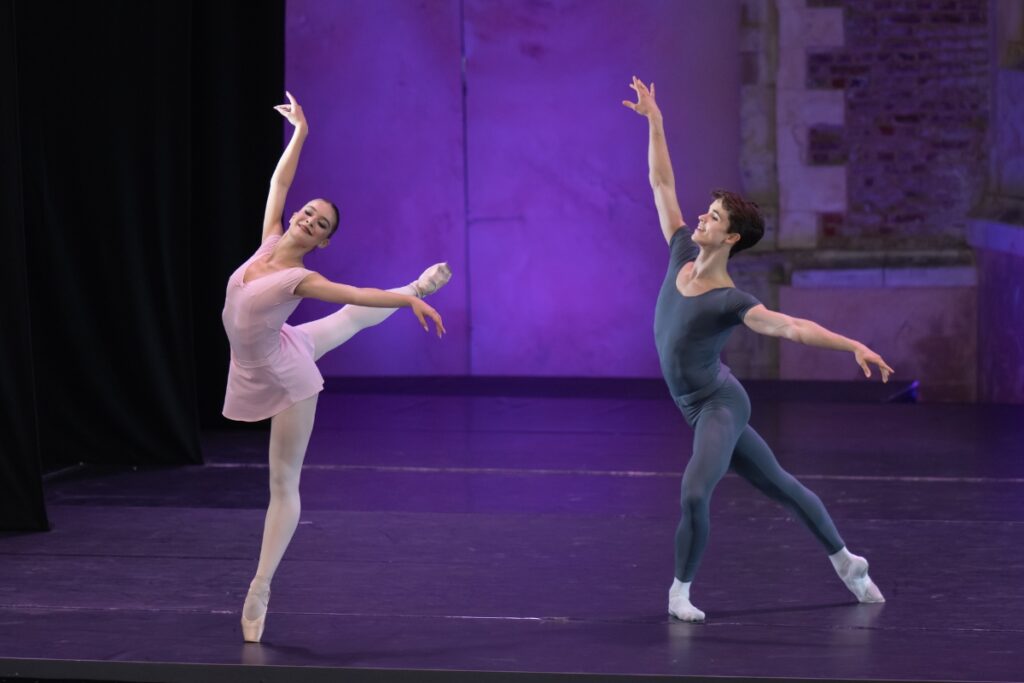
Guided and nurtured by Choreographic Tutor Rhian Robbins, eight students from Years 7, 8 and 9 presented their work to audiences of fellow students, staff, supporters and loved ones at White Lodge from 24-27 March. Their choreographies shared common themes of seeking community, connecting with nature and exploring the impact of technology on humanity.
The Thursday afternoon performance featured a panel of choreographic industry leaders: Isabela Coracy, Senior Artist in Ballet Black; Nandita Shankardass, alum and founder of Welcome Movement; and Jonathan Watkins, alum and founder of Ballet Queer. The panelists provided valuable feedback and mentorship to the young choreographers following the performance.
Nature and environmental activism: Explorer and There is no Planet B
Year 7 student William and Year 8 student Will were both inspired by nature as a stimulus for their pieces. William’s Explorer opened the show with a young boy exploring a jungle of arms and legs interlocking in canon. William said that he was inspired by a large tree at White Lodge, perfectly encapsulated by a group of dancers swaying with intricate arm movements conveying branches in the wind.
While choreographing There is no Planet B, Will channeled his role model, Sir David Attenborough, who is also celebrating his 100th birthday this year. Will’s music included a recording of Sir David talking about the importance of environmental activism, and Will passionately spoke about how much he hopes his generation will value the natural world amidst a global climate crisis. His dancers channeled this fervor and hope to composer Ludovico Einaudi’s Experience.
Technology: Connection, LOOP 404 and Lumina
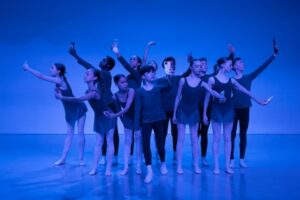
Year 8 student Felicity’s Connection was a plea to people of all ages to become more conscious about their phone usage and prioritise in-person connection with their loved ones. Felicity incorporated smart phone cases as props, with small lights illuminating the screen-addicted dancers’ faces. The work included motifs of a mother being too focused on her work emails and children turning away from swing sets and toward their screens like moths to a flame.
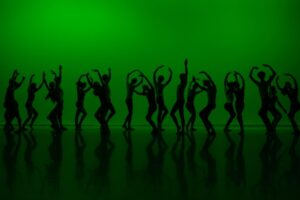
Year 9 student Mirabelle dove deeper into digital technology as inspiration for her piece LOOP 404, named after the ‘404 Not Found’ HTTP error code commonly found on broken website links. Mirabelle expressed her fascination with binary code in her introductory speech, specifically how just two number digits form the fundamental computer language. Her choreography featured a constant, hypnotic stream of dancers moving across a bright green backdrop in two straight lines, much like lines of text on a computer screen.
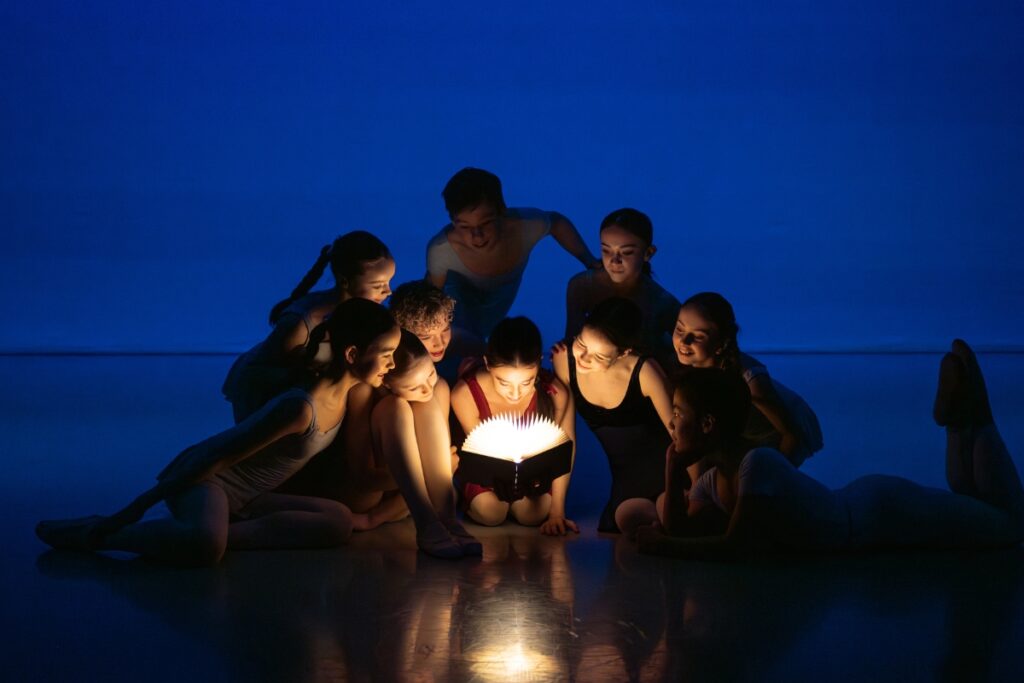
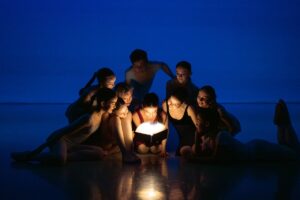
Year 8 student Rosie delved into a non-digital form of technology: books. She centred her work around a glowing book prop, effectively demonstrating the enlightenment of reading and education. Her work conveyed the importance of sharing knowledge and providing access to information, with the choreography ending in a touching tableau of students crouching around the warm glow of the book.
Community: Parallel Universes, Dissociate and In the Mood to Dance
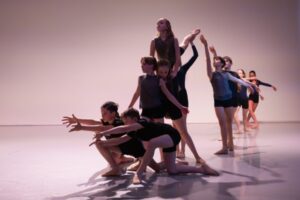
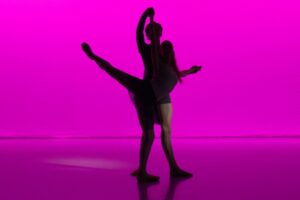
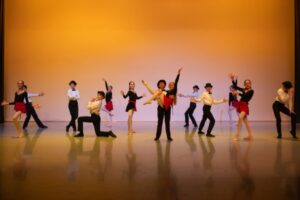
Finding, losing and embracing community were the themes for the final three choreographies. Year 7 student Bertalan explored the most expansive concepts of community in Parallel Universes, a piece that considered how many versions of people and groups could theoretically exist.
Conversely, Year 9 student Cam was interested in the psychological concept of dissociation, when the mind detaches and disconnects from social and emotional situations to cope with immense stress, in his piece titled Dissociate. Together, Bertalan and Cam’s pieces provided a fascinating juxtaposition of ideas regarding connection and community, from unfathomable universes to the intricacies of the human mind.
Maddie, Year 7, closed the programme by grounding us back into one of the core aspects of community and connection: dancing. Her work was inspired by Glenn Miller’s 1940 hit In the Mood, which she honoured in the title In the Mood to Dance. This joyful, high-energy number celebrated friendship and movement in a 1940s jazz club-inspired setting.
Congratulations to all the student choreographers, performers and production assistants. Thank you to our staff, supporters and families for helping make events like this possible.
Catja Christensen is the Marketing and Communications Executive at The Royal Ballet School and joined the School in 2025. She enjoys interviewing students, staff and guest artists for news stories and crafting eye-catching newsletters.