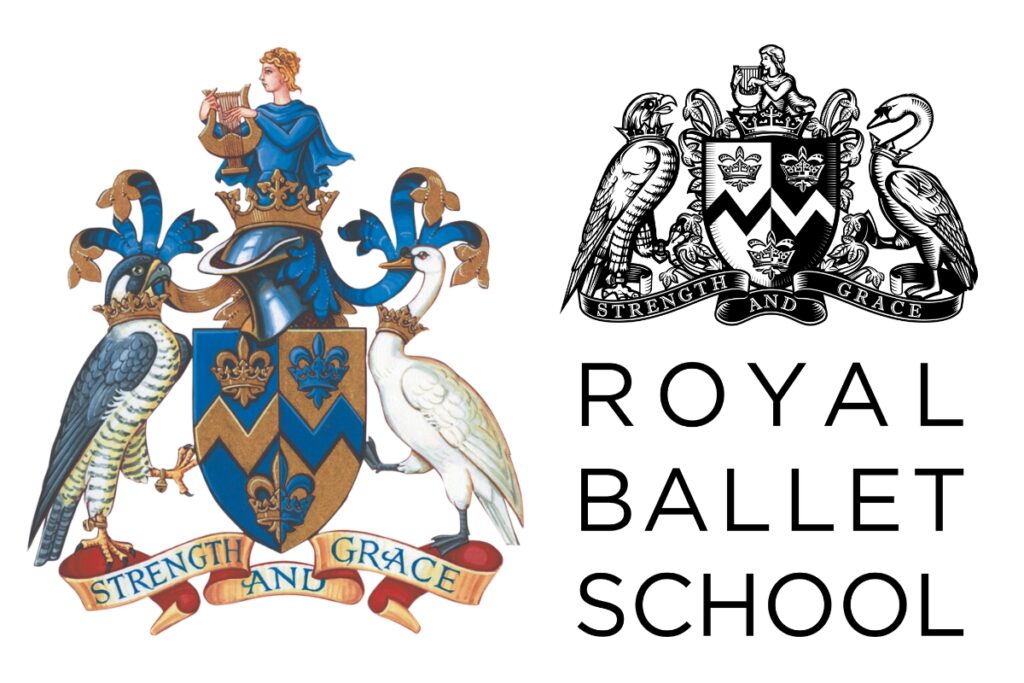
The evolution of The Royal Ballet School crest
The crest is one of the most recognisable symbols of The Royal Ballet School, but what does it really represent? In honour of our centenary, we are reflecting on the evolution of the School’s Coat of Arms over the past decades.
Who created The Royal Ballet School’s crest?
‘The School crest, or more accurately, its Coat of Arms (technically, the crest is just the top section, with Terpsichore playing on her lyre), was created for The Royal Ballet School and Companies by the College of Arms in 1982,’ said Dr Anna Meadmore, Manager of Special Collections.
Dr Meadmore recently installed a new display case detailing the history of the crest at Upper School, Covent Garden. The first placard reads:
The Armorial Bearings of The Royal Ballet School
Arms: Per pale azure, and a dance between three crowns each enfiled by a fleur de lys and counterchanged.
Crest: Upon a helm out of a crown, a demi female figure representing Terpsichore proper, vested and mantled azure, playing on a cithara gold.
Supporters: Dexter a peregrine falcon proper belled, and sinister a swan proper, each gorged with a crown gold.
Motto: Strength and Grace
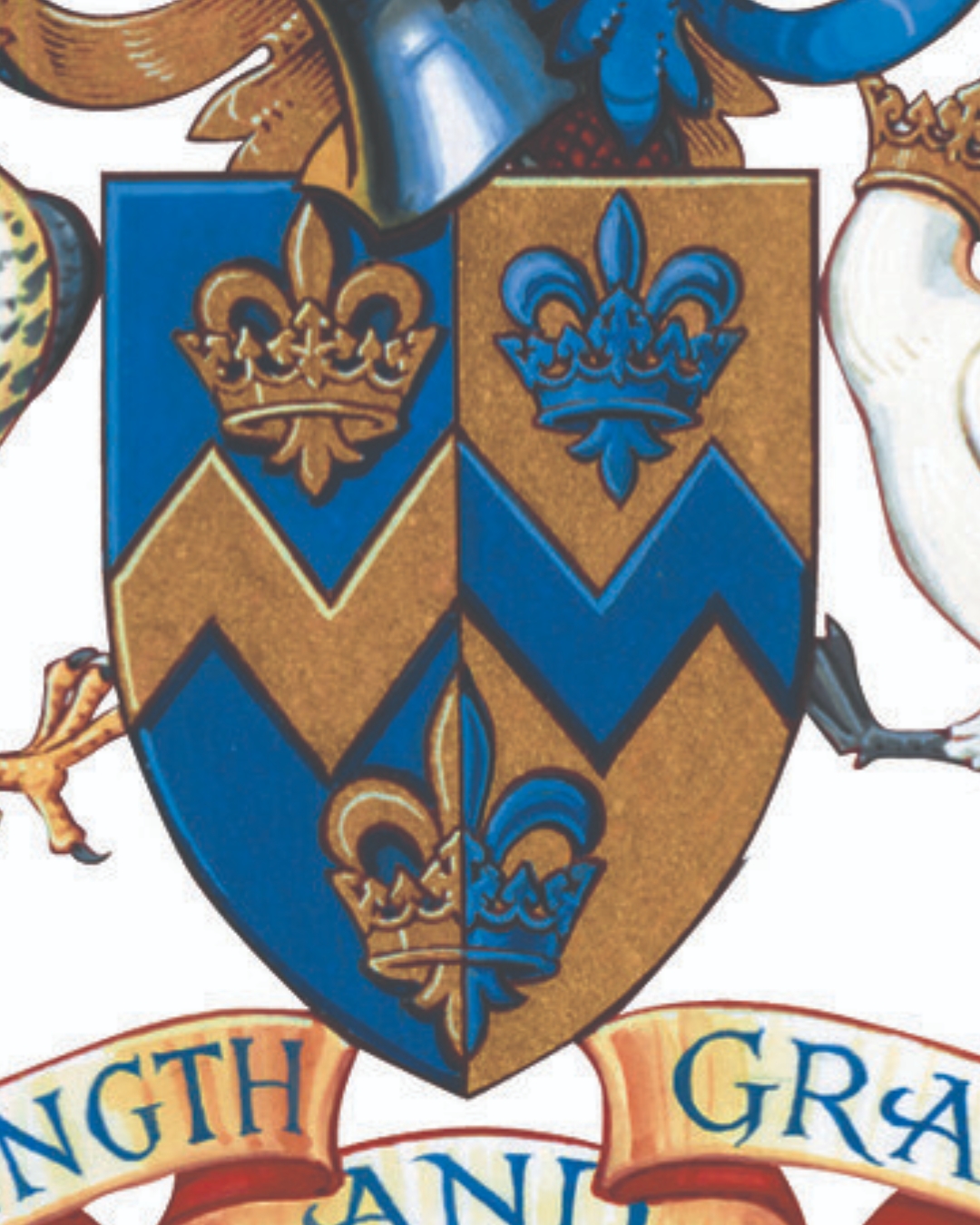
Dr Meadmore writes, ‘The zig zag bar across the centre of the shield has been known to armorists since the middle ages as a ‘dance.’ The three fleurs de lys, or lily flowers, are allusions to:
- Lilian Baylis, Manager of the Old Vic and Sadler’s Wells Theatres
- the arms of France and hence to the stage name of our Founder Dame Ninette de Valois
- And to the lily itself, one of the most graceful and elegant of flowers.
The three crowns refer firstly to the Royal Charter of 1956. They also represent the three bodies which were amalgamated under the Charter: Sadler’s Wells Ballet, Sadler’s Wells Theatre Ballet, and Sadler’s Wells School. Today, they are known as The Royal Ballet, the Birmingham Royal Ballet and The Royal Ballet School.’
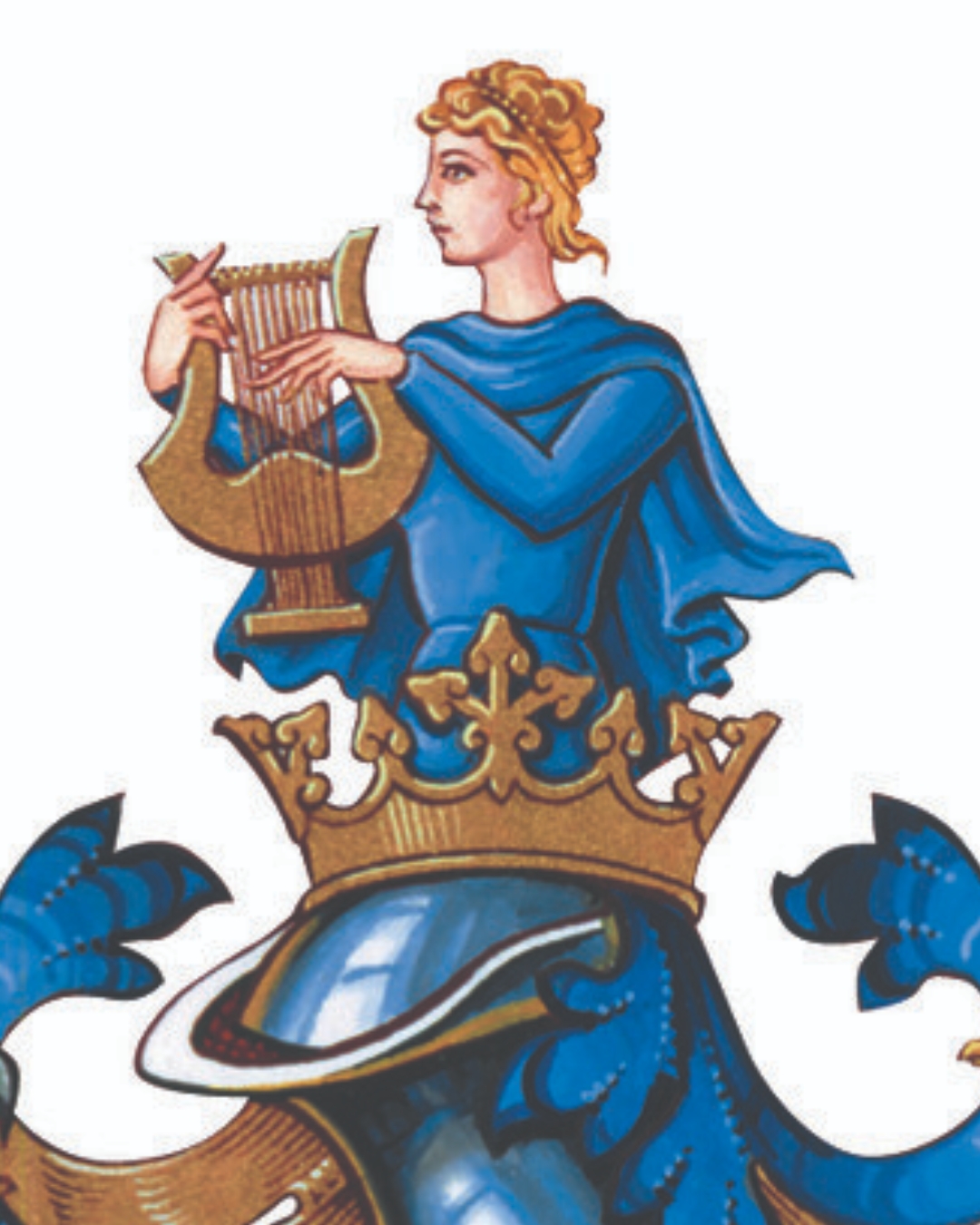
‘The crest is a figure representing Terpsichore, the Greek muse of dance, and lyric poetry.
She is also seen as a symbol of vitality and youth.
Her instrument, the Cithara, has nine strings, as there are nine Muses of the Arts. De Valois, like Diaghilev, saw ballet as an ideal synthesis of all the Arts.
The motto and the supporters suggest the principal attributes, both physical and mental, required by a dancer.’
‘The peregrine falcon symbolizes the ‘masculine’ qualities of strength, speed, energy, agility and bravery, all held in check by discipline and self-control.
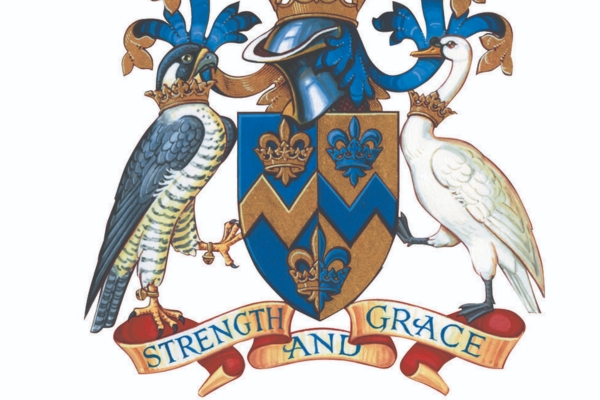
The swan represents the more ‘feminine’ qualities of beauty, grace, elegance, patience and serenity, with a concealed strength. It alludes to the ballet Swan Lake.’
Why did The Royal Ballet School update its branding?
In 2016, the School unveiled refreshed branding to position the School at the forefront of international classical ballet training but also, importantly, to visually align with The Royal Opera House and The Royal Ballet Company, who updated their branding in 2010 and again in 2024.
The new visual brand identity was designed by world-renowned creative agency Imagination as part of their sponsorship of the School. Imagination also supported the School’s centenary campaign look and feel.
The crest represents the School on our digital platforms, merchandise, performance programmes and other assets. Updating our logo and ensuring it continues to represent our values is an important part of the School’s longevity, particularly as we celebrate 100 years.
The Royal Ballet School’s centenary logo designed in collaboration with Imagination
The crest and logo are used in tandem with brands we partner with, like our centenary dancewear collaboration with Freed of London.
When did The Royal Ballet School receive a Royal Charter?
In 1956, the School and its affiliated Companies were awarded a Royal Charter by Her Majesty Queen Elizabeth II. Our founder, Dame Ninette de Valois, wanted to secure the essential unity between the two Companies and the School and strengthen their triangular relationship. The Royal Ballet School, The Royal Ballet and the Sadler’s Wells Royal Ballet (later renamed Birmingham Royal Ballet following its move there in 1990) were established as a three-fold institution in December 1956, with The Queen’s sister, Princess Margaret, as its President.
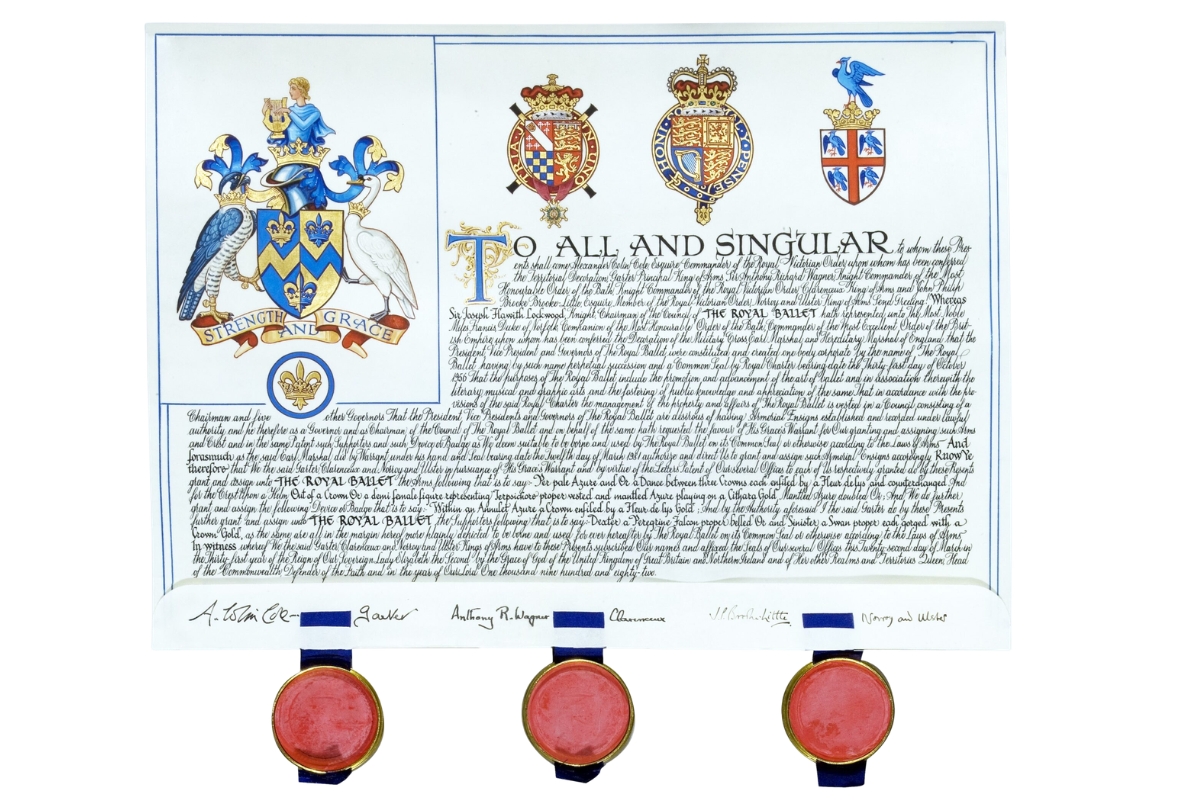
The Letters Patent granting a unique coat of arms, which was created for The Royal Ballet School and Companies by the Royal College of Arms in 1982. The Royal Charter itself was awarded by HM Queen Elizabeth II to The Royal Ballet School and Companies on 31 October 1956. Image © Royal Opera House.
By kind permission ROH Collections.
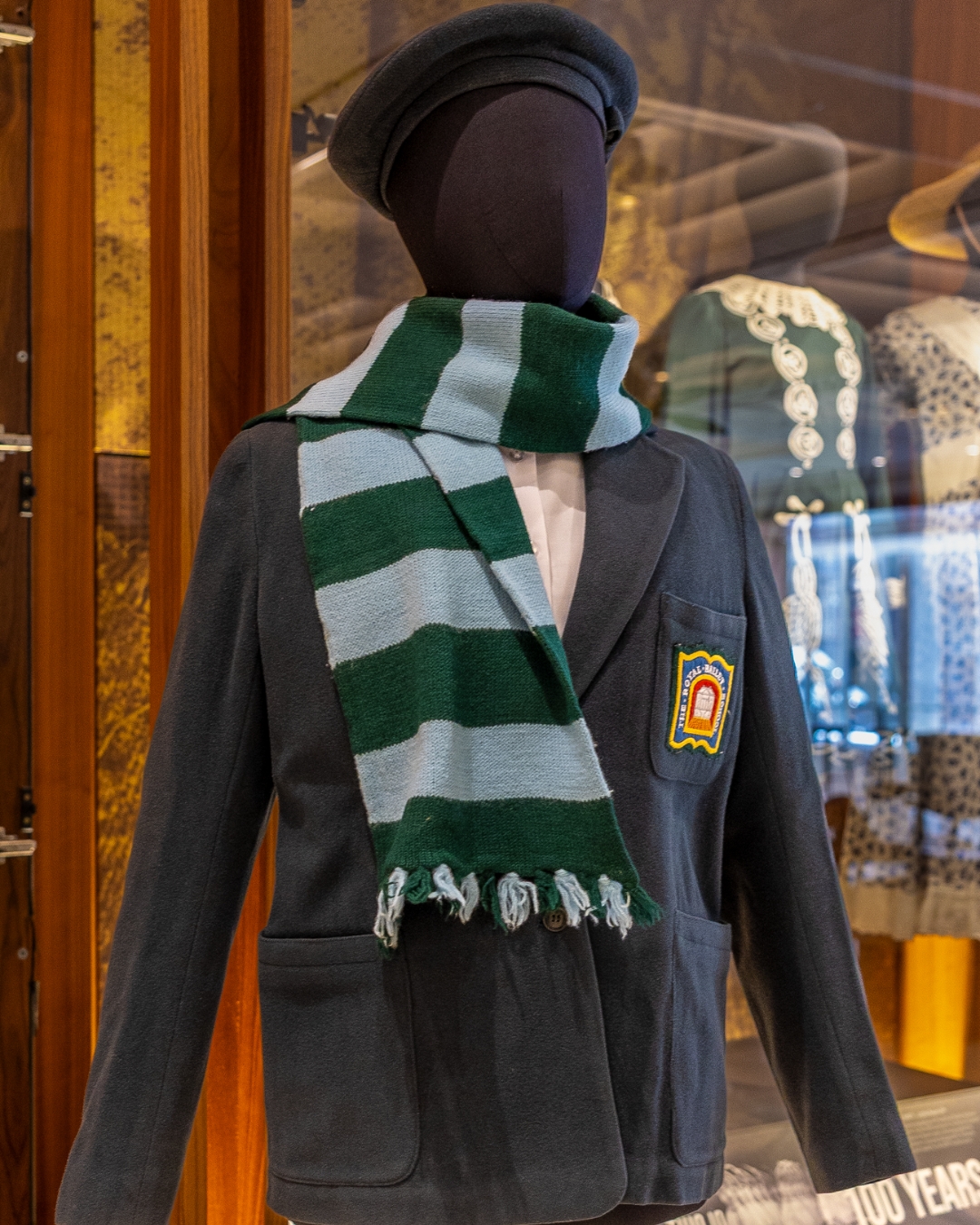
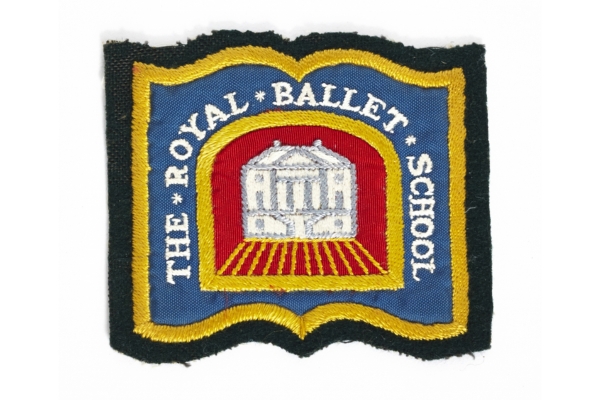
Before the Royal Charter, the School used a badge featuring White Lodge for School uniform blazers (c 1956)
Head to the Royal Opera House’s free exhibition to see the School’s 1956 uniform alongside student costumes from now until October.
Celebrate the School’s 100th anniversary and wear the crest with pride by exploring our merchandise collection.
Catja Christensen is the Marketing and Communications Executive at The Royal Ballet School and joined the School in 2025. She enjoys interviewing students, staff and guest artists for news stories and crafting eye-catching newsletters.