

100 stories: Nandita Shankardass
As part of our centenary year, we are featuring 100 stories that make up The Royal Ballet School’s past, present and future. Today, we share the story of alum, dance artist, choreographer, teacher, multidisciplinary facilitator and the Founder of Welcome Movement® Nandita Shankardass.
We spoke with Nandita this April as she returned to White Lodge for the first time since she graduated 28 years ago. She fondly recalled her favourite memories as a student and expressed how the choreographic programme planted the seeds for her thriving artistic career as a performer and choreographer.
Early years and training
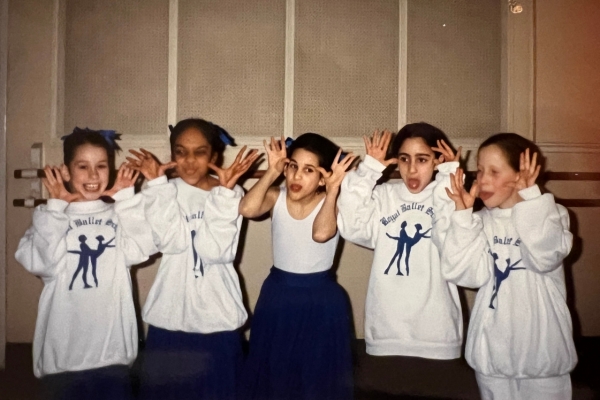
Nandita (second from right) with her fellow Junior Associates
Nandita started learning ballet at age four at the Audrey Joyce School of Dance in North London and joined The Royal Ballet School’s Junior Associate Programme aged eight.
I couldn’t wait for Saturdays as a Junior Associate at Talgarth Road, when, after a week of primary school, I knew I would enjoy a whole uninterrupted day of dance! It was here that I began to develop friendships with other young dancers who I joined White Lodge with a few years later. We already began building a sense of trust with each other on these Saturdays, which would carry on during our years at the School as we became young adults, navigating our dance training, dreams and growing up together. My absolute favourite part of the Associate classes was when we were encouraged to move freely and creatively. It was in these moments that I knew I had an interest in finding and discovering my own pathways with movement.
Nandita entered White Lodge at age 11, filled with excitement and nerves to start boarding.
Joining White Lodge was a spectrum of emotions. First, the excitement of knowing I would be dancing for most of my days, training with other children who shared the same passion, boarding with my friends and feeling like we’d be having a sleepover every night! But somewhere within all this was the underlying feeling of the unknown, of being the only person in my family and our South Asian community to explore training in the arts at this level and intensity towards a professional dance career.
My parents were hesitant to send me to board, but my unwavering stubbornness that I absolutely had to accept the place and the opportunity to focus on dance won them over. My family and I had to have open minds to the experience as we discovered together what it meant to train as a dancer full-time. My parents were with me every step of the way, always checking in with me, supporting me through challenges and celebrating my successes.
I became aware of Benazir Hussain, then a soloist with The Royal Ballet, who had also trained at the School before me. An English ballerina whose father was of Indian descent, she was the only professional with a similar background to me, and I looked up to her during my own training.
School life and mentors
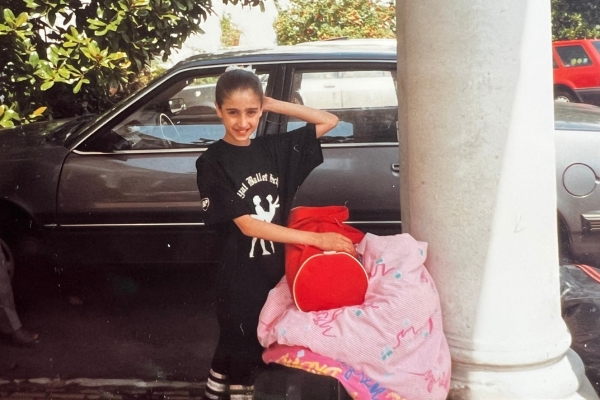
Nandita moves into White Lodge.
Nandita attended both White Lodge and Upper School, then located on Talgarth Road in Barons Court. Over the years, she made many fond memories with her peers and teachers. She recalled art classes with Mrs Padmore and Miss Pickston, contemporary classes with Chris Carter and ballet classes with Katya Svelibilova, Jackie Barrett and Jay Jolley as formative to her creative journey.
My memories with my year group, who became my close friends, are the most vivid. I look back to how we rallied around each other and were there for one another without fail, to how we faced challenges as vulnerable 11 year old kids in a lodge in the middle of a park without our parents, missing our families, training in a complex art form and studying for our academic exams, experiencing adolescence and growing pains and all that comes with that stage of life.
I discovered more of my body’s possibilities through contemporary movement, which our strong foundation in ballet technique greatly supported and vice versa. This introduction to contemporary technique at the School supported me later in my career dancing with companies which had a versatile repertoire and where I continued to explore contemporary dance.
I loved our choir sessions where the whole school would come together to sing. It was one of the most powerful experiences I remember feeling as a student, just as it is to dance with others. I have recently started singing classes again and joined a choir this January, which brings me back to this feeling.
It’s only now, through this interview and these questions, that I realise just how much this School instilled, inspired and gave space for us to discover and explore in these aspects, alongside the focus on ballet technique. It continues to make my life beautiful to this day.
Although Nandita enjoyed her time boarding at White Lodge, she is optimistic about the recent announcement of changes to full-time training, including transitioning Years 7 and 8 from full-time vocational training to enhanced national Associate centres and a new UK Scholars programme.
I am very hopeful about the recent and evolving changes being made at the School led by Iain Mackay, who brings a true freshness to the School and who has the students’ wellbeing, artistry and creativity at heart. I appreciate his decision to begin vocational training at White Lodge at an older age; this feels necessary and wise.
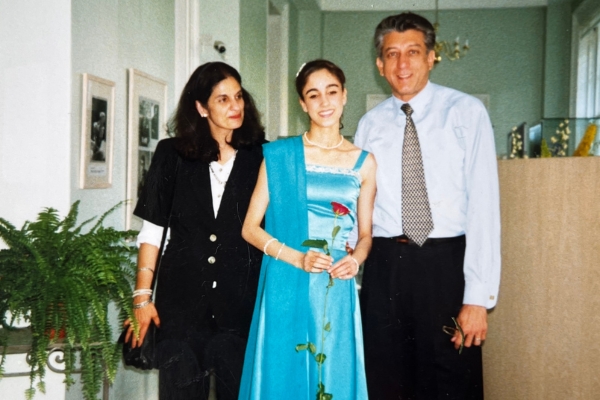
Nandita with her parents at her White Lodge Year 11 ceremony
She recalls several memories from her later years as a student and reflects on the values that helped her transition from student to young professional.
When I trained at Upper School from 1998-2001, we were very fortunate to share the building with The Royal Ballet, who were based at Talgarth Road whilst the Royal Opera House went through a refurbishment. We were incredibly lucky to be able to watch company rehearsals through the window in any spare moment we had to see the professionals at work.
Performing at Opera Holland Park was always fun. The openness of the stage, being able to see and connect with audiences was very special and offered another dimension to the experience of performing.
Nandita recently returned to White Lodge as a panelist at our 2026 Ursula Moreton Emerging Choreographer performances, where she provided valuable feedback and mentorship to the young choreographers following the performance.
Returning to the School after 28 years, was a real trip down memory lane. Walking through the grounds, through studios, spaces and corridors, my most vivid memory was of my classmates. It is here that I began to learn and understand the value and true nature of friendship – those who are with when you have no family around. Life happens, and through circumstances, challenges and wins, you find yourself in each other’s corners instinctively, and solidarity is formed. Going through these experiences together, discovering who you are, built these bonds of unspoken trust and care.
I was so inspired and impressed by each and every young choreographer who presented work for the Ursula Moreton Emerging Choreographer. I admired how thoughtful they had been in preparing mood boards to give us an insight into their processes and how they spoke to us about their inspirations and motivations before their pieces were performed. I was very moved by these young activists in the making, creating work to inspire a better world and humanity. Seeing themes like these approached by such young minds gives me huge hope for the future of dance: making dance which is meaningful, impactful and influential. They were pieces that invited the audience to question, reflect and experience joy.
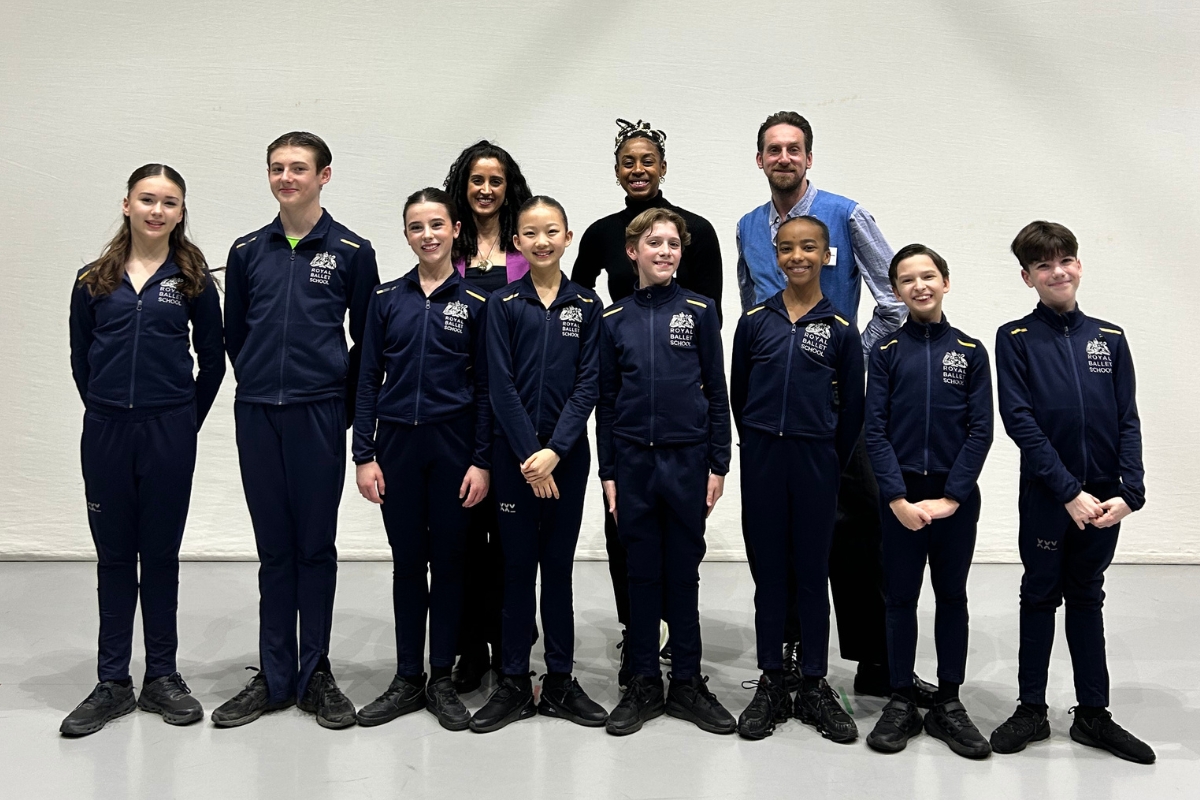
Nandita, Isabela and Jonathan stand with the Ursula Moreton Emerging Choreographers
Along with the other panellists, Jonathan Watkins and Isabela Coracy, we were invited to offer feedback and have a chat with the young choreographers post-performance. This is not something we had at my time. The performance is also no longer a competition, which I was very happy to learn about, as a healthy way to support young talent and creative interest. It was an honour to be invited back after all these years to support this particular programme within the School, which nurtured my own curiosity and creativity.
It was a full circle moment, reminding me of how brave I once was too, and how as an adult, we can at times lose our childlike innocence and gutsiness. I was reinspired that day about how necessary it is to stay closely connected to our inner child and our creativity, an important reminder in life to enjoy our sense of self, what we want to create in the world, the legacy we want to leave behind and not giving up on our dreams.
Choreographic journey
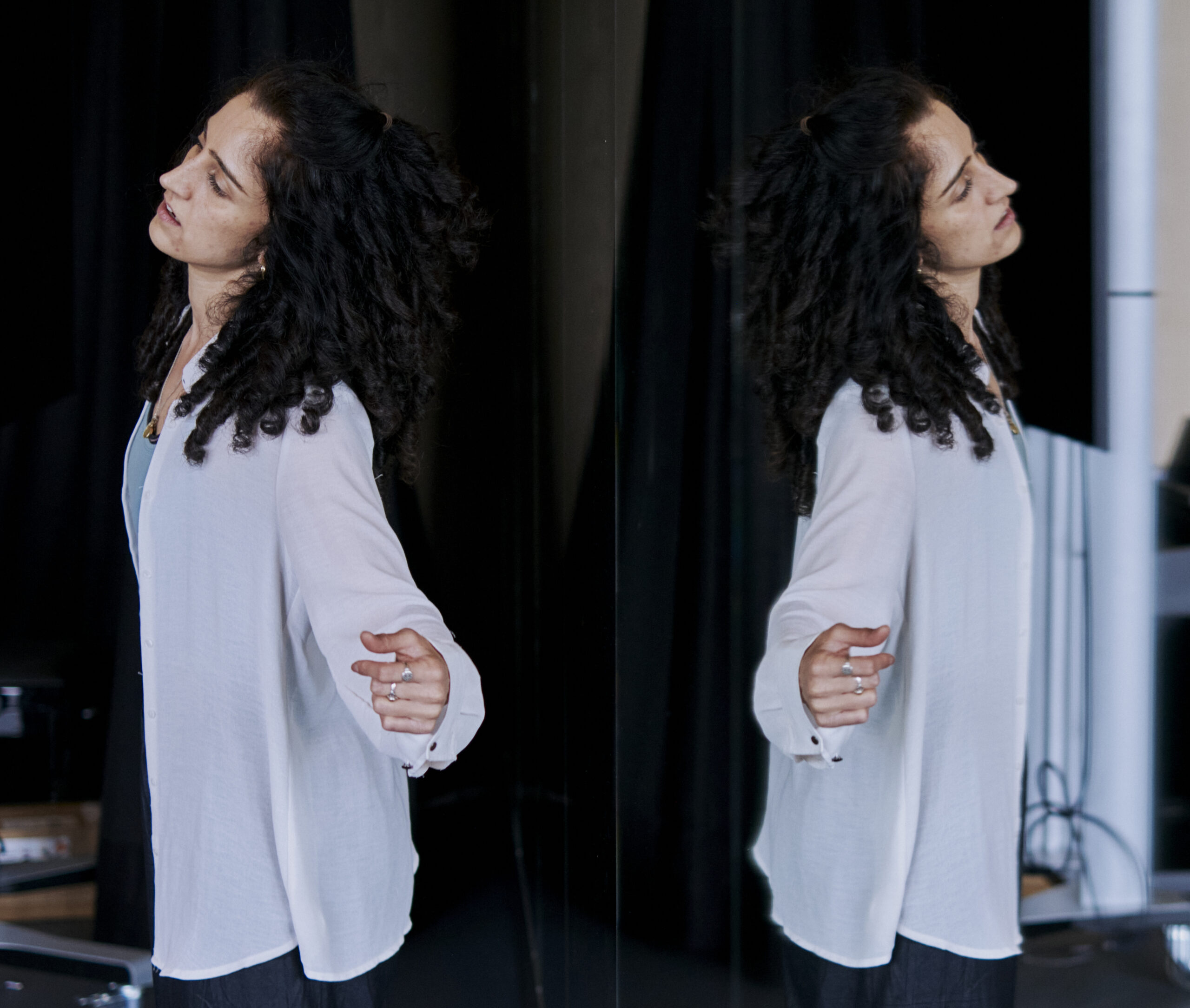
Nandita choreographing in the studio, photo by Ravi Chandarana
Nandita’s journey started in the same choreographic programme at the School, when they were still competitions. She won the Dame Ninette de Valois and James Monahan Awards for her student work.
I relished the freedom the School gave us to express creatively, and the trust they had in us at a young age to channel our visions and create.
We would organise ourselves to create and rehearse in any spare moments we had, around classes, meals and homework. To this day, I am reminded of how brave, courageous and undeterred we were as young choreographers. We went with our gut and instinct, and it felt like nothing was holding us back! We were supported with the ideal conditions to create, with space, time, dancers and all our creativity, raring to go.
Music was a strong driver for my work and still is to this day. I was interested in narrative work in my earlier student years and more abstract in the later ones. Both still interest me, and deeper research is now a big part of my process around the themes and messages I want to explore.
My classmates who choreographed each year along with me inspired me greatly, including my good friends Poppy Ben-David and David Johnson, whose work, even at age 11, was incredible. I thought they were geniuses! Dancing in their work and experiencing their process was insightful to my own. This taught me that you can find the most inspirational people at times in your peers who are right by your side.
I found myself in my element choreographing, enjoying its challenges and discoveries. As a student, there were not many female choreographers at the time for me to look up to, let alone any female choreographers of Indian descent in the ballet world, whom I could aspire to or see myself in. Once I started working, more and more female choreographers were establishing themselves, which was exciting. Whenever I could create an opportunity for myself to choreograph or one was offered to me during my career, I jumped at the chance! I felt very motivated to keep this fire burning bright to inspire others.
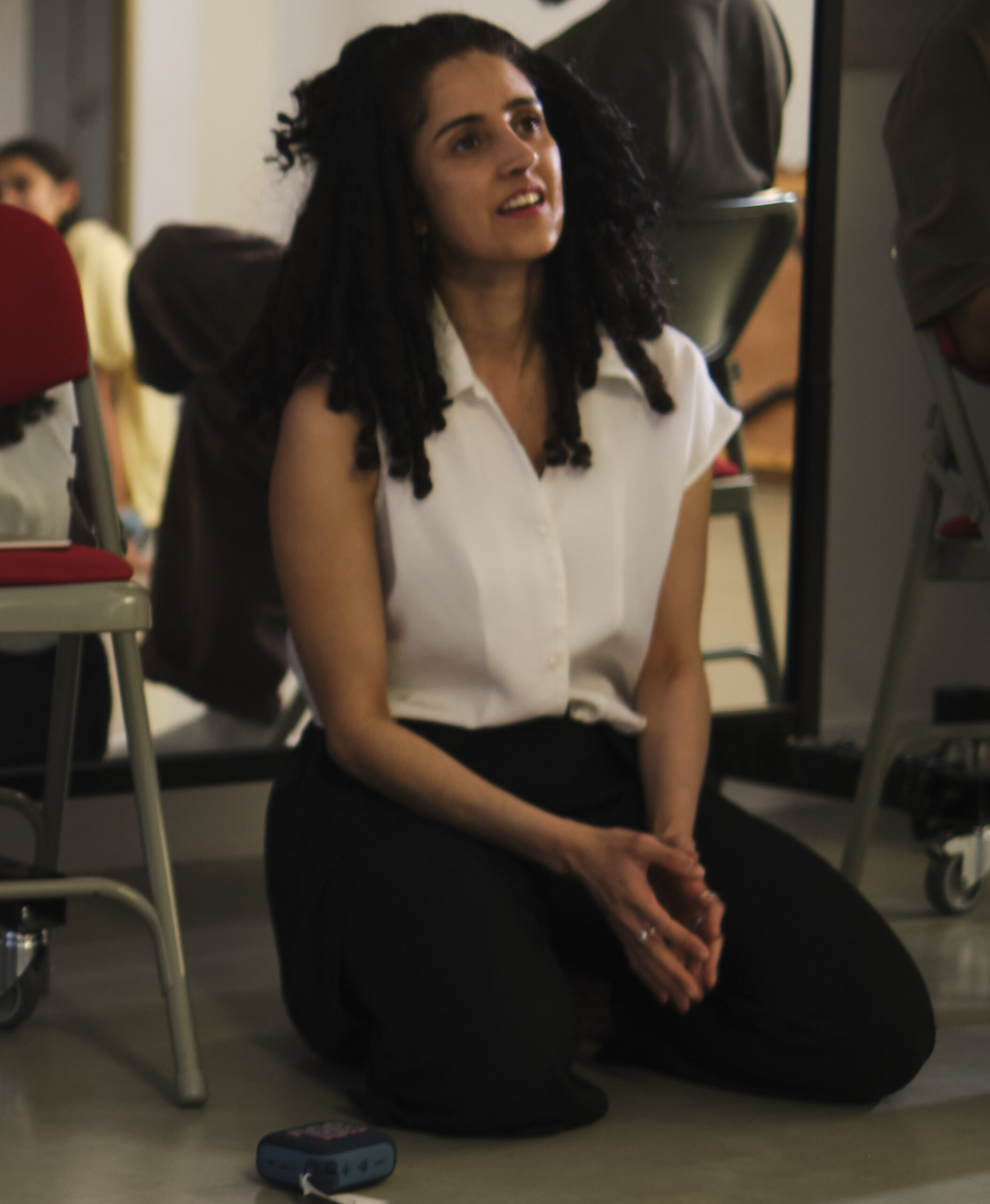
Nandita choreographing, photo by Ravi Chandarana
Nandita shares advice to other choreographers that she learned from her younger self:
I remind myself now to go for it and to be fearless. Manifest the vision into a reality, and enjoy all it has to offer along the way. The process is everything – finding where the magic lies, figuring out how things can come together.
Be with and committed to the process, lean into collaboration and be open to the possibilities you’ll discover. Try not to be too precious with your material; let it evolve with your collaborators in real time – collectively, a lot more gold can be found! Develop your craft by being part of others’ processes – this can teach you a lot. Being a dancer in this shared and scared space, receiving the material to interpret or respond to, will support how you lead others in this way by being on that side of things. Reflect on what you make, it will guide you into the next thing you create, with what you discovered, what really worked and what you didn’t try as you deepen your creative practice.
Nandita recalled several choreographic mentors and experiences at the School who inspired and supported her early work.
Opportunities to dance in productions by The Royal Ballet and Birmingham Royal Ballet throughout our training and watch shows were inspiring for me to dream and experiment with my own ideas. Being in a company environment at such a young age and taking it all in was magical!
I loved Sir Kenneth Macmillan’s work whilst a student. David Bintley, director at Birmingham Royal Ballet at the time, was another choreographer whose work inspired me. And I saw the rise of Christopher Wheeldon, an emerging choreographer at the time.
Matthew Hart came in to create Peter and the Wolf for and with the students at the School, and this was my first experience of being part of a creative process with a professional choreographer and seeing them at work, figuring things out.
Career highlights
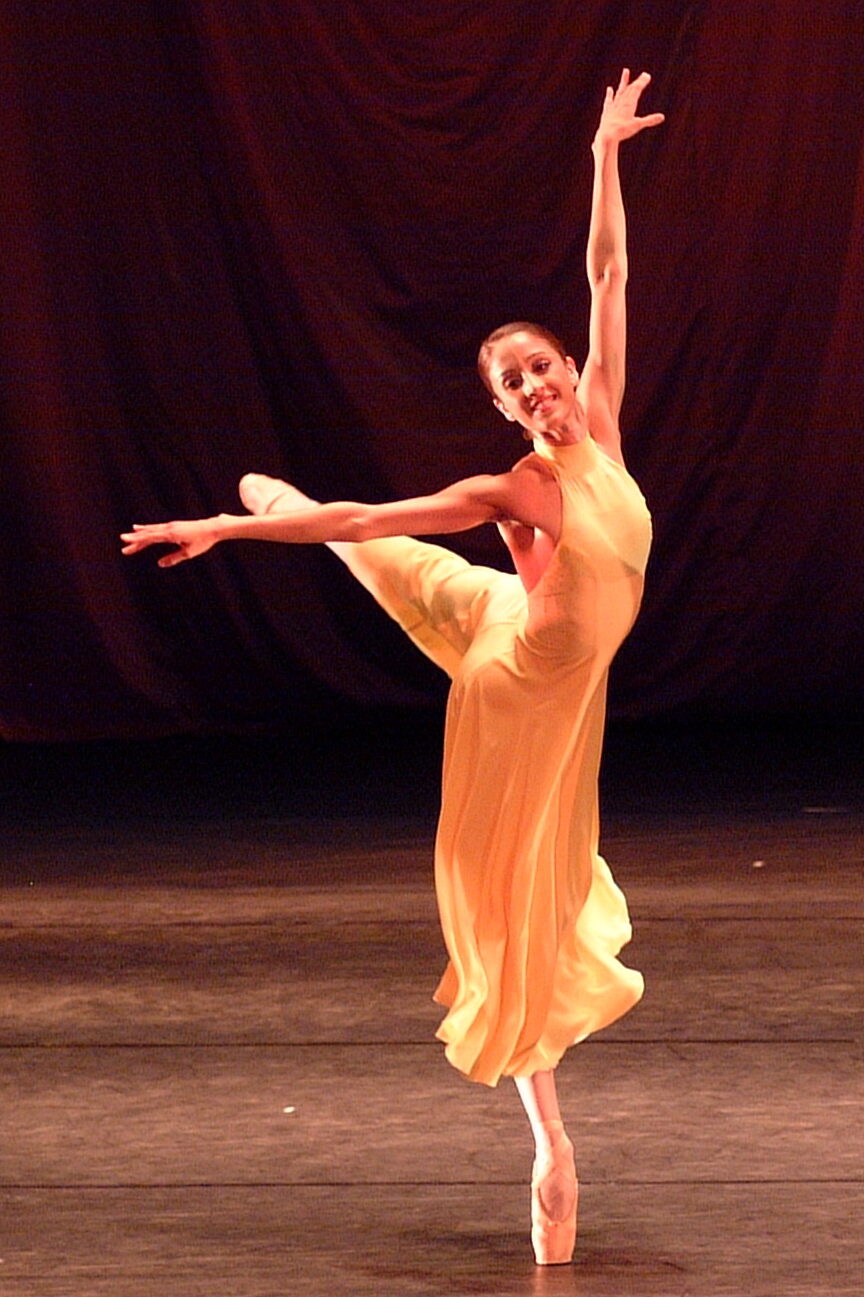
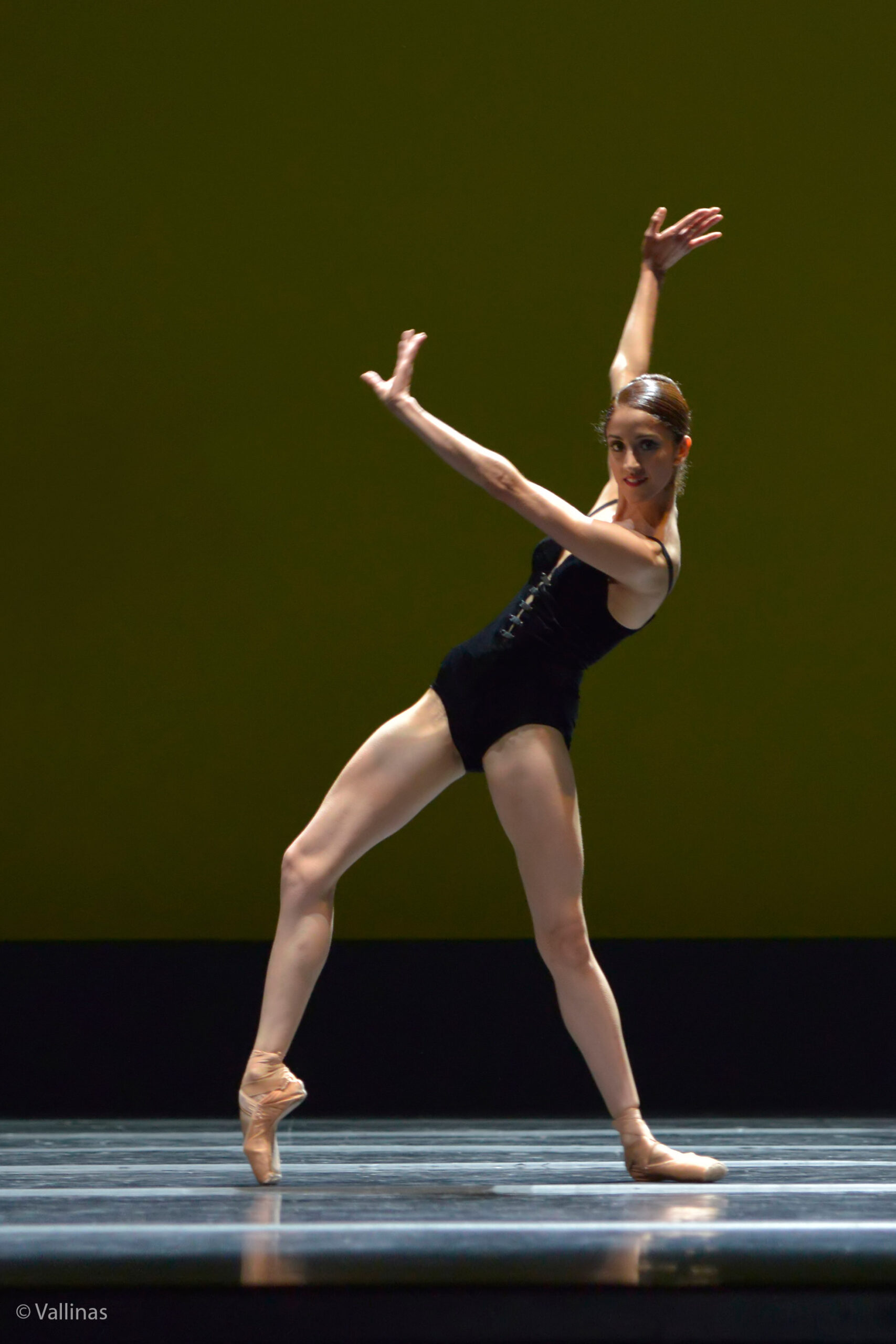
Left: Nandita performing with Zurich Ballet, photo by Peter Schnetz. Right: Nandita performing with Compañia Nacional de Danza, photo by Jesus Vallinas
Nandita has danced with world-renowned companies, including Zürcher Ballet, Victor Ullate Ballet, Ballet Black, Scottish Ballet and Compañia Nacional de Danza. She has performed in a wide range of repertoire, dancing in works by Jiří Kylián, William Forsythe, George Balanchine, Uwe Scholz and Ohad Naharin. She continued choreographing throughout her performing career, keeping her creativity alive.
When I graduated from the School, my first contract was with Zürcher Junior Ballet. When I later transitioned into the main company Zürcher Ballet, I was commissioned by director, Heinz Spoerli, to create a work for the Zürcher Junior Ballet. This was my first professional choreographic work and a fulfilling moment to see my ballet, Capture, on the main stage at The Zürich Opera House, with lighting, and in costumes I had designed. My family from London was in the audience, and it was a dream come true.
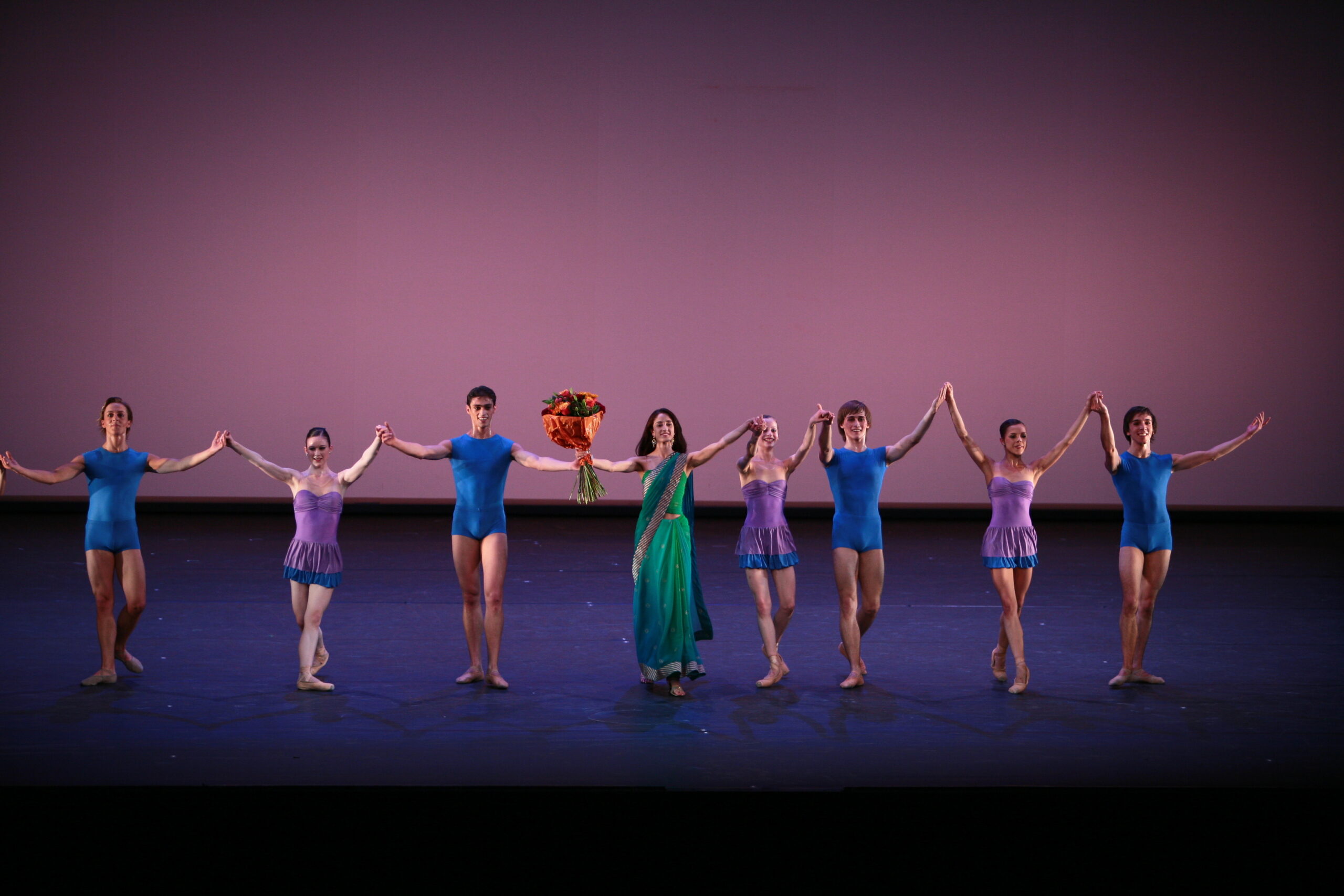
Nandita bows with the cast of her choreography Capture at Zurich Ballet, photo by Peter Schnetz
Another highlight was joining Ballet Black where, for the first time in my training and career, I was in the studio and on stage with a company fully made up of dancers of colour. At Ballet Black, I was also given the opportunity by director Cassa Pancho to create for the company. I created Synergy in collaboration with the dancers, which was performed at the Royal Opera House.
While dancing with Compañia Nacional de Danza in Madrid, Spain, my neoclassical and contemporary dance understanding really grew and evolved. I performed in work by choreographers I had only ever dreamt of, dancing leading roles in ballets such as Sleepless, Petit Mort, Herman Schermann, Who Cares? and 3 Preludes.
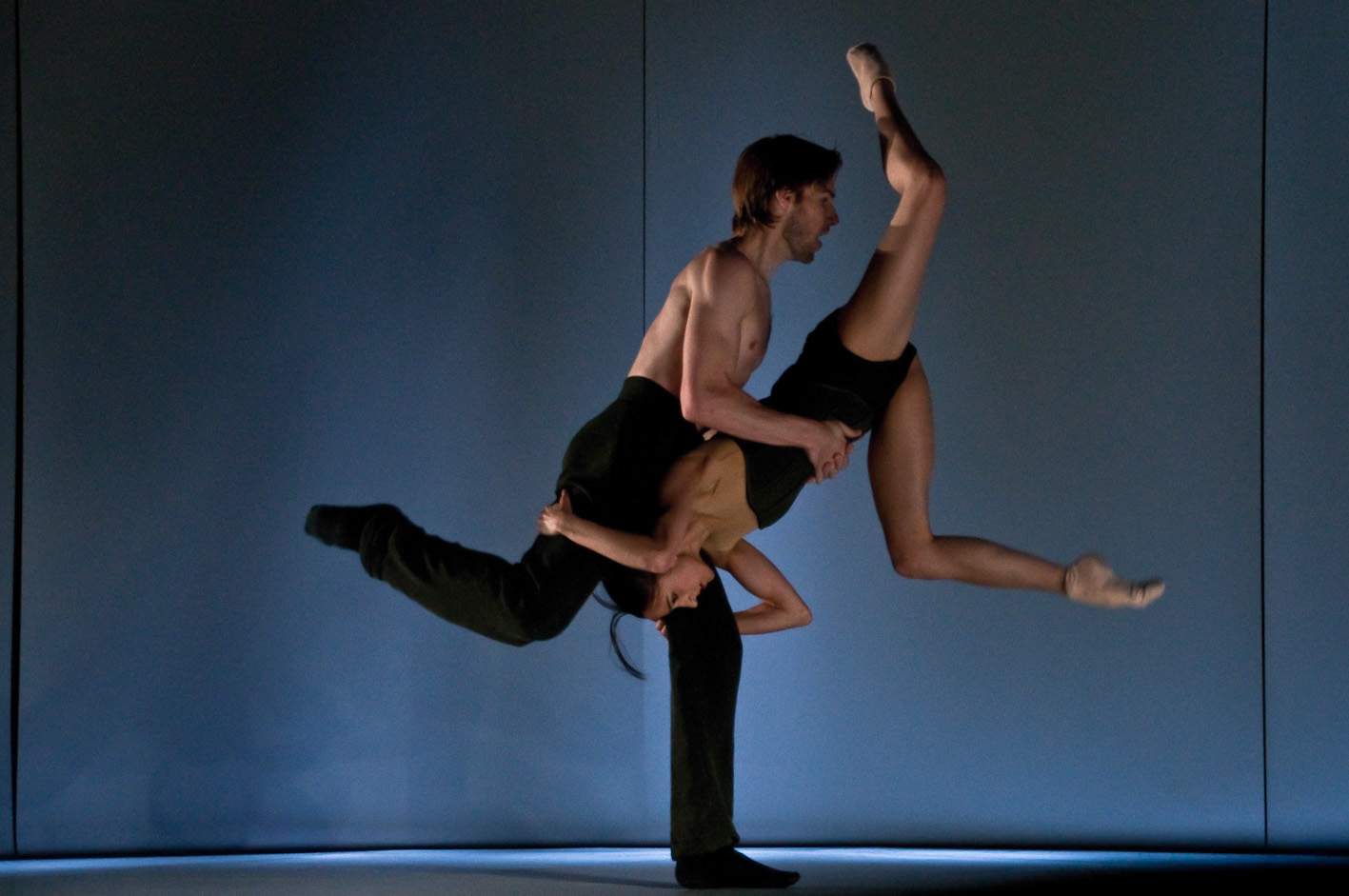
Nandita performing with Compañia Nacional de Danza
I created Jaane Ajnabee for this company as a young choreographer in collaboration with composer and dear friend Shammi Pithia, who performed live on stage with us. For my British South Asian experience and Spanish world to meet on stage was unforgettable, and it initiated a new wave of creative work for me. I transitioned into becoming an independent artist in the UK and began connecting and collaborating with more South Asian artists.
Since being back in London I have developed my teaching, facilitation and creative practice in a range of spaces, centered around wellbeing, creativity, and freedom of expression, which Welcome Movement® is rooted in.
I created my first outdoor work last year, Roots to Rise, commissioned by Without Walls to tour to festivals across the UK. Through this commission, I was able to collaborate with a range of artists and experts in multiple areas across dramaturgy and accessibility, which expanded my artistic practice. Creating for the outdoors and for public space is an evolution in my creative practice after many years in traditional theatres, which encourages me to explore new things creatively.
After returning to the School during our centenary year, Nandita feels optimistic about the next 100 years, hoping for increased access, inclusivity and progress for young dancers.
Seeing women of colour teaching in the School, such as my fellow inspiring Ballet Black colleague and dear friend, Sarah Kundi, brings me hope that current and future global majority students in the School can see themselves represented in the faculty.
I hope the choreographic programme continues to be celebrated throughout the students’ training. I hope that there is a wholesome, holistic and inclusive approach to every programme and project the School designs while maintaining excellence and artistry in its dancers. These programmes continue to develop young individuals and minds who take up space in the dance industry and graduate feeling grounded, well-rounded, imaginative, aware, creative and capable to contribute and lead the future of dance.
My time at the School was a true privilege. I am deeply grateful for the sense of interdependence I have developed and the lasting resilience it has instilled in me. It has been a very cathartic experience for me to reflect on my journey.
Follow Nandita’s choreographic work here. Learn more about the Ninette de Valois Choreographic Programme here.
Catja Christensen is the Marketing and Communications Executive at The Royal Ballet School and joined the School in 2025. She enjoys interviewing students, staff and guest artists for news stories and crafting eye-catching newsletters.